Last Updated on 11/08/2026 by Bonnen Battery
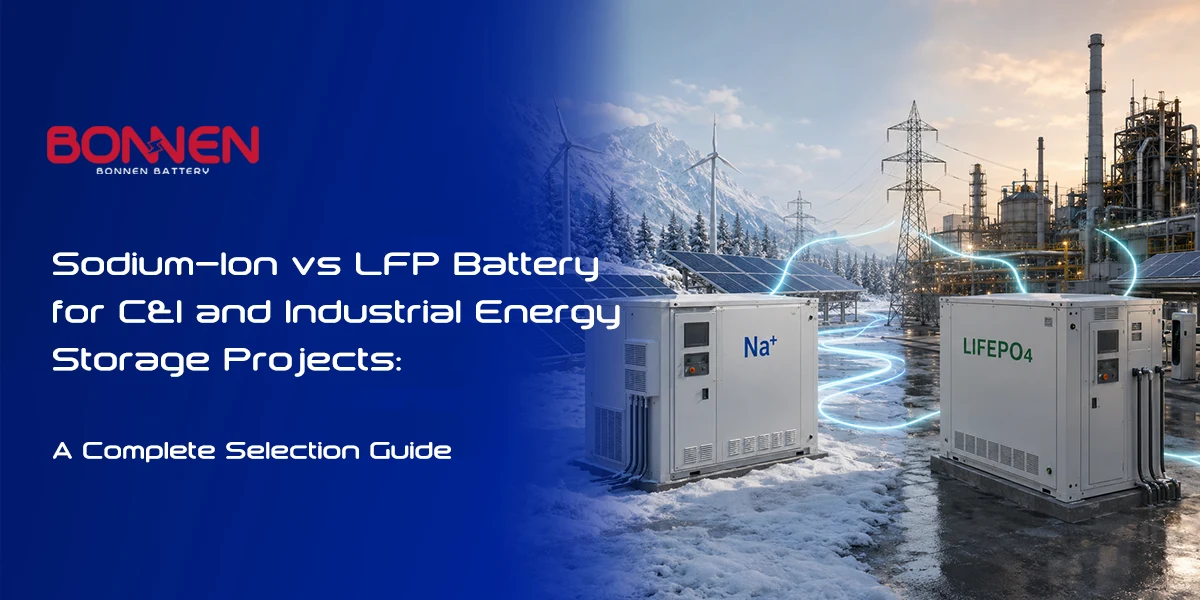
Sodium-Ion vs LFP Battery for C&I and Industrial Energy Storage Projects: A Complete Selection Guide
For most commercial and industrial energy storage projects today, LFP remains the lower-risk default because it has a mature supply chain, high energy density, established project experience, and broad system availability. Sodium-ion should enter the shortlist when low-temperature operation, raw-material diversification, or stationary use with enough installation space is especially important. In other words, there is no universal winner: LFP is currently the more mature choice, while sodium-ion can be the better project choice under the right operating conditions. In 2025, LFP accounted for around 90% of global battery storage deployments, while current sodium-ion cell manufacturing capacity was still only slightly above 1% of lithium-ion capacity, according to the International Energy Agency’s analysis of global battery trends ⇱.
That gap does not mean sodium-ion should be ignored. The International Energy Agency, or IEA, reported in 2026 that the latest sodium-ion cells can reach about 175 Wh/kg, compared with up to 205 Wh/kg for the latest LFP cells. The same IEA analysis highlights a major sodium-ion strength: some latest-generation designs retain around 90% of nominal capacity at temperatures as low as -40°C.
The practical rule is simple: choose the battery chemistry from the project requirements, not from one attractive cell specification.
This guide is written from our battery-system engineering perspective and cross-checked against information from the IEA, U.S. Department of Energy, national laboratory research, IEC standards, UNECE transport rules, and peer-reviewed battery research. It focuses on C&I and industrial energy storage rather than repeating the basic sodium-ion chemistry explained in our earlier introductory comparison.
For a basic explanation of how the two chemistries work, read our friendly sodium-ion and lithium-ion battery comparison ⇱.
1. Battery Chemistry Selection Starts With the Project, Not the Cell
A C&I battery project is not simply a large battery purchase. It is an energy system built around a specific load profile, grid connection, operating schedule, environment, and financial target.
That is why comparing sodium-ion and LFP only by Wh/kg, cycle life, or cell price can lead to the wrong decision.
The U.S. Department of Energy’s battery storage procurement guidance ⇱ follows the same project-level approach. It encourages buyers to define technical requirements and procurement conditions before choosing the final BESS configuration.

1.1 Define the Application Scenario First
A factory using batteries for demand-charge reduction has different needs from a microgrid that must keep critical equipment running during a blackout.
Peak shaving normally requires the battery to discharge during short periods of high demand. Solar energy shifting may require several hours of discharge after solar production falls. Backup power requires enough stored energy to support critical loads for a defined period. EV charging sites may need strong short-term power to reduce grid demand when several vehicles charge at once. Modern commercial and industrial battery energy storage systems ⇱ can support peak shaving, solar energy shifting, backup power, EV charging, and microgrid applications.
The application tells you what the battery needs to do. Chemistry selection comes later.
For example, a cold-climate microgrid may give more weight to low-temperature performance. A warehouse with very limited outdoor space may give more weight to energy density. A bank-financed project may give more weight to certifications, warranty history, and supply-chain maturity.
1.2 Determine Your Energy and Power Requirements
Energy and power are different.
Energy, measured in kWh or MWh, tells you how much electricity the system can store.
Power, measured in kW or MW, tells you how quickly the system can charge or discharge that energy.
A 200 kWh battery connected to a 100 kW PCS can theoretically deliver rated power for about two hours before system losses and usable SOC limits are considered.
For project selection, define rated power, usable energy, expected discharge duration, maximum charge power, maximum discharge power, and short-term peak demand.
Do not size a project only from nominal battery capacity. Usable energy after SOC limits, temperature derating, system losses, and aging is what actually matters.
1.3 Consider the Daily Operating Profile
Two systems with the same 500 kWh nameplate capacity may age very differently.
A battery cycling once per day at moderate power is not experiencing the same stress as a battery performing several deep cycles every day.
Important operating conditions include depth of discharge, or DOD; average SOC; charge and discharge rate; number of cycles per day; temperature; and how long the battery stays near maximum SOC.
Cycle-life numbers are only meaningful when the test conditions are known.
A statement such as “8,000 cycles” is incomplete unless the supplier also tells you the test temperature, DOD, C-rate, end-of-life capacity, and whether the number comes from cell testing or complete-system warranty terms.
1.4 Check the Site Environment
Temperature can change both performance and economics.
Important site data include minimum and maximum ambient temperature, humidity, altitude, indoor or outdoor installation, available ventilation, salt exposure, dust, and installation space.
Cold conditions can reduce available battery energy and charging power. Hot conditions can accelerate degradation and increase cooling demand.
Battery thermal management is therefore not just an accessory. A 2025 Nature review ⇱ states that no battery system can be considered completely safe or independent of temperature, and identifies thermal management and fire protection as key parts of battery safety.
1.5 Define the Required Project Life
Many stationary battery projects are designed around ten years or more of operation.
The important question is not simply, “How many cycles can the cell achieve?”
A better question is:
“How much usable energy and power will the complete system still provide near the end of the project?”
Project evaluation should include calendar aging, cycling degradation, augmentation, replacement strategy, end-of-warranty capacity, and annual energy throughput.
National laboratory battery-storage models include degradation and augmentation as real lifetime costs rather than assuming the battery remains unchanged throughout the project.
2. Sodium-Ion vs LFP Battery: Project-Level Comparison
At the project level, LFP currently wins on maturity and compactness. Sodium-ion has its strongest case in cold-temperature performance and chemistry diversification.

The table below summarizes the practical differences.
| Project Factor | Sodium-Ion | LFP |
| Market maturity in stationary storage | Emerging | Very mature |
| Current global deployment | Small | Dominant |
| Latest cell-level energy density | Up to about 175 Wh/kg | Up to about 205 Wh/kg |
| Low-temperature potential | Strong advantage in some latest designs | More temperature-sensitive |
| System footprint | Usually larger for equal energy | Usually more compact |
| Supply-chain depth | Still developing | Very large and mature |
| Certification experience | Developing | Well established |
| Project financing familiarity | Lower today | High |
| Raw-material diversification | Strong potential | Depends on lithium and LFP supply chain |
| Best fit today | Selected stationary, cold-climate and industrial projects | Broad C&I and stationary storage market |
–
The energy-density and market-maturity figures reflect current industry conditions, not permanent limits. Battery technology is changing quickly.
2.1 Energy Density and System Footprint
For stationary energy storage, energy density matters less than it does in an EV, but it still matters.
According to the IEA’s 2026 assessment ⇱, recent sodium-ion cells can reach up to about 175 Wh/kg, while the latest LFP cells can reach about 205 Wh/kg.
That difference means a sodium-ion battery may require more cell mass or volume to store the same amount of energy.
However, cell Wh/kg is not the best metric for a C&I project.
A project developer should compare system-level figures such as kWh per cabinet, usable kWh per square meter, spacing requirements, maintenance access, PCS location, transformer area, and fire-separation requirements.
A slightly lower cell energy density may have little practical effect on a large industrial site with plenty of outdoor space.
The same difference may become critical on a city site where every square meter is expensive.
2.2 Power Capability and High-Rate Performance
Do not assume that one chemistry automatically charges or discharges faster.
Maximum power depends on the specific cell, electrode design, cell temperature, BMS limits, busbars, contactors, cables, cooling system, PCS, and control strategy.
Sodium-ion cells can be designed for strong rate capability, but “sodium-ion charges faster than LFP” should never be treated as a universal engineering rule.
Ask for the actual continuous C-rate, peak C-rate, peak duration, temperature conditions, and cycle-life impact at the proposed operating rate.
For peak shaving, a system that regularly operates near maximum power needs very different engineering margins from a low-rate four-hour storage system.
2.3 Low-Temperature Performance
Low-temperature performance ⇱ is currently one of the strongest reasons to evaluate sodium-ion.
The IEA reported in 2026 that the latest generation of sodium-ion batteries can retain around 90% of nominal capacity at temperatures as low as -40°C, although this performance is technology-specific and should not be assumed for every sodium-ion cell.
Peer-reviewed research also explains why sodium-ion has attracted attention for cold applications. Sodium-ion transport can offer favorable low-temperature behavior, although electrolyte resistance, interface reactions, and diffusion still become more difficult as temperature falls. Sodium-ion batteries do not magically escape cold-temperature electrochemistry.
For a real project, ask four questions:
What capacity remains at the minimum site temperature?
What continuous discharge power remains?
Can the battery charge at that temperature?
How much heater energy is required?
The answers matter more than the temperature number printed on a brochure.
2.4 Safety and Thermal Management
Neither sodium-ion nor LFP should be described as “fireproof.”
Battery safety is a system property.
It depends on cell chemistry, electrolyte, SOC, cell quality, BMS protection, thermal management, electrical protection, cabinet design, gas detection, fault isolation, and fire-control measures.
Research on sodium-ion thermal stability shows that sodium-ion cells can have different thermal characteristics from lithium-ion cells ⇱, but their behavior depends strongly on cathode, anode, electrolyte, SOC, aging, and abuse conditions. Researchers continue to study sodium plating, gas generation, oxygen release, and thermal runaway pathways.
That means a purchasing decision should be based on actual safety test data for the proposed cell and system, not on a general statement that one chemistry is “safe.”
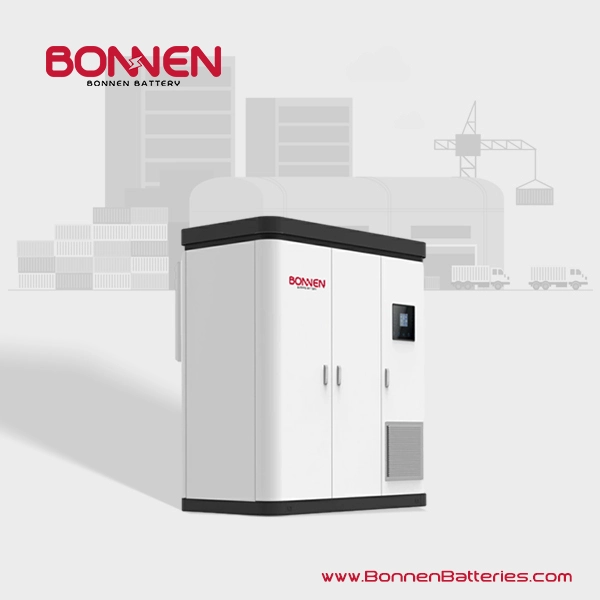
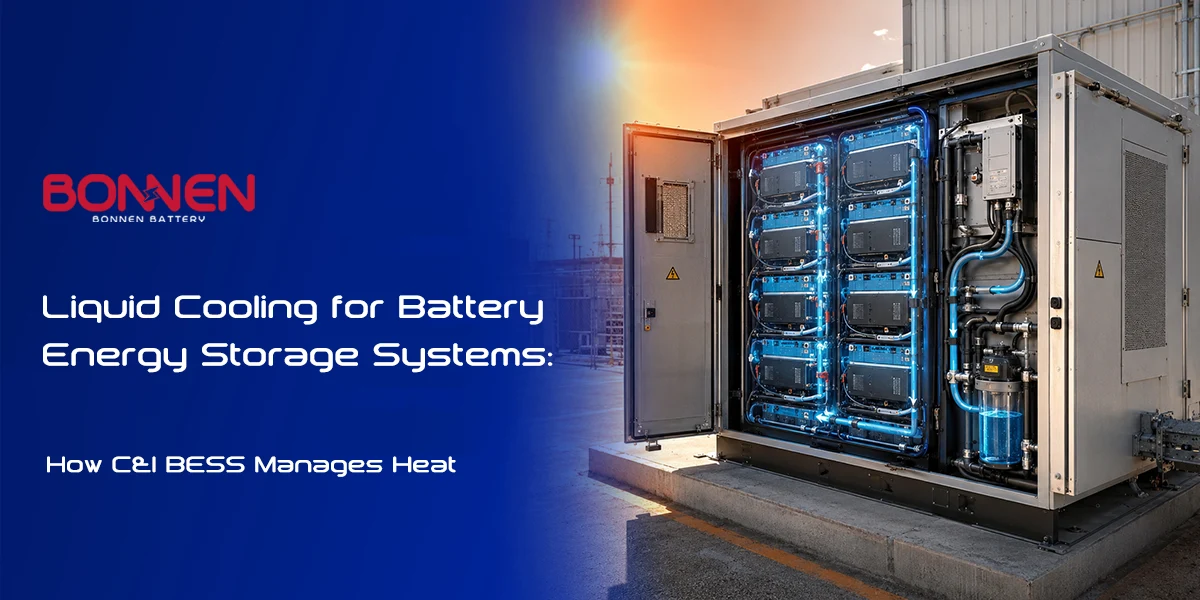
For large C&I systems, layered protection is still essential: cell monitoring, temperature sensors, insulation monitoring, gas detection, smoke detection, emergency shutdown, thermal control, fault isolation, and a fire-response strategy. In higher-capacity C&I projects, liquid-cooled commercial battery storage systems ⇱ can also help maintain more consistent battery temperatures during daily cycling.
2.5 Round-Trip Efficiency and Auxiliary Energy Consumption
Round-trip efficiency, or RTE, is the percentage of energy you get back after storing and later discharging electricity.
If a system receives 100 kWh and returns 88 kWh, its round-trip efficiency is 88%.
However, project RTE should include more than the battery cell.
Power conversion, cables, transformers, pumps, fans, cooling equipment, heaters, BMS electronics, and standby loads all consume energy.
The 2024 national laboratory commercial battery-storage model uses 85% as a representative round-trip efficiency for lithium-ion battery storage. That is a modeling assumption, not a guaranteed value for every system.
Detailed research on stationary lithium-ion containers has also shown that auxiliary consumption can become a major efficiency loss when a battery operates at low utilization.
For that reason, compare AC-to-AC efficiency at realistic operating power, not only maximum PCS efficiency.
2.6 Cycle Life and Long-Term Degradation
Cycle life is useful only when test conditions match the project.
A battery completing 8,000 cycles at 25°C, moderate current, and controlled DOD cannot automatically be expected to provide 8,000 equivalent cycles in a hot outdoor cabinet operating at aggressive power.
Temperature, DOD, C-rate, SOC window, and cell aging all affect long-term capacity.
When comparing sodium-ion and LFP proposals, request the original cycling curve rather than only the headline cycle count.
Also ask whether the warranty is based on years, cycles, energy throughput, remaining capacity, or a combination of these conditions.
2.7 Certification and Project Approval
LFP has a major practical advantage here because the technology already has extensive history in stationary energy storage.
The IEC 62619 standard ⇱ covers safety requirements for secondary lithium cells and batteries used in industrial applications, including stationary energy storage, telecom, UPS, and other industrial applications. IEC 63056 ⇱ adds requirements for lithium batteries used in electrical energy storage systems.
For North American ESS projects, system-level fire and installation requirements can also involve UL 9540, UL 9540A, NFPA 855, the International Fire Code, and requirements from the local authority having jurisdiction, or AHJ. UL Solutions notes that the 2026 edition of NFPA 855 and the 2024 IFC include large-scale fire-testing requirements in certain situations.
Sodium-ion projects require extra attention because certification pathways and product histories are less mature.
Transport requirements must also be checked. UNECE has already added sodium-ion battery testing provisions to the UN Manual of Tests and Criteria ⇱, and the 2025 UN Model Regulations include updated rules covering sodium-ion and hybrid battery transport.
The practical rule is simple: confirm the exact certification and transport requirements before placing the order, not after the battery is built.
3. When Sodium-Ion Battery May Be the Better Choice
Sodium-ion becomes interesting when the project contains a condition that directly matches its strengths.
It should not be selected just because sodium is abundant.

3.1 Cold-Climate Energy Storage Projects
Cold climates are currently one of the clearest use cases.
The IEA says current sodium-ion technology is already cost-effective in some particularly cold-climate stationary storage applications, even while LFP remains more competitive in many normal-temperature projects.
A factory in a region where winter temperatures regularly fall below -20°C may spend meaningful energy keeping conventional batteries inside an acceptable temperature range.
If a sodium-ion system can maintain more usable energy and power with less heating, the project-level advantage may be larger than the difference in battery purchase price.
This must still be confirmed with real temperature curves.
3.2 Projects With Enough Installation Space
Stationary storage gives sodium-ion more room to compete because a battery cabinet does not need to move.
Extra weight may have little economic impact at a large factory, industrial park, solar site, or microgrid.
Extra footprint can still matter, but it is often more manageable than in vehicles.
This is one reason the IEA identifies stationary battery storage as one of the most suitable applications for sodium-ion technology.
3.3 Projects Seeking Supply-Chain Diversification
Sodium-ion eliminates lithium from the cell chemistry, which creates an additional supply option for the battery industry.
However, it is important not to oversimplify this advantage.
The IEA notes that sodium-ion can diversify some raw-material exposure, but its downstream cell, cathode, and hard-carbon supply chains remain concentrated and much less developed than lithium-ion supply chains.
The correct conclusion is therefore:
Sodium-ion can diversify chemistry risk, but it does not eliminate battery supply-chain risk.
3.4 Early-Adopter Industrial Projects
Some projects can accept more technology risk than others.
A company installing a modular demonstration system at its own factory can monitor performance for one or two operating seasons before expanding.
That approach is very different from financing a large project whose revenue model depends on predictable performance for 15 years.
For early sodium-ion deployments, modular design can reduce risk. A project can begin with one cabinet and expand after collecting real operating data.
4. When LFP Battery Is Still the Preferred Choice
In 2025, LFP accounted for around 90% of global battery storage deployments. That level of market adoption creates real project advantages: more system designs, more field experience, more experienced EPC teams, and more familiar certification pathways.

4.1 Projects Requiring Maximum Market Maturity
For many buyers, maturity is worth money.
A bank, insurer, investor, or large EPC contractor may prefer technology with a long operating history and a wide supplier base.
LFP currently has that advantage.
This is especially important when battery performance directly affects project revenue or financing.
4.2 Sites With Limited Installation Space
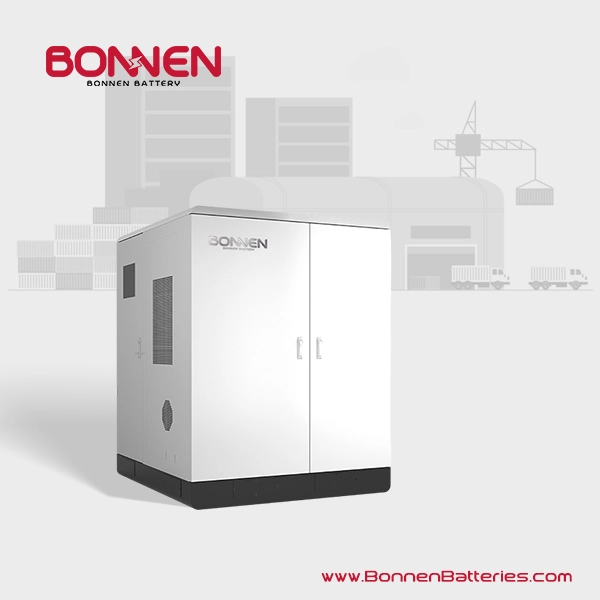
If the site has a strict footprint limit, a compact LFP commercial battery storage cabinet ⇱ may deserve serious preference.
Higher energy density can allow more energy to fit inside the same battery area.
The IEA’s latest comparison places leading LFP cells at up to roughly 205 Wh/kg versus up to 175 Wh/kg for the latest sodium-ion cells.
The cell difference does not translate directly into the same percentage difference at cabinet level, but it shows why layout calculations matter.
Compare actual cabinet dimensions and usable kWh per square meter.
4.3 Projects With Strict Approval Requirements
A chemistry may perform well technically and still be difficult to deploy if the project cannot obtain approval.
For markets with strict fire, electrical, grid, and insurance requirements, the availability of certified system configurations can have more value than a small improvement in cell performance.
This is one reason technical procurement should include the certification pathway from the beginning.
4.4 Projects With Tight Delivery Schedules
A mature supply chain normally provides more options for cells, modules, BMS hardware, PCS integration, replacement parts, and service.
Sodium-ion manufacturing is growing quickly, but the IEA estimates that current sodium-ion cell manufacturing capacity remains only a little above 1% of lithium-ion capacity. Announced sodium-ion projects for 2030 are equivalent to only about 7% of committed lithium-ion manufacturing capacity for that year.
For a project with a fixed commissioning date, supply availability can therefore be more important than theoretical chemistry advantages.
5. Comparing Total Project Cost: CAPEX Is Not the Only Factor
The cheapest battery does not automatically create the cheapest storage project.
A better comparison is the cost of delivering useful energy over the full project life.

5.1 Initial System Investment
CAPEX includes much more than cells.
Depending on project scope, it may include battery modules, racks, cabinets, BMS, PCS, EMS, transformer, switchgear, liquid cooling or HVAC, fire protection, communication equipment, site engineering, civil work, electrical installation, commissioning, certification, and shipping.
A lower cell price can disappear quickly if the system requires more cabinets, more land, more heating, or additional engineering work.
5.2 Operating Cost
OPEX can include cooling electricity, heating electricity, standby power, maintenance, inspections, communication services, spare parts, and component replacement.
Efficiency matters because every percentage point of energy loss reduces the energy available to sell or use.
The 2024 national laboratory model uses a representative 85% RTE for commercial lithium-ion storage and assumes fixed O&M equivalent to 2.5% of capital cost per year in its modeling framework. These are modeling assumptions rather than universal project values, but they show why lifetime economics cannot be reduced to battery purchase price.
5.3 Lifetime Cost and LCOS
LCOS means levelized cost of storage.
In simple terms, LCOS asks:
“How much does each unit of delivered stored electricity cost over the system’s lifetime?”
A simplified project view is:
* Total lifetime cost ÷ total useful energy delivered over the project life.
Lifetime cost can include initial CAPEX, electricity losses, O&M, augmentation, replacements, financing, and end-of-life costs.
Total delivered energy depends on usable capacity, efficiency, cycling schedule, availability, and degradation.
This creates an important selection rule:
A battery with a higher purchase price can still produce lower lifetime cost if it provides higher usable energy, better efficiency, lower auxiliary consumption, or lower replacement cost.
The opposite can also be true.
6. Example Project Evaluation: 225 kWh Sodium-Ion C&I Energy Storage System
A practical example helps show why system-level comparison is more useful than chemistry-level comparison.

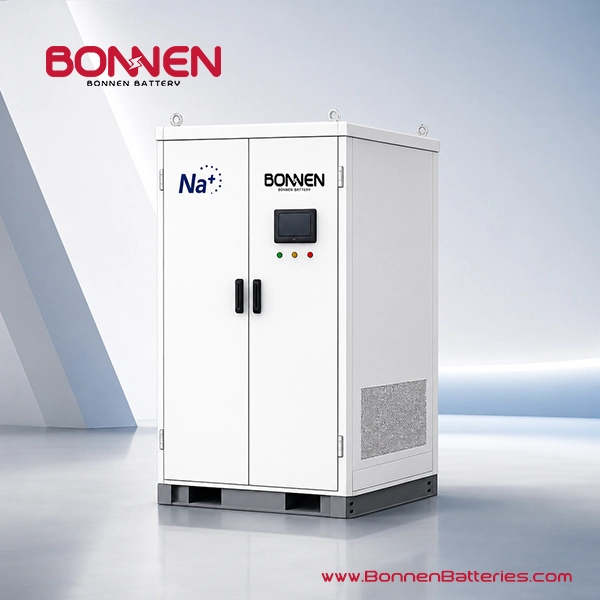
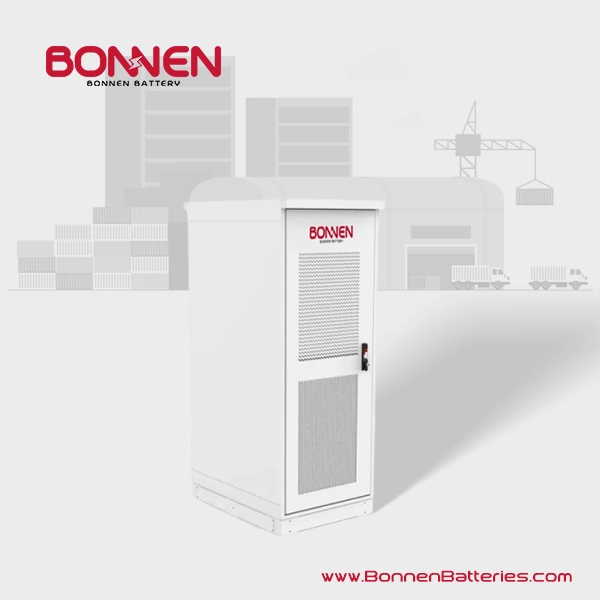
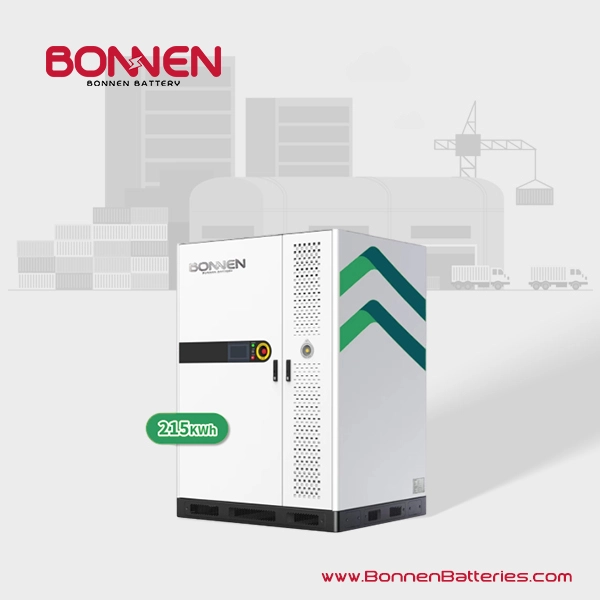
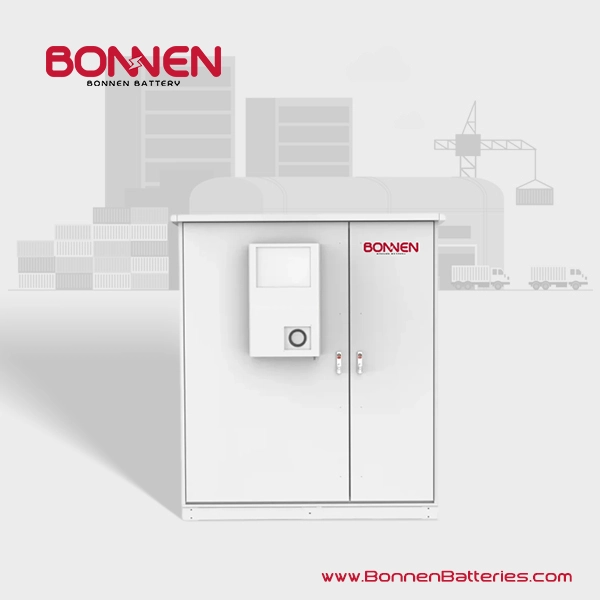
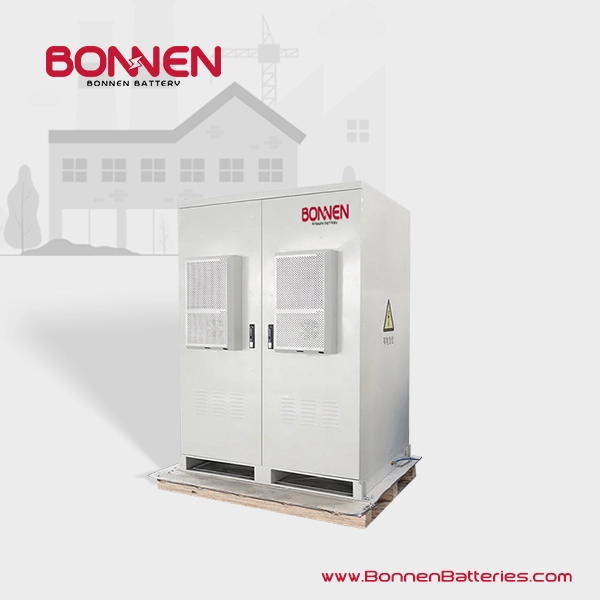
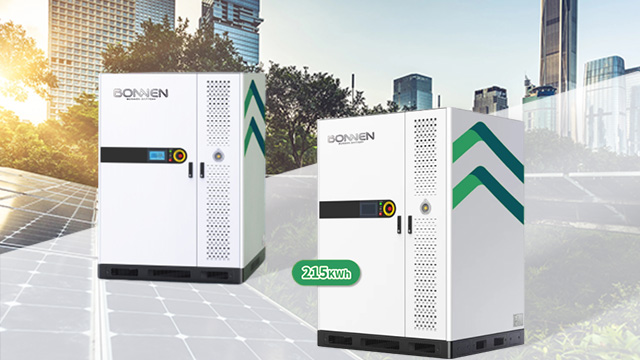
For Bonnen Battery current 225 kWh sodium-ion C&I system ⇱ design, we use 225 kWh nominal battery energy with about 204 kWh usable at 90% DOD and an integrated 110 kW PCS. That produces a nominal energy-to-power ratio close to two hours.
The system is designed as an IP65 outdoor cabinet with liquid cooling. Its specified operating range is -30°C to +55°C, and the thermal system is designed to keep cell temperature difference within 3°C.
The battery specification uses 0.5C as the recommended charge and discharge operating point. The module specification allows up to 1C continuous charging, 1.5C continuous discharging, and 2C short-term peak discharge under specified conditions.
The stated module cycling specification is at least 6,000 cycles at 100% DOD or at least 8,000 cycles at 80% DOD under 25°C and 0.5C test conditions. This is a good example of why cycle-life numbers should always include the test conditions.
The integrated design specifies system RTE of at least 88%, while the PCS maximum efficiency is at least 98.4%. The difference illustrates an important point: PCS efficiency is not the same as complete storage-system efficiency.

For a factory peak-shaving project, I would still compare this sodium-ion solution against a similar LFP commercial and industrial energy storage system ⇱ using the same project inputs.
The comparison should include usable kWh, rated kW, minimum-temperature power, annual cooling or heating consumption, cabinet footprint, warranty throughput, certification status, delivery time, and total installed cost.
If the site is cold and installation space is available, sodium-ion may become attractive.
If space, financing history, certification maturity, and maximum supply-chain depth are the main priorities, LFP may remain the lower-risk option.
That is what project selection should look like.
7. Battery Supplier Evaluation Checklist for C&I Projects
A serious BESS quotation should allow you to verify the system, not just compare prices.
The U.S. Department of Energy provides a dedicated BESS procurement checklist because early technical definition can reduce problems later in project development.

7.1 Technical Information to Request
Ask for the exact cell chemistry and cell model, not only “sodium-ion” or “LFP.”
Request nominal and usable energy, operating voltage range, continuous and peak current, continuous and peak power, recommended C-rate, temperature derating curves, charge limits at low temperature, RTE, auxiliary consumption, cooling method, IP rating, communication protocols, and expansion method.
For cycle life, ask for the original test conditions.
For system efficiency, ask whether the value is DC-side, PCS-only, or AC-to-AC.
For temperature, ask whether the published range means the battery can simply remain powered on or can actually charge and discharge at full rated power.
Those are very different specifications.
7.2 Commercial Information to Confirm
Ask how the warranty is calculated.
A useful warranty should clearly define years, energy throughput, maximum cycles, DOD, allowed temperature range, SOC limits, and end-of-warranty capacity.
Also confirm cell replacement availability, spare-part strategy, PCS support, BMS software support, remote monitoring terms, expected service life, and lead time.
For emerging technologies such as sodium-ion, long-term replacement strategy deserves extra attention.
7.3 Certification and Safety Documents
Request documents before the order whenever possible.
The required package depends on the market and installation, but it may include cell and battery test reports, industrial battery safety documentation, transport testing, system fire testing, EMC documentation, electrical safety documentation, grid compliance, and local project approvals.
8. Sodium-Ion vs LFP Battery Selection Decision Tree
A practical selection process can be reduced to a few project questions.
| Project Question | If Yes | What It Means |
| Does the site regularly face very low temperatures? | Give sodium-ion a closer look | Low-temperature performance may create a real system advantage |
| Is installation space extremely limited? | Give LFP more weight | Higher energy density may reduce footprint |
| Does financing require long operating history? | Favor mature LFP solutions | Bankability and field history become important |
| Is chemistry diversification a strategic goal? | Evaluate sodium-ion | It can reduce direct dependence on lithium chemistry |
| Does the project need the widest current supplier ecosystem? | Favor LFP | Supply-chain depth is much greater |
| Can the project begin with a pilot and expand later? | Sodium-ion becomes easier to evaluate | Real site data can be collected before full rollout |
| Is one chemistry clearly cheaper per cell? | Do not decide yet | Compare installed cost and lifetime delivered energy |
–
Three steps are enough for an initial shortlist.
First, define the project requirements.
Second, remove any chemistry that fails a hard requirement such as space, power, temperature, certification, or delivery schedule.
Third, compare the remaining options using total lifetime cost and project risk.
This method is more reliable than choosing a battery from a single specification.

9. FAQs
Q1: Is sodium-ion better than LFP for commercial energy storage?
Not in every project. LFP is currently more mature and dominates stationary storage, while sodium-ion can be attractive for cold climates, stationary installations with enough space, and projects that value chemistry diversification. The IEA reports that LFP represented around 90% of battery storage deployments in 2025.
Q2: Which is better for C&I energy storage, sodium-ion or LFP?
For a typical C&I site without unusual temperature conditions, LFP is usually the lower-risk starting point today. For an outdoor project with severe winter temperatures, sodium-ion deserves a direct system-level comparison. The final answer should come from usable energy, power, footprint, temperature performance, certification, warranty, and lifetime cost.
Q3: Is sodium-ion battery good for cold-climate energy storage?
Yes, cold-climate storage is one of the most promising current use cases. The IEA reports that some latest-generation sodium-ion batteries retain around 90% nominal capacity at -40°C. That number is not universal, so always request the actual low-temperature curve for the proposed cell.
Q4: Is sodium-ion cheaper than LFP for C&I battery storage?
Not automatically. Sodium raw materials can offer long-term cost potential, but LFP benefits from huge manufacturing scale and very aggressive current pricing. The IEA says present lithium prices are not high enough for sodium-ion to undercut LFP in most applications, although sodium-ion can already be economically attractive in some cold-climate projects.
Q5: What is the energy-density difference between sodium-ion and LFP batteries?
The IEA’s 2026 comparison puts the latest sodium-ion cells at up to about 175 Wh/kg and the latest LFP cells at up to about 205 Wh/kg. LFP therefore still has a cell-level energy-density advantage.
For C&I storage, also compare kWh per cabinet and kWh per square meter because cell Wh/kg alone does not tell you the real site footprint.
Q6: Does sodium-ion battery storage need more space than LFP?
Usually, yes, for the same stored energy, because sodium-ion currently has lower energy density. The actual difference depends on the module, cabinet, cooling system, PCS arrangement, and maintenance spacing. Use real cabinet drawings rather than estimating footprint from cell data alone.
Q7: Is sodium-ion safer than LFP for industrial energy storage?
It is more accurate to say that the two chemistries can have different thermal behaviors rather than declaring one universally safer. Sodium-ion safety depends strongly on cathode chemistry, hard-carbon behavior, electrolyte, SOC, aging, and system design. Current peer-reviewed research continues to study sodium-ion thermal runaway and gas-generation mechanisms.
For either chemistry, a large BESS still needs proper BMS protection, thermal management, electrical isolation, detection, and fire-response design.
Q8: Can sodium-ion batteries experience thermal runaway?
Yes. Sodium-ion is not immune to thermal runaway.
Research has documented thermal instability, gas generation, electrode reactions, and thermal runaway pathways in sodium-ion cells. This is why claims such as “sodium-ion cannot catch fire” should not be used for engineering decisions.
Q9: What round-trip efficiency should I expect from a C&I BESS?
It depends on the complete system.
A national laboratory model uses 85% as a representative RTE for commercial lithium-ion storage. Some integrated systems can be higher, but the result changes with load, PCS efficiency, transformers, cooling, heating, and standby consumption.
Always ask for AC-to-AC system RTE at realistic operating power.
Q10: How many cycles can a sodium-ion industrial battery last?
There is no single correct sodium-ion cycle-life number.
Different sodium-ion cathodes, anodes, electrolytes, cell designs, DOD levels, temperatures, and C-rates can produce very different results. A cycle-life claim should always include test conditions.
For example, Bonnen Battery 225 kWh sodium-ion system we currently specify uses modules rated for at least 6,000 cycles at 100% DOD or at least 8,000 cycles at 80% DOD under 25°C and 0.5C conditions.
Q11: Which battery is better for factory peak shaving?
Both can work.
For factory peak shaving, first calculate the required kW, kWh, peak period, cycles per day, electricity tariff, and site temperature.
LFP may be easier to source and finance. Sodium-ion may become more attractive when the battery operates outdoors in severe cold or when chemistry diversification has strategic value.
Q12: Which battery is better for commercial solar energy storage?
LFP is currently the more mature choice for most solar-plus-storage projects.
Sodium-ion is worth evaluating when installation weight is not important, sufficient land is available, and the project benefits from low-temperature operation or an alternative battery supply chain.
The correct comparison is the amount of solar energy delivered back to the load over the system’s lifetime, not simply the cell purchase price.
Q13: Is sodium-ion suitable for industrial microgrids?
Yes, it can be. Stationary microgrids are one of the applications where lower gravimetric energy density matters less. The IEA specifically identifies stationary battery storage as a promising sodium-ion application.
However, microgrid projects should verify black-start requirements, PCS operation, EMS communication, backup duration, islanding logic, certification, and low-temperature charging limits.
Q14: Can sodium-ion completely replace LFP in stationary storage?
That is unlikely in the near term. LFP already accounts for around 90% of global battery storage deployments, while sodium-ion manufacturing capacity is still small in comparison. Sodium-ion is more likely to complement LFP by serving applications where its particular characteristics create project value.
Q15: How mature is the sodium-ion battery supply chain?
It is scaling quickly but is still much smaller than lithium-ion.
The IEA estimates that current sodium-ion cell capacity is just over 1% of lithium-ion capacity. Announced sodium-ion capacity for 2030 is roughly 7% of committed lithium-ion manufacturing capacity for the same year.
This means replacement-cell availability and long-term supplier support should be checked carefully.
Q16: Does sodium-ion eliminate battery supply-chain risk?
No. It removes direct reliance on lithium inside the cell chemistry and creates new material options, but hard carbon, cathode materials, cell production, and other downstream manufacturing still have geographic concentration.
Sodium-ion is a supply-chain diversification tool, not a supply-chain risk-free technology.
Q17: What certifications should I ask for on a C&I battery storage system?
Start with the requirements of the installation country and the local authority.
For lithium industrial batteries, IEC 62619 and IEC 63056 are important references in many stationary applications. North American projects ⇱ may also require system-level compliance involving UL 9540, UL 9540A, NFPA 855, IFC requirements, and AHJ approval.
Sodium-ion requirements should be confirmed specifically for the proposed system because standards and approval pathways continue to develop.
Q18: Does sodium-ion need UN transport testing?
Sodium-ion batteries are covered by dedicated UN transport testing and dangerous-goods provisions.
UNECE added sodium-ion testing provisions to the eighth revised edition of the UN Manual of Tests and Criteria, and current Model Regulations include sodium-ion battery transport provisions.
Never assume that sodium-ion can automatically be shipped as ordinary non-dangerous cargo.
Q19: Is liquid cooling useful for sodium-ion C&I battery systems?
Yes, when the system power, cabinet size, climate, and operating profile justify it.
Liquid cooling can help reduce temperature differences between cells and maintain a more consistent operating environment.
The benefit is not unique to sodium-ion. Good thermal control is valuable for any battery chemistry because temperature affects resistance, aging, efficiency, and safety.
Q20: What information should I send a battery supplier before asking for a quotation?
Send the application, installation country, rated power, required usable energy, backup duration, cycles per day, minimum and maximum temperature, available installation space, AC voltage, grid or off-grid operating mode, communication requirements, certification requirements, quantity, and target delivery date.
Those inputs allow the supplier to design a project system rather than simply quote a battery cabinet.
Q21: How do I compare sodium-ion and LFP quotes fairly?
Put both proposals into the same comparison table.
Use the same required usable kWh, rated kW, operating temperature, DOD, project life, warranty conditions, efficiency definition, site footprint, certifications, shipping scope, installation scope, and expected annual energy throughput.
Comparing one supplier’s nominal battery capacity with another supplier’s usable capacity is not a fair comparison.
Q22: What is the best battery chemistry for a two-hour C&I storage project?
There is no chemistry that is automatically best because the duration is two hours.
A two-hour project with limited space and strict financing requirements may favor LFP.
A two-hour outdoor project operating through extremely cold winters may make sodium-ion more competitive.
The two-hour duration tells you the energy-to-power ratio. It does not decide the chemistry.
10. Conclusion: Choose the Battery Chemistry That Matches the Project
Sodium-ion and LFP should not be treated as two batteries fighting for one winner.
They are two engineering options with different levels of maturity and different project strengths.
LFP remains the safer default decision for many C&I projects today because it combines high energy density, mature manufacturing, established project history, and broad market acceptance. Its position is clear: around 90% of global battery storage deployments in 2025 used LFP.
Sodium-ion is entering a different stage. Its energy density has improved to around 175 Wh/kg in leading current designs, and its low-temperature performance can be very strong. At the same time, its manufacturing base, certification history, and supply ecosystem remain much smaller.
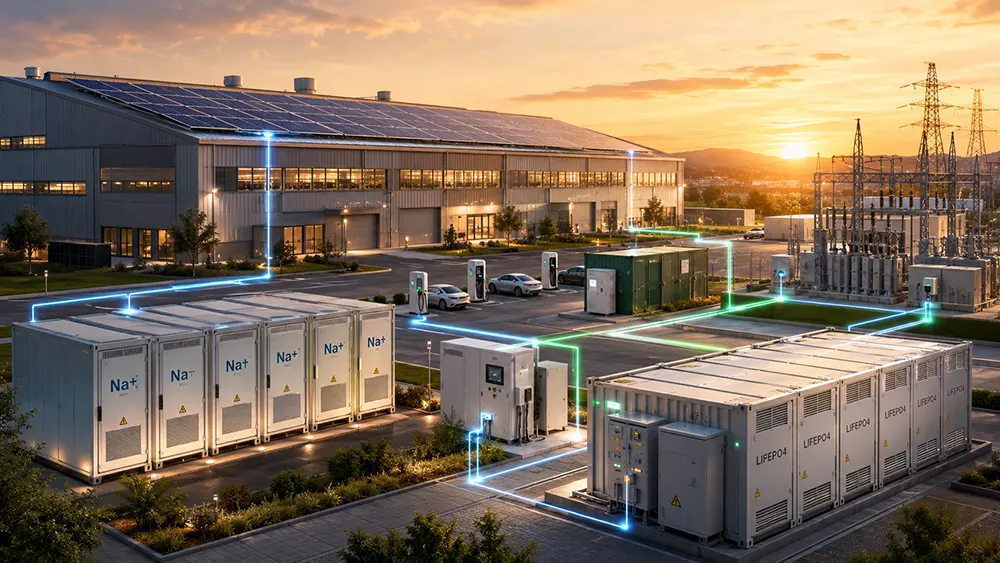
For a project engineer, the decision therefore becomes straightforward.
Use LFP when compact size, maturity, certification history, bankability, and supply availability are the main priorities.
Evaluate sodium-ion when cold-temperature performance, stationary use, and chemistry diversification can create measurable project value.
Then compare the actual systems on usable energy, power, efficiency, temperature derating, footprint, warranty, certification, delivery risk, and lifetime cost.
That is a much better question than simply asking, “Which battery is better?”
If you are planning a C&I or industrial battery project, send us the required power, usable energy, operating temperature, site space, cycle profile, installation country, and certification requirements. We can compare sodium-ion and LFP system options against the same project conditions before selecting the final battery architecture.
Sources and further reading:
- International Energy Agency — Global Energy Review 2026
- International Energy Agency — Global EV Outlook 2026
- U.S. Department of Energy — Battery Storage Technical Specifications
- National Renewable Energy Laboratory — Advanced Technology Baseline
- IEC 62619:2022 Industrial Batteries
- UNECE UN Manual of Tests and Criteria
Contact Bonnen Battery↓ now and let us help you power your adventures with the best C&I and Industrial Energy Storage technology.
© [Bonnen Battery] and [www.bonnenbatteries.com]. Unauthorized use and/or duplication of this material without express and written permission from this site’s author and/or owner is strictly prohibited. Excerpts and links may be used, provided that full and clear credit is given to [Bonnen Battery] and [www.bonnenbatteries.com] with appropriate and specific direction to the original content.