
Custom AMR Battery Engineering
Custom Battery Systems for AMRs and Industrial Robots
Engineer the right lithium battery for your robot’s voltage, runtime, payload and charging strategy. Bonnen develops custom LFP and NMC battery systems from 24V to 700V with smart BMS, CAN communication and rugged enclosure options.

- Voltage24V–700V
- ChemistryLFP / NMC
- CommunicationCAN / RS485
- ChargingPlug-in / Docking / Opportunity
- Thermal OptionsPassive / Heating / Active Cooling
- ProtectionCustom IP-Rated Enclosures
Application Engineering
Battery Solutions for Different Robot Platforms
The robot platform defines the duty cycle, but the battery is engineered around the complete electrical, mechanical, charging and environmental requirement.

Warehouse AMRs & AGVs
For material transport AMRs, tote handlers, latent-lift platforms, tugger AGVs and automated forklifts, the battery must fit limited chassis space while supporting repeatable fleet duty cycles and planned charging windows.
- Compact packaging
- Cycle-life and fleet standardization
- Docking and opportunity charging

Heavy-Duty Logistics Robots
High-payload logistics platforms and high-power autonomous equipment can require a higher-voltage architecture engineered around continuous power, short peak loads, current limits and safe high-voltage switching.
- Contactors, pre-charge and fuse protection
- Continuous and peak power delivery
- Thermal management

Inspection & Patrol Robots
Robots for industrial campuses, oil and gas facilities, security patrol and remote inspection need battery systems evaluated for long standby periods, vibration, outdoor temperatures and enclosure protection.
- Environmental and vibration requirements
- Remote SOC, SOH and fault data
- Long mission and standby planning
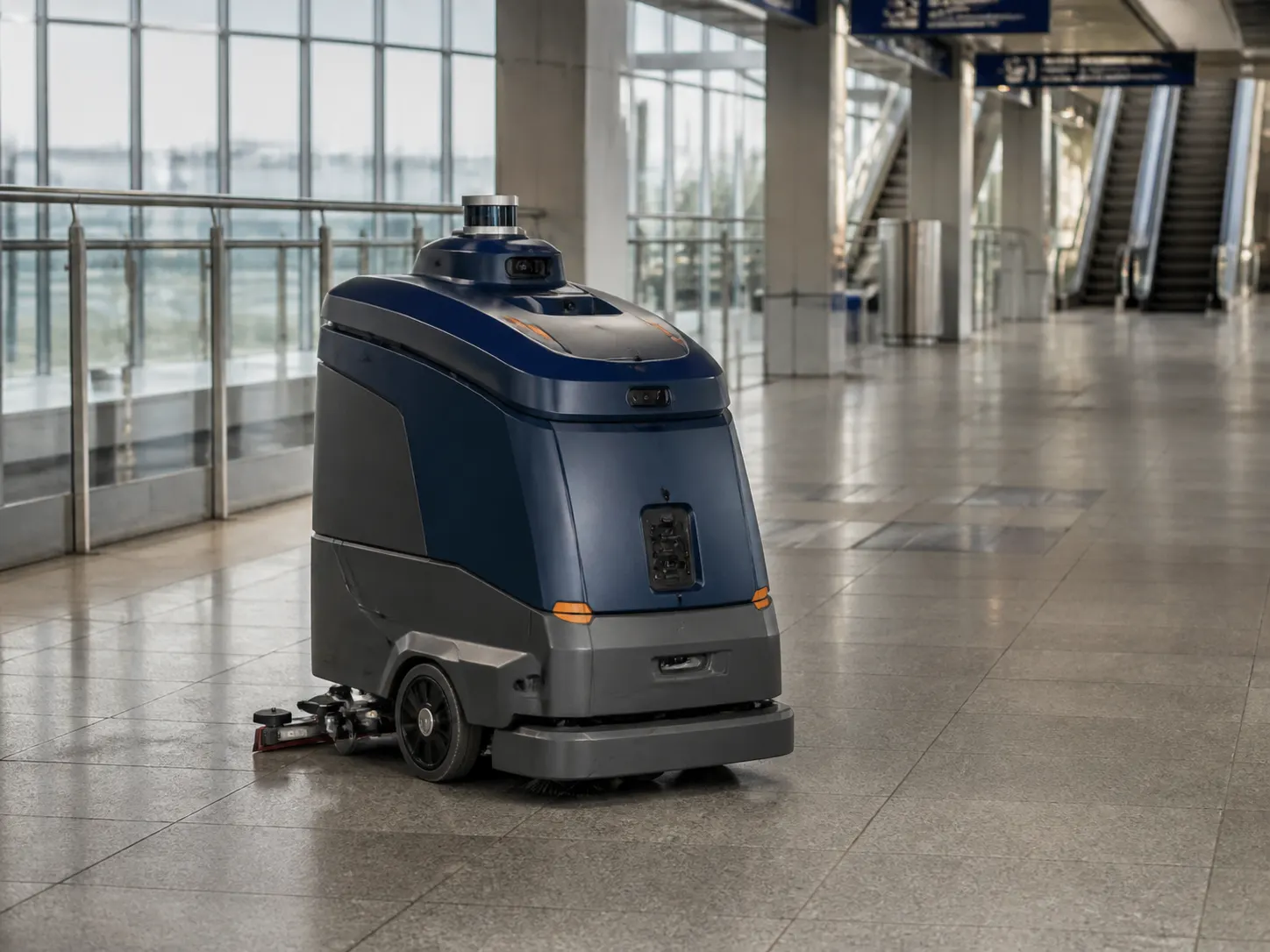
Cleaning, Delivery & Service Robots
Autonomous cleaning, delivery, disinfection and commercial service robots benefit from lightweight packaging, accessible maintenance and safe charging interfaces without sacrificing useful runtime inside a compact machine.
- Lightweight, compact integration
- Safe charging interface
- Serviceable removable options
Voltage Selection
Battery Architectures from 24V to 700V
Choose voltage from the full drive and charging system—not from a broad robot category or a single competitor specification.
Compact Robot Platforms
- Typical applications
- Warehouse AMRs, AGVs, cleaning and delivery robots
- Key design focus
- Compact packaging, cycle-life design, docking and opportunity charging
Outdoor & Medium-Duty Platforms
- Typical applications
- Outdoor inspection robots, patrol platforms and medium-duty UGVs
- Key design focus
- Runtime, environmental protection, communication and thermal control
High-Power Autonomous Equipment
- Typical applications
- Heavy-duty logistics platforms and high-power autonomous equipment
- Key design focus
- HV safety, contactors, pre-charge, insulation monitoring and active cooling options
The final voltage should be selected from the motor, inverter, power demand, cable current, available battery space and charging architecture—not from the robot category alone. Runtime, payload, duty cycle and thermal environment also shape the final specification.

System Integration
More Than a Battery Pack
A robot battery is a coordinated power subsystem. Final specifications are confirmed during engineering review around the electrical architecture, mounting envelope, service strategy and charging interface.
- Cell and module configuration
- Mechanical enclosure and mounting
- Smart BMS and CAN integration
- Contactors, fuse and pre-charge
- Charging and docking interface
- Heating and thermal management
- SOC, SOH and fault reporting
- Serviceability and replacement strategy
Charging Architecture
Design Charging Around Fleet Uptime
Charging rate, docking frequency and thermal load must be designed together with the fleet duty cycle and available charging windows.
Scheduled Full Charging
For fleets with planned breaks or overnight charging windows.
- Duty cycle
- Predictable shifts with sufficient parked time
- Design focus
- Charge rate, connector access, BMS limits and heat rejection
Opportunity Charging
For high-utilization fleets that can recharge while waiting, loading or briefly docking.
- Duty cycle
- Frequent short dwell periods
- Design focus
- Docking tolerance, contact cycle life, charger handshake and thermal accumulation
Manual or Automated Battery Swapping
For platforms that cannot remain parked but can support a controlled replacement process.
- Duty cycle
- Continuous operation with planned service access
- Design focus
- Safe power isolation, contactor control, mechanical interlock, connector cycle life, inrush-current control and service access

Fast-charging capability depends on cell selection, battery capacity, temperature, BMS limits and charger design. Connector geometry, alignment, communication and safety interlocks must be engineered to project requirements.
Plan Your Charging ArchitectureProject Definition
What We Need to Design Your AMR Battery
A complete project brief lets the electrical, mechanical and thermal architecture be evaluated together before final specifications are confirmed.
- Robot type and application
- Nominal voltage and voltage window
- Average, continuous and peak power
- Required operating hours
- Payload and duty cycle
- Battery-space envelope
- Maximum battery weight
- Charging method and available charging time
- Communication protocol
- Operating and charging temperature
- IP, vibration and shock requirements
- Prototype and annual quantity
Illustrative Systems
Typical AMR Battery Reference Architectures
These configurations clarify the type of components that may be considered at different voltage levels. They are not customer case studies or fixed products.
51.2V Warehouse AMR Architecture
- LFP battery modules
- Low-voltage BMS
- Main fuse
- CAN or RS485
- Docking charge interface
- Compact removable enclosure
96V Outdoor Inspection Robot Architecture
- LFP or NMC modules
- Rugged enclosure
- Smart BMS
- Heating option
- CAN communication
- Sealed charging and power connectors
400V Heavy-Duty Logistics Robot Architecture
- High-voltage battery modules and HV BMS
- Main contactors and pre-charge circuit
- HV fuse and service disconnect
- Insulation monitoring
- Active thermal-management option
Illustrative configurations only. Final voltage, capacity, current, enclosure and communication interface are engineered around the robot platform.
Engineering Workflow
From Robot Requirements to Production
Project timing depends on design complexity, component availability, validation scope and certification requirements.
- Requirement ReviewYou provide voltage, power, runtime, envelope, charging and environment inputs. Bonnen defines the engineering basis and open questions.
- Electrical & Mechanical DesignBonnen develops the cell configuration, protection architecture, BMS interface, enclosure and mounting concept for review.
- Prototype DevelopmentApproved drawings and specifications move into a prototype build with traceable interfaces for robot integration.
- Integration & ValidationBattery behavior, communication, charging, thermal response and mechanical interfaces are evaluated against the project validation plan.
- Pilot and Volume ProductionApproved design files, quality controls and production requirements support pilot builds and planned volume manufacturing.
Custom Solution Categories
Relevant Battery Solutions
Select the solution category closest to your platform, then confirm the final voltage, capacity, power, enclosure and communication interface during engineering review.
Compact Robot Batteries
For warehouse AMRs, AGVs, delivery and cleaning platforms where packaging, fleet standardization, service access and docking interfaces drive the design.
Discuss a Compact Robot BatteryOutdoor Robot Batteries
For inspection, patrol and medium-duty UGV platforms that require environmental protection, communication, temperature management and mission-runtime planning.
Discuss an Outdoor Robot BatteryHigh-Voltage Robot Batteries
For heavy-duty autonomous equipment requiring an engineered HV architecture, contactors, pre-charge, insulation monitoring and thermal-management options.
Discuss a High-Voltage Robot BatteryDocking & Opportunity-Charging Systems
Battery and charger interfaces evaluated together around contact geometry, alignment tolerance, BMS handshake, charging rate and fleet dwell time.
Discuss an Automatic Charging SystemEngineering Assurance
Designed for Integration, Validation and Production
Validation scope is defined for the final application and selected architecture. Support can cover prototype-to-production engineering and transport documentation without implying that every custom configuration holds the same certification.
- Electrical protection validation
- BMS communication testing
- Charge and discharge testing
- Thermal testing
- Vibration and mechanical checks
- Enclosure and ingress-protection validation
- UN38.3 and shipping-document support
- Prototype-to-production engineering

Engineering Knowledge
AMR Battery Engineering Resources
Use these Bonnen engineering articles to prepare design questions before discussing your robot platform.
What Is an AMR? Power System Explained
Review how motors, controllers, charging hardware, BMS communication and protection functions work together within an autonomous mobile robot power system.
Explore AMR power-system fundamentalsHow to Choose the Right AMR Battery System
Learn which voltage, runtime, power, enclosure, communication and charging inputs matter when comparing battery architectures for a new AMR platform.
Review the AMR battery selection guideUnderstanding Lithium Battery Pack Enclosure Design
See how structural strength, sealing, materials, mounting and internal component integration shape an enclosure that protects a custom lithium battery system.
Study battery enclosure design principlesHow Custom Lithium Battery Packs Are Engineered
Follow the engineering path from cell and module selection through BMS, protection, thermal design, enclosure integration, prototyping and system validation.
Understand the custom pack engineering processUnderstanding Common BMS Wake-Up Signals
Compare practical wake-up strategies and consider how the battery, robot controller and charger coordinate communication, low-power states and safe activation.
Examine BMS wake-up signal optionsLiquid Cooling for Lithium Battery Systems
Explore cooling-plate layouts, indirect liquid-cooling approaches and the trade-offs between heat removal, complexity, weight, maintenance and leakage risk.
Compare liquid-cooling design approachesBuild the Battery Around Your Robot—not the Other Way Around
Share your robot platform’s voltage, power, runtime, battery-space and charging requirements. Bonnen’s engineering team can evaluate the electrical, mechanical and thermal architecture for your project.