Last Updated on 22/08/2026 by Bonnen Battery
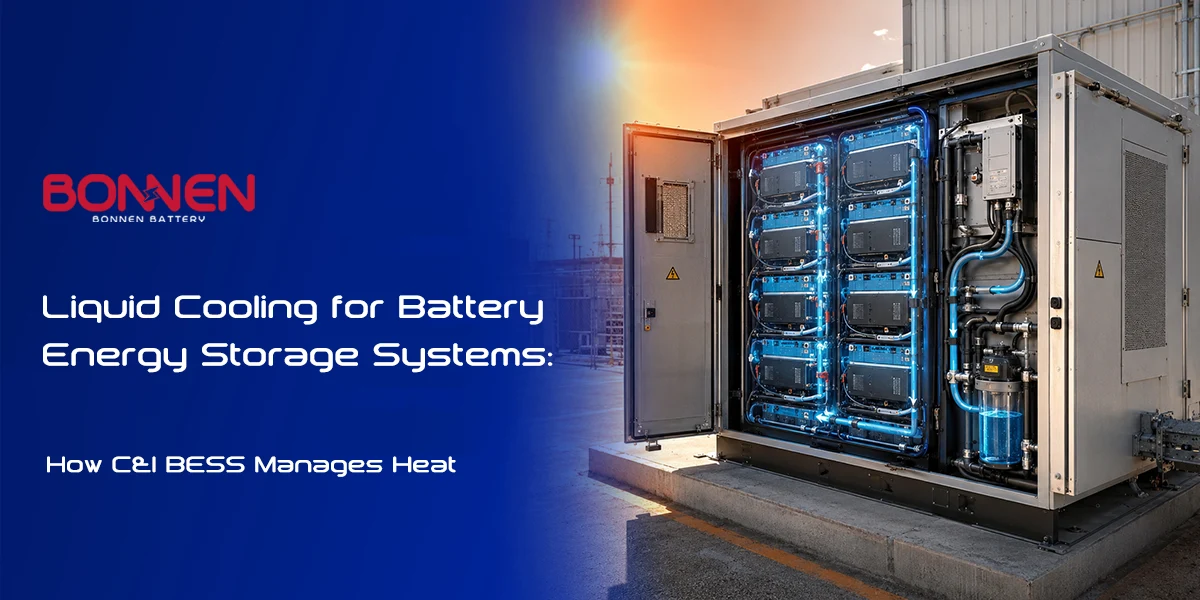
Liquid Cooling for Battery Energy Storage Systems: How C&I BESS Manages Heat
Outdoor commercial and industrial battery energy storage systems (C&I BESS) manage extreme heat by combining enclosure design, battery thermal management, BMS monitoring, controlled airflow or liquid cooling, and system-level protection. For high-energy-density outdoor cabinets operating in hot climates or cycling frequently, liquid cooling is increasingly preferred because it can remove heat close to the battery cells and maintain tighter temperature uniformity than conventional air cooling. However, the goal is not to make the battery as cold as possible. Good thermal management keeps cell temperature within a controlled operating window, minimizes temperature differences between cells, avoids condensation, reduces cooling energy consumption, and prevents local hot spots from becoming a safety problem.
Temperature matters because heat is one of the strongest drivers of lithium-ion battery aging. A 2025 study ⇱ on large-format 180 Ah lithium iron phosphate (LFP) cells for stationary storage found that increasing the test temperature from 35°C to 50°C roughly doubled capacity loss, making temperature the dominant aging factor in the study.
This is why thermal management should not be treated as an accessory attached to a battery cabinet. In an outdoor BESS, thermal management is part of the battery’s lifetime, performance and safety architecture.
1. What Does BESS Thermal Management Mean?
BESS thermal management is the process of controlling battery temperature and temperature uniformity during charging, discharging, standby and changing ambient conditions.
For an outdoor C&I system, the thermal management system may include air conditioning, forced-air cooling, liquid cold plates, pumps, compressors, heat exchangers, temperature and humidity sensors, insulation, control software and communication with the battery management system (BMS).
A Sandia National Laboratories energy-storage guide ⇱ notes that stationary lithium-ion systems are generally designed around approximately 20–25°C and that operation significantly above or below the intended temperature can reduce efficiency and shorten battery life. The same guidance emphasizes that charging and discharging generate heat because the battery is not 100% efficient.
That does not mean every LFP battery must always remain at exactly 20–25°C. Cell manufacturers specify different allowable charge, discharge and storage ranges.
The important distinction is:
| Temperature term | What it actually means |
| Allowable operating temperature | The range in which the cell or system is permitted to operate |
| Recommended operating range | The range preferred for normal long-term operation |
| Thermal-management target | The temperature range the BESS controller tries to maintain during real operation |
| Maximum cell temperature | The hottest monitored cell temperature at a given moment |
| Cell temperature difference, ΔT | The difference between the hottest and coolest cells or measurement points |
–
Allowable temperature and ideal lifetime temperature are not the same thing. A battery may technically operate at a high temperature while still aging faster at that temperature.

2. Why Is Hot Weather So Difficult for Outdoor Battery Storage?
Imagine an outdoor battery cabinet installed beside a factory in summer.
The weather station reports 40°C.
The cabinet is sitting under direct sunlight.
The battery is charging during the midday solar peak.
The power electronics are operating.
The cells themselves are generating heat.
The internal battery temperature is therefore not determined by the weather forecast alone.
A useful way to think about it is:
Battery temperature = ambient heat + solar heat gain + internally generated heat − heat removed by the thermal-management system.
This is why an outdoor BESS can experience demanding thermal conditions even when its specified ambient operating range appears adequate.
High humidity adds another problem. In tropical and subtropical locations such as southern China, Southeast Asia, the Gulf Coast of the United States and other humid regions, cooling hardware must control not only temperature but also moisture and condensation risk.
High-temperature desert installations create a different challenge: intense solar radiation, hot inlet air, large day-night temperature swings and dust.
There is no single “hot climate.” Thermal design should consider temperature, relative humidity, solar exposure, cycling profile and installation conditions together.
3. Where Does the Heat Inside a Battery Energy Storage System Come From?
Some of the heat comes from outside the cabinet, but some comes from the battery itself.
When current flows through a battery, electrical resistance converts part of the electrical energy into heat. A simplified expression is:
Q ∝ I²R
where I is current and R is internal resistance.
This explains an important practical point: heat generation rises rapidly when current increases because resistive heating increases approximately with the square of current.
Real battery heat generation is more complicated than I²R alone because electrochemical reactions and entropy effects also contribute. However, the simple equation helps explain why heavy charging and discharging place greater demand on the cooling system.
Other heat sources include the PCS (power conversion system), busbars, electrical connections, transformers or auxiliary electronics, depending on the system architecture.
The Sandia guidance similarly notes that energy not transferred efficiently through the battery is predominantly converted into heat, and that thermal behavior varies across the state-of-charge range.
This is also why battery temperature cannot be managed only according to outdoor air temperature.
A smart controller should know what the battery is doing.
4. Why Does High Temperature Shorten LFP Battery Life?
LFP chemistry is widely used in stationary storage because of its cycle-life and thermal-safety characteristics, but LFP cells are not immune to heat-induced aging.
High temperature accelerates the chemical side reactions that gradually consume usable lithium and increase battery resistance.
A long-established study of graphite/LFP cells stored at 30°C, 45°C and 60°C found that capacity loss increased strongly with temperature, while state of charge also affected degradation but to a lesser degree.
More recently, research on large-format stationary-storage LFP cells reached a similar conclusion: temperature was the dominant aging driver, and increasing the test condition from 35°C to 50°C doubled capacity loss.
This gives BESS owners an important takeaway:
A battery that avoids thermal shutdown is not necessarily a battery operating at the best temperature for long service life.
Long-term thermal design therefore focuses on controlling both peak temperature and accumulated exposure to elevated temperatures.
5. Maximum Temperature Is Only Half the Problem
Suppose two 372 kWh battery cabinets both report an average battery temperature of 30°C.
Cabinet A has cells between 29°C and 31°C.
Cabinet B has cells between 25°C and 35°C.
Those systems are not thermally equivalent.
Temperature uniformity describes how evenly battery cells are heated and cooled, and it can be just as important as average temperature.
If some cells consistently operate hotter than others, they may age at different rates. That can gradually increase differences in capacity, internal resistance and state-of-charge behavior across the pack.
The BMS then has to manage an increasingly mismatched battery population.
For this reason, serious BESS thermal specifications should ask two questions:
How hot does the hottest cell become?
and
What is the maximum temperature difference between cells?

6. Air Cooling vs. Liquid Cooling for C&I Battery Storage
Air cooling and liquid cooling are both legitimate engineering approaches. Neither cooling method is automatically “compliant” or “non-compliant.”
The correct choice depends on energy density, system power, duty cycle, climate, enclosure geometry, target temperature uniformity, cost and maintenance strategy.
| Design factor | Air / HVAC-based cooling | Cold-plate liquid cooling |
| Heat-transfer medium | Air | Liquid coolant |
| Heat removal near cells | Indirect | Directly through cold plates or thermal interfaces |
| Temperature uniformity | Usually more difficult in dense cabinets | Usually easier to control tightly |
| Equipment complexity | Lower | Higher |
| Pumps and coolant circuit | Not normally required | Required |
| Leak management | Not applicable to coolant loop | Must be designed and monitored |
| Filter maintenance | May be required depending on architecture | Often reduced on battery-side closed loops |
| High-energy-density cabinet | Possible, but increasingly challenging | Well suited |
| Hot-climate high-duty operation | Requires careful HVAC sizing | Strong application for liquid cooling |
| Condensation management | Important | Especially important around cold surfaces and piping |
| Initial system cost | Usually lower | Usually higher |
| Thermal-control flexibility | Moderate | High |
–
7. Why Is Liquid Cooling Becoming More Common in Outdoor C&I BESS?
Liquid cooling places a heat-transfer path closer to the battery cells.
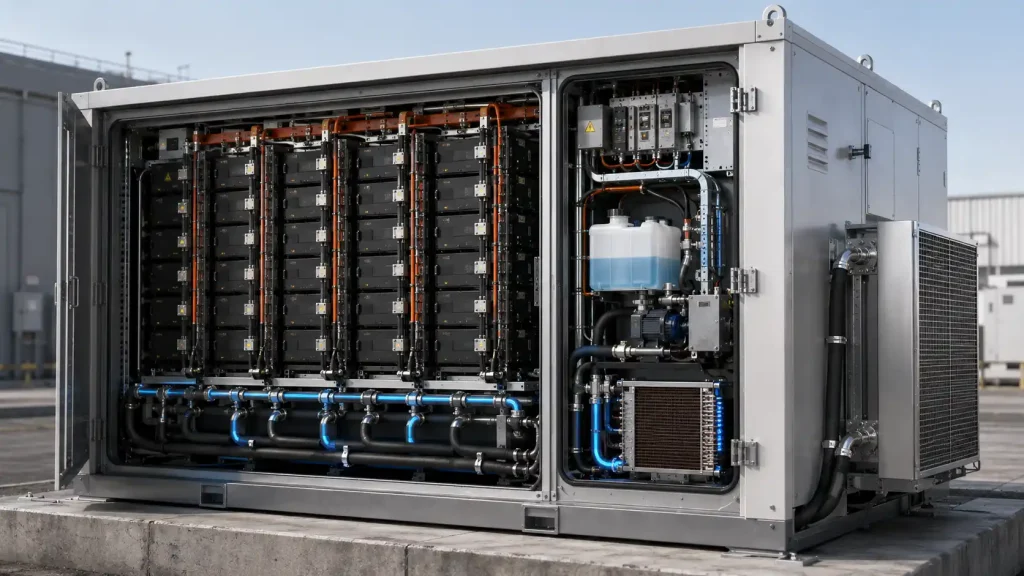
A typical system uses a cold plate next to or underneath the battery module. Heat travels from the cells through the module structure and thermal interface into the cold plate. A circulating coolant carries that heat to a cooling unit, where it is rejected to the outside environment.
The basic heat path is:
Battery cell → thermal interface → cold plate → coolant loop → heat exchanger or chiller → ambient environment.
Unlike immersion cooling, the battery cells in a conventional cold-plate system are not submerged in coolant.
That distinction matters because “liquid cooling” and “immersion cooling” are sometimes incorrectly used as interchangeable terms.
Cold-plate liquid cooling uses a sealed liquid circuit to remove heat indirectly from the cells; immersion cooling places battery components in direct contact with a dielectric cooling fluid.
For today’s outdoor C&I cabinets, cold-plate liquid cooling is a common architecture because it combines strong heat transfer with modular battery-pack construction.

8. How Much Better Can Temperature Uniformity Become?
There is no universal number that applies to every BESS.
Performance depends on cold-plate design, cell arrangement, coolant temperature, coolant flow, battery current, ambient temperature and measurement method.
However, well-designed systems can achieve small temperature differences.
A field study of a containerized battery storage system ⇱ using a two-phase liquid-cooling design reported maximum temperature differences below 2°C at pack level and below 3°C at rack level. In that particular study, temperature difference was reduced by about 60% compared with the traditional air-cooling system used for comparison.
Another full-scale 100 kW/500 kWh energy-storage study reported maximum battery-to-battery temperature differences below 3°C during the tested charging and discharging conditions.
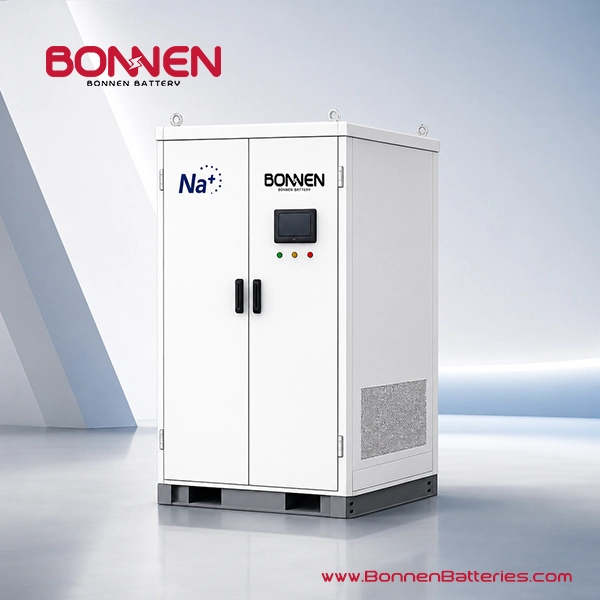
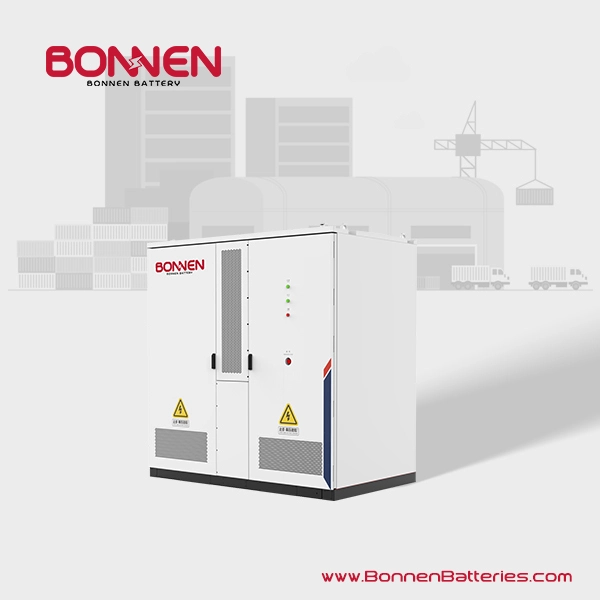
As a practical manufacturer example, Bonnen Battery’s current 372 kWh liquid-cooled C&I storage cabinet publishes a cell temperature difference specification of ≤3°C.
The useful procurement question is not “Is it liquid cooled?” but “What maximum cell temperature and cell-to-cell ΔT can the system maintain under my actual operating conditions?”
9. What Coolant Is Used in a Liquid-Cooled BESS?
Water-glycol mixtures are commonly used in closed-loop thermal-management applications because the formulation can provide heat transfer, freeze protection and corrosion control.
The required formulation depends on factors such as minimum ambient temperature, materials in the liquid loop, corrosion-control requirements, pump characteristics and the cooling-unit specification.
Pure water is generally not treated as a universal BESS coolant solution because a practical long-life cooling loop must also consider freezing, corrosion, biological growth, material compatibility and electrical-system consequences if leakage occurs.
Coolant selection should follow the thermal-management system manufacturer’s validated specification rather than a fixed industry percentage copied from another project.
10. Why Cooling a Battery More Aggressively Is Not Always Better
This is one of the most important ideas in modern BESS thermal management:
The objective is not maximum cooling. The objective is optimum cooling.
Lower coolant temperatures can reduce battery temperature, but they can also increase compressor energy consumption and condensation risk.
The trade-off can be measured.
A 2025 experimental study of C&I energy storage ⇱ under high-temperature and high-humidity conditions tested different liquid-supply temperatures. Under a 30°C/70% RH environment, increasing the supply-liquid range from 20–25°C to 24–28°C reduced cooling-system energy consumption by 22%, while maximum battery-cell temperature increased by approximately 3°C.
That experiment demonstrates a fundamental control problem:
Every additional degree of cooling has a cost, and the most energy-efficient thermal strategy is not necessarily the coldest strategy.
The controller therefore has to balance at least four variables:
| Control objective | What happens if it is poorly managed? |
| Maximum battery temperature | High temperatures accelerate degradation |
| Temperature uniformity | Large ΔT can increase cell-to-cell aging differences |
| Cooling auxiliary energy | Excessive cooling reduces system-level efficiency |
| Condensation margin | Surfaces below dew point can collect moisture |
–
This is where intelligent thermal control becomes useful.

11. How Does Intelligent BESS Thermal Control Actually Work?
“Intelligent cooling” does not automatically mean artificial intelligence.
A practical thermal-management controller can already make sophisticated decisions using sensor data, lookup tables, adaptive control and operating logic.
Depending on system architecture, useful inputs may include battery-cell temperatures, coolant inlet and outlet temperatures, ambient temperature, relative humidity, battery current, SOC, charging or discharging power, flow rate, pressure and cooling-unit status.
The BMS and thermal-management controller can then adjust pump speed, fan speed, compressor capacity or cooling set points according to actual heat generation.
For example, during a low-power standby period, full compressor output may be unnecessary. During sustained high-power charging in hot weather, cooling demand can increase before cells approach a temperature limit.
More advanced systems can also use predicted load or weather conditions.
A good thermal-control claim should explain what is measured, what is controlled and under what conditions the efficiency improvement was obtained.

12. How Does a Liquid-Cooled BESS Prevent Condensation?
High humidity turns cooling into a moisture-management problem.
ASHRAE ⇱ defines dew point as the temperature at which water vapor reaches saturation and begins to condense. If a cold surface falls below the dew-point temperature of the surrounding air, condensation can form.
For example, a coolant pipe inside a hot, humid cabinet may become considerably colder than the surrounding air. If the pipe surface drops below the local dew point, moisture can appear on the pipe even though there is no coolant leak.
That moisture is unwanted near electrical equipment.
Condensation prevention therefore depends on controlling surface temperature relative to dew point, not simply on keeping the cabinet sealed.
A robust hot-and-humid-climate design can combine several measures: coolant temperature limits based on humidity conditions, insulated coolant pipes, sealed fittings, humidity monitoring, drainage considerations, corrosion-resistant materials, leak detection and careful separation between the liquid circuit and high-voltage electrical components.
ASHRAE guidance for cooling systems uses the same basic physics: keeping a cooled surface above the surrounding air’s dew-point temperature prevents condensation.
This makes relative humidity a meaningful BESS design input, not just an environmental specification printed on a datasheet.
13. What Happens When the Outdoor Temperature Reaches 40°C or More?
At high ambient temperature, the cooling system has less temperature difference available for rejecting heat to the environment.
At the same time, the battery may still be charging or discharging at high power.
The cooling system therefore has to remove internally generated heat while operating against a hot external environment.
A 2025 C&I storage experiment comparing environmental conditions found that operation at 40°C increased cooling-system energy consumption compared with the lower-temperature test condition and increased the measured longitudinal battery temperature difference.
This is why the phrase “operating temperature up to 50°C” does not tell an EPC or system owner everything they need to know.
A better thermal specification asks:
At 40°C or 45°C ambient temperature, what continuous charge/discharge power is available, what is the maximum cell temperature, what is the maximum ΔT, and does the PCS or battery derate?
That is much closer to the information needed to design a real project.
14. Should the Cooling System Turn Off at Night?
Not necessarily.
A sealed outdoor cabinet should not be assumed to maintain thermal balance through “natural convection” simply because the sun has gone down.
During low-load periods, a well-designed system may reduce cooling demand by slowing pumps, reducing compressor output or changing temperature set points.
But whether cooling can stop completely depends on battery temperature, ambient temperature, standby heat generation, humidity, SOC, system architecture and the manufacturer’s validated control strategy.
Low load should mean “cool only as much as necessary,” not automatically “turn cooling off.”
15. How Is Thermal Management Connected to Battery Safety?
Thermal management is a preventive safety layer, but it is not the entire BESS safety system.
Battery safety should be designed as a sequence of prevention, detection, electrical isolation, propagation control and emergency response.
Thermal management helps prevent abnormal temperature accumulation.
The BMS monitors electrical and thermal conditions.
Protection logic may limit current or stop charging and discharging when critical conditions are detected.
Physical barriers and module architecture can slow heat transfer between cells or modules.
Fire and gas detection can identify a developing event.
Fire-protection systems are then designed according to system architecture, local code and validated testing.
This distinction matters because a fire-suppression agent should not be presented as the primary thermal-runaway prevention mechanism.
Cooling prevents routine heat accumulation; BMS protection manages abnormal operation; fire and propagation measures address failure scenarios. These functions are related, but they are not interchangeable.
16. Why UL 9540A Matters for BESS Thermal Safety
For North American projects, thermal safety goes beyond keeping the battery cool during normal operation.
UL 9540A ⇱ is the test method for evaluating thermal runaway fire propagation in battery energy storage systems. The testing evaluates behavior at different levels, including cell, module and larger installation configurations depending on the applicable edition and test program.
The sixth edition of UL 9540A was published on March 13, 2026 and incorporates a large-scale fire-test methodology aligned with the 2026 edition of NFPA 855 ⇱.
This is an important distinction:
Normal-operation thermal management asks, “Can the system control battery temperature?” UL 9540A asks, “What happens if thermal runaway occurs, and how does the event propagate?”
Both questions matter, but they test different parts of BESS safety.
17. Which Standards Are Relevant to BESS Thermal Management and Safety?
The exact compliance package depends on country, project size, electrical architecture and local authority requirements.
The following standards are useful reference points rather than a universal compliance checklist:
| Standard | Main relevance |
| IEC 62619:2022 | Safety requirements for industrial secondary lithium cells and batteries, including stationary energy storage applications |
| IEC 60529 | IP Code for protection provided by electrical enclosures |
| UL 9540A | Thermal runaway fire-propagation test method for BESS |
| NFPA 855:2026 | Installation requirements for stationary energy storage systems in the United States |
| GB/T 36276-2023 | Chinese standard for lithium-ion batteries used in electrical energy storage |
| GB/T 46443-2025 | Chinese standard covering refrigerating units/heat pumps for electrochemical energy-storage thermal management |
–
IEC confirms that IEC 62619:2022 ⇱ covers industrial lithium batteries including stationary electrical energy storage systems.
China’s GB/T 36276-2023 ⇱, Lithium ion battery for electrical energy storage, has been in force since July 1, 2024.
GB/T 46443-2025 ⇱, Thermal management for energy storage—Refrigerating units (heat pumps) for electrochemical energy storage, came into force on May 1, 2026.
The existence of these standards does not mean every specific control setting, coolant concentration or shutdown strategy is prescribed by them. Project designers should verify the actual clauses and applicable local regulations rather than using standards as general marketing labels.
18. When Does Liquid Cooling Make the Most Sense?
Liquid cooling becomes particularly attractive as several thermal challenges occur at the same time.
An outdoor cabinet may have high energy density, limited installation footprint, frequent cycling, high ambient temperature, substantial solar exposure and a long service-life target.
When those conditions combine, airflow paths become harder to manage and cell-to-cell thermal uniformity becomes increasingly important.
This does not make air cooling obsolete.
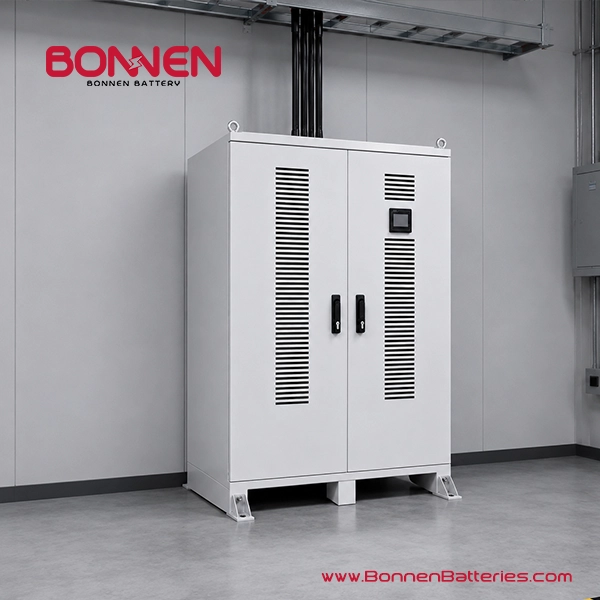
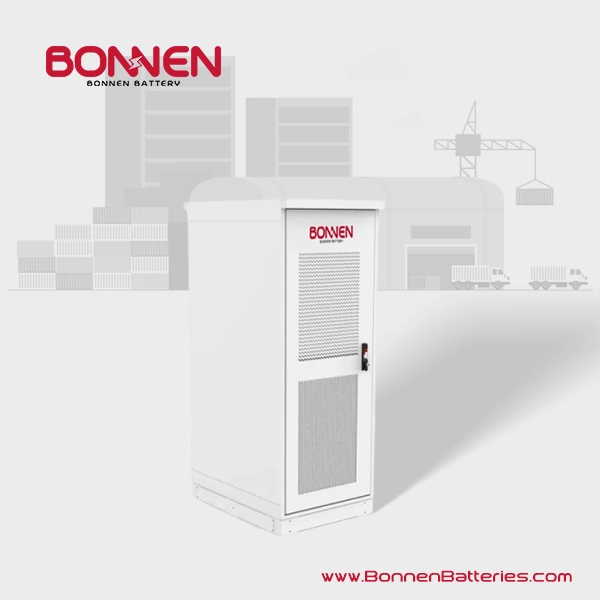
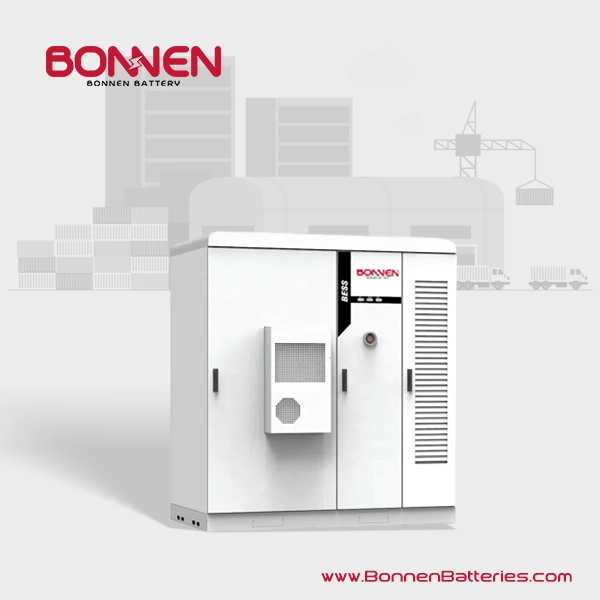
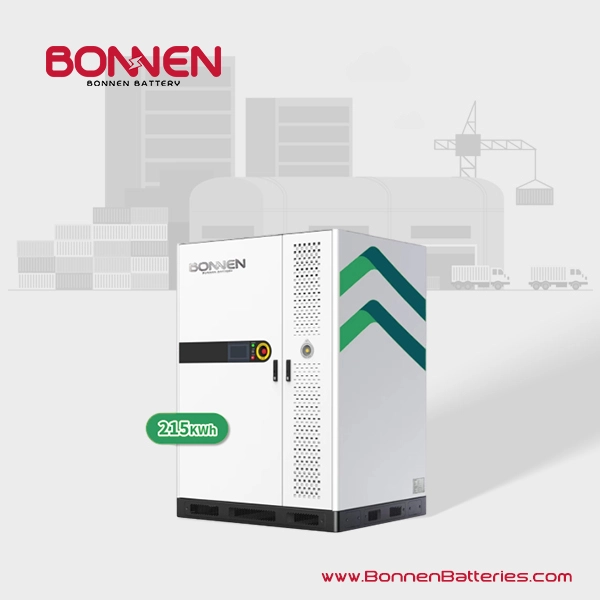
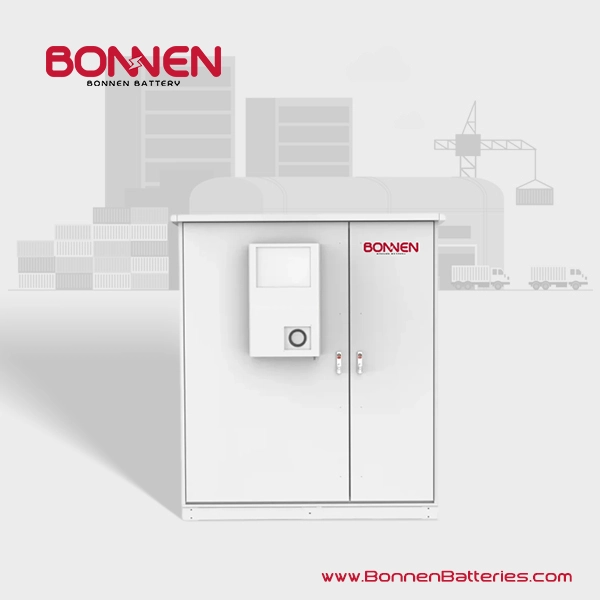
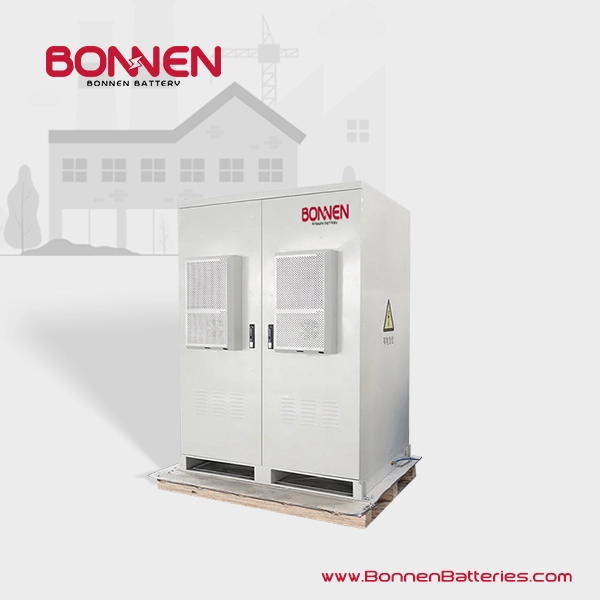
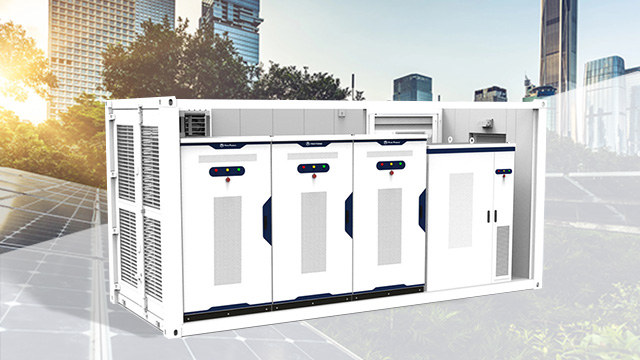
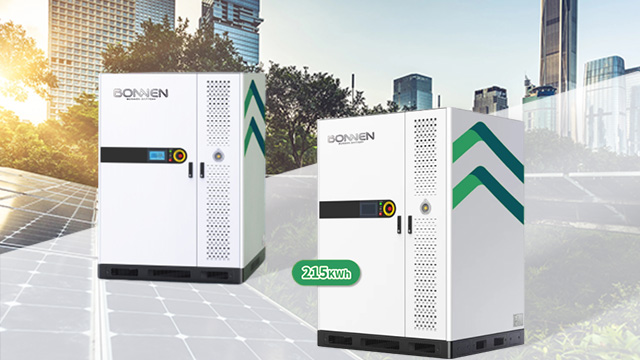
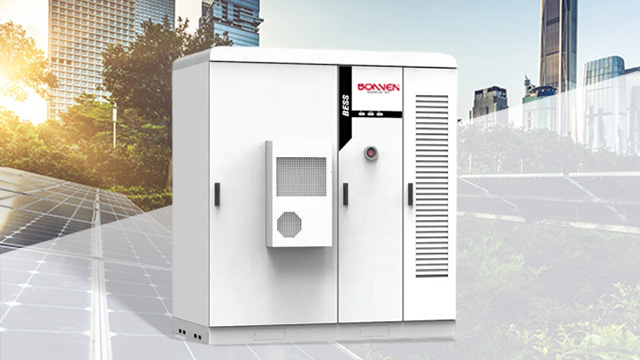
Bonnen Battery, for example, publishes both air-conditioned and liquid-cooled C&I storage architectures. Its 215 kWh cabinet uses industrial air-conditioning thermal management, while its current 372 kWh cabinet uses liquid cooling and specifies a cell temperature difference of ≤3°C.
That illustrates a more useful engineering principle:
Cooling technology should follow the battery architecture and project duty cycle; the project should not be forced to fit a fashionable cooling technology.
19. What Does This Mean for Outdoor C&I BESS Design?
For project owners, the thermal-management decision should start before product selection.
Consider a factory planning a daily peak-shaving system in a climate where summer afternoon temperatures regularly exceed 38°C.
The thermal-design process should examine the expected charge/discharge schedule, power-to-energy ratio, annual throughput, installation position, direct solar exposure, humidity, available clearance around the cabinet and the required battery lifetime.
A system that cycles once per week has a different thermal duty from a system performing daily peak shaving and demand management.
A shaded installation has a different external heat load from a cabinet exposed to afternoon sun.
A tropical installation has different moisture constraints from a desert installation.
The same nominal 372 kWh battery can therefore require different thermal-control settings in Guangzhou, Dubai, Houston or Melbourne.
20. Bonnen Battery Example: 372 kWh Liquid-Cooled C&I Storage
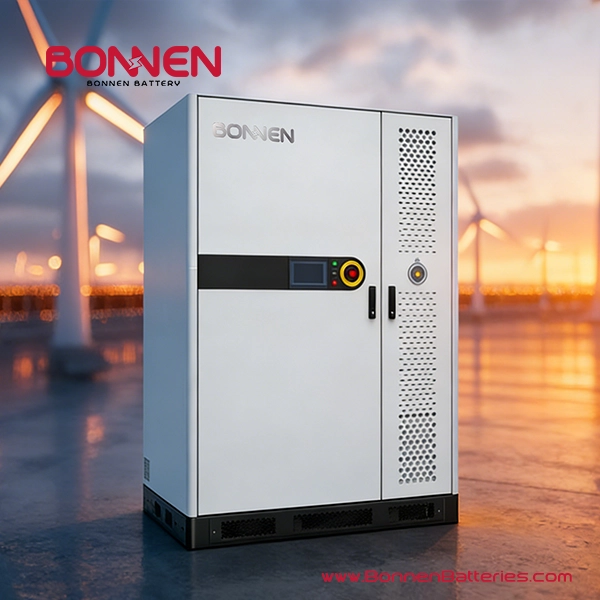
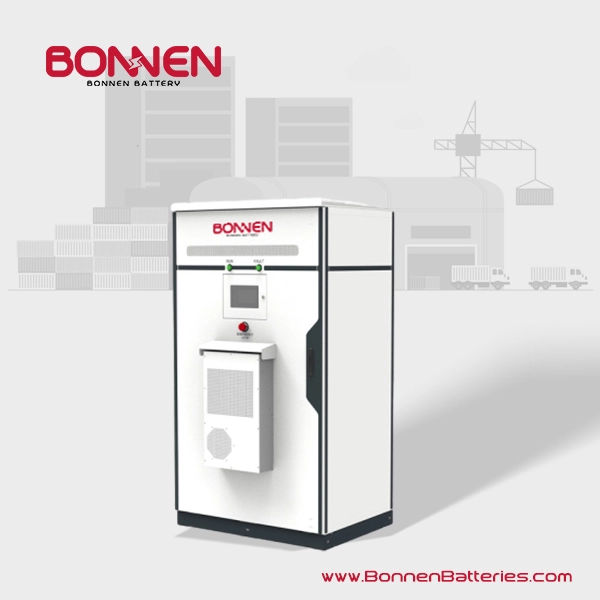
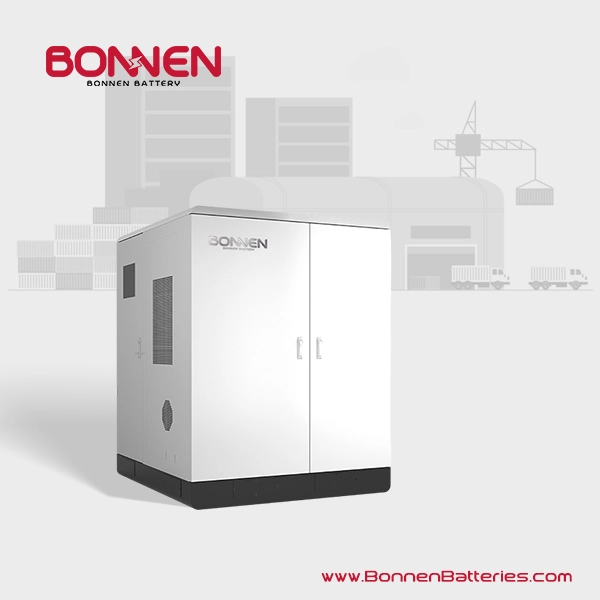
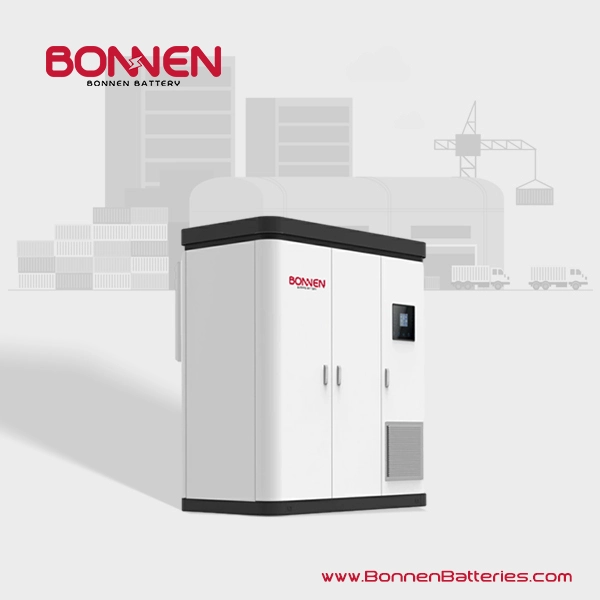
Bonnen Battery’s current 372 kWh commercial and industrial storage cabinet ⇱ uses LFP cells and a liquid thermal-management architecture.

Its published design specifies a cell temperature difference of ≤3°C, with liquid cooling applied to support temperature uniformity in a high-density cabinet.
For project selection, however, the headline capacity is only the beginning.
Bonnen engineers evaluate application information such as required kW and kWh, daily cycling profile, grid-connected or off-grid operation, ambient conditions, installation layout and project-specific electrical requirements before determining an appropriate storage configuration.
For hot-climate installations, thermal design should be reviewed together with enclosure protection, derating strategy, humidity conditions, fire protection and maintenance access.
A well-designed BESS is not simply a battery plus a chiller. It is an integrated electrical, thermal, control and safety system.
21. FAQ
1. How do outdoor battery energy storage systems stay cool in 40°C weather?
Outdoor BESS use a combination of insulation, thermal-management equipment, temperature sensors and active control. Depending on the design, heat may be removed by conditioned air or by a liquid coolant circulating through cold plates. In high-energy-density systems, liquid cooling is increasingly used because heat can be transferred away from battery modules more directly.
The real design question is not simply whether the outside temperature is 40°C. Engineers also need to know battery power, cycling duration, solar exposure, humidity and how much thermal derating is allowed.
2. Is 40°C too hot for an LFP battery energy storage system?
Not necessarily as a short-term ambient condition, because many LFP systems are designed with operating ranges that include temperatures around 40°C.
However, continuous high cell temperature can accelerate aging even when the battery remains within its permitted operating range.
Research on stationary-storage LFP cells has shown significantly greater degradation at elevated temperatures.
So the important value is the actual cell temperature, not outdoor temperature alone.
3. What is the best operating temperature for a lithium battery energy storage system?
There is no universal temperature that applies to every cell.
Sandia guidance notes that stationary lithium-ion systems are commonly designed around 20–25°C, but actual recommended ranges depend on cell chemistry and manufacturer specifications.
For system designers, maintaining a stable moderate temperature and small cell-to-cell ΔT is generally more important than trying to hit one exact number.
4. Does high temperature really shorten LiFePO4 battery life?
Yes. High temperature accelerates chemical side reactions inside lithium-ion cells. A 2025 study of large-format stationary LFP cells reported that increasing temperature from 35°C to 50°C doubled capacity loss under the study conditions. That does not provide a universal “life reduction percentage,” but it clearly shows why thermal exposure matters.
5. Is liquid cooling better than air cooling for commercial battery storage?
For high-energy-density cabinets, hot climates and frequent cycling, liquid cooling generally provides greater heat-removal capability and tighter control over temperature uniformity. Air cooling can still be appropriate for systems with lower thermal loads or different cost and maintenance priorities. Liquid cooling is an engineering option, not a universal compliance requirement.
6. How does a liquid-cooled BESS work?
A cold plate absorbs heat from the battery module. Coolant flows through internal channels in the plate, transports the heat to a cooling unit and then returns to the battery. The coolant does not normally contact the battery cells directly. That is why conventional cold-plate liquid cooling is different from immersion cooling.
7. What is a good cell temperature difference for a liquid-cooled BESS?
There is no single mandatory value, but smaller temperature differences generally indicate better thermal uniformity. Field research has demonstrated pack-level ΔT below 2°C in a specially designed containerized system, while Bonnen’s current 372 kWh liquid-cooled C&I cabinet publishes a specification of ≤3°C. Always confirm whether the supplier’s number refers to cell, module, pack, rack or cabinet level and under what test condition it was measured.
8. Why is cell temperature uniformity important in a battery energy storage system?
Because cells that operate at different temperatures can age at different rates. Over thousands of cycles, persistent temperature differences can contribute to differences in capacity and resistance across the battery. Keeping cells thermally uniform helps the BMS manage a more consistent battery population over time.
9. Can liquid cooling extend the life of an LFP battery?
It can contribute to longer battery life when it reduces sustained high-temperature exposure and improves temperature uniformity. However, no responsible supplier should promise a fixed lifetime increase based only on the words “liquid cooling.” Battery life also depends on cell design, SOC window, depth of discharge, C-rate, calendar time and operating strategy.
10. Does a liquid-cooled BESS consume less electricity than an air-cooled system?
Not automatically. Cooling energy depends on ambient temperature, load, cooling architecture, compressor efficiency and control settings. One field study reported strong temperature-uniformity improvements compared with air cooling, while another high-temperature/high-humidity C&I study showed that simply changing liquid-supply temperature could reduce cooling energy by 22%. The better question is therefore: What is the auxiliary cooling consumption under my project’s expected climate and load profile?
11. What coolant is normally used in a liquid-cooled battery energy storage system?
Water-glycol-based coolants are commonly used in closed-loop thermal systems, but the correct concentration and additive package depend on the design. Coolant selection must consider freeze protection, corrosion, material compatibility, heat-transfer performance and maintenance requirements. A fixed glycol percentage should not be treated as universal.
12. Can a liquid-cooled battery cabinet develop condensation?
Yes, if a pipe, cold plate or other surface becomes colder than the dew point of the surrounding air. ASHRAE explains that condensation begins when a surface temperature drops below the local dew point. That is why hot-and-humid installations require coordinated control of coolant temperature, humidity, insulation and sealing.
13. How do you prevent condensation inside a liquid-cooled BESS?
The basic principle is simple: keep exposed cold surfaces above the surrounding dew point or isolate them from humid air. In practice, systems may use pipe insulation, sealed coolant loops, humidity sensing, controlled coolant temperatures, sealed fittings and corrosion-resistant materials. Condensation prevention is a thermal-control problem and a mechanical-design problem at the same time.
14. Should I choose liquid cooling for a battery storage project in a hot climate?
Liquid cooling is worth serious consideration when the project combines high ambient temperature with high energy density, frequent cycling, high power, limited footprint or tight lifetime requirements. However, climate alone is not enough to make the choice. An engineer should compare the thermal load, expected ΔT, derating behavior, auxiliary consumption, maintenance requirements and total project cost.
15. Does a battery energy storage system lose power when the weather gets too hot?
It can. Many BESS designs reduce charge or discharge power when cell, PCS or internal system temperatures approach specified limits. This is called thermal derating. Buyers should therefore ask for the power available at high ambient temperature rather than checking only the maximum operating-temperature number.
16. What happens if the liquid-cooling pump in a BESS fails?
A properly designed system should detect abnormal flow, pressure, temperature or cooling-system status and respond according to its protection logic. Depending on severity, the system may raise an alarm, reduce power or stop charging and discharging. The exact sequence should be documented by the manufacturer rather than assumed.
17. Does a BMS control the liquid cooling system?
The BMS usually provides important battery information used by the thermal-control system, including cell temperature, pack temperature, SOC, current and fault status. Depending on architecture, a separate thermal controller, EMS or system controller may issue commands to pumps, compressors and fans. The important requirement is coordinated communication between battery monitoring and thermal control.
18. Does AI make BESS liquid cooling more efficient?
Potentially, but the word “AI” alone tells you almost nothing about thermal performance. Predictive algorithms can use load forecasts, weather, SOC and temperature trends to adjust cooling earlier or more efficiently. But a valid efficiency claim should include measured baseline conditions and test results. Smart cooling is valuable because it matches cooling power to thermal demand; it is not valuable merely because the software is called AI.
19. What is the difference between liquid cooling and immersion cooling for batteries?
In cold-plate liquid cooling, coolant remains inside pipes and cooling plates while heat passes indirectly from the battery into the coolant. In immersion cooling, cells or modules are placed in direct contact with a dielectric liquid. The two systems use different fluids, sealing methods, mechanical structures and maintenance approaches.
20. Is liquid cooling required for an IP65 battery cabinet?
No. IP rating and cooling method describe different characteristics. IEC 60529 ⇱ defines IP ratings according to protection provided by the enclosure. A cabinet’s IP rating depends on enclosure construction and testing, not simply on whether the battery uses air or liquid cooling.
21. How much temperature difference is acceptable between battery cells in a BESS?
The acceptable value depends on cell type, system specification and operating condition. For high-performance liquid-cooled systems, designers often aim for only a few degrees Celsius of cell-to-cell difference. The most useful approach is to ask the supplier for a validated maximum ΔT under rated charge/discharge power and high ambient temperature.
22. Final Takeaway
The best thermal-management system is not the one that makes a BESS coldest; it is the one that keeps the battery within a controlled temperature window with small cell-to-cell differences, low auxiliary energy consumption and adequate condensation margin throughout the project’s real operating conditions.
For smaller or lower-thermal-load systems, air-based thermal management can remain practical.
For dense outdoor C&I storage operating in hot climates, cycling frequently or requiring tight temperature uniformity, cold-plate liquid cooling offers clear engineering advantages.
But liquid cooling alone does not create a safe, long-life BESS.
Successful systems integrate thermal management with cell selection, BMS protection, electrical design, enclosure protection, humidity control, fault detection and fire-propagation strategy.
For project developers and EPCs, the most important question is therefore not:
“Does this battery have liquid cooling?”
It is:
“Can this BESS maintain the required cell temperature, temperature uniformity and available power throughout my actual climate and duty cycle?”
That is the question that turns thermal management from a product feature into an engineering decision.
Technical References and Further Reading
* Large-format stationary LFP aging: Degradation modes of large-format stationary-storage LFP-based lithium-ion cells during calendaric and cyclic aging, Journal of Energy Storage, 2025. The study identifies high temperature as the dominant aging driver and reports doubled capacity loss from 35°C to 50°C under its test conditions.
* Stationary storage thermal-management guidance: Sandia National Laboratories guidance on energy-storage safety and thermal management discusses heat generation and commonly designed operating temperatures for stationary lithium-ion systems.
* Containerized liquid-cooling field study: A field study reports pack-level maximum temperature difference below 2°C and rack-level difference below 3°C in the tested two-phase liquid-cooling system.
* High-temperature and high-humidity C&I BESS experiment: The study evaluates cooling energy, battery temperature and supply-liquid-temperature optimization under controlled hot and humid conditions.
* Dew point and condensation: ASHRAE technical guidance explains that condensation occurs when a surface falls below the dew-point temperature of surrounding air.
* Industrial lithium battery safety: IEC 62619:2022 covers safety requirements for secondary lithium cells and batteries used in industrial applications, including stationary energy storage.
* Ingress protection: IEC 60529 defines degrees of protection provided by electrical enclosures under the IP Code.
* BESS thermal runaway testing: UL 9540A evaluates thermal runaway and fire-propagation behavior in battery energy storage systems.
* Stationary ESS installation: NFPA 855:2026 addresses installation of stationary energy storage systems.
* China energy-storage battery standard: GB/T 36276-2023 covers lithium-ion batteries for electrical energy storage.
* China energy-storage thermal-management standard: GB/T 46443-2025 covers refrigerating units and heat pumps for electrochemical energy-storage thermal management.
* Bonnen Battery C&I liquid-cooling example: The current 372 kWh C&I cabinet publishes liquid cooling and a cell-temperature-difference specification of ≤3°C.
Contact Bonnen Battery↓ now and let us help you power your adventures with the best C&I and Industrial Energy Storage technology.
© [Bonnen Battery] and [www.bonnenbatteries.com]. Unauthorized use and/or duplication of this material without express and written permission from this site’s author and/or owner is strictly prohibited. Excerpts and links may be used, provided that full and clear credit is given to [Bonnen Battery] and [www.bonnenbatteries.com] with appropriate and specific direction to the original content.