Last Updated on 10/10/2026 by Bonnen Battery
How to Evaluate a Custom Lithium Battery Pack Manufacturer: An OEM Buyer’s Guide
The best way to evaluate a custom lithium battery pack manufacturer is to look beyond price, factory size, and certificates. For an OEM project, a reliable manufacturer must understand your equipment, design a battery system around its real operating requirements, verify the design through testing, and maintain consistent quality during production. Engineering capability, manufacturing control, system integration, testing evidence, and long-term support should carry more weight than marketing claims.
A battery pack that looks perfect on a quotation can become a serious problem if it cannot fit your equipment, communicate with your controller, handle peak current, or pass the required tests.
And discovering these problems after ordering 100 batteries is not anyone’s idea of a successful project.
This guide explains how OEM buyers, procurement managers, and engineers can evaluate a custom lithium battery pack manufacturer before placing an order. It includes practical questions, documents to request, warning signs to watch for, and an interactive OEM Battery Manufacturer Evaluation Scorecard to compare potential suppliers.
Jump to the OEM Battery Manufacturer Scorecard →
The goal is simple: find a manufacturer that can deliver a battery system that works in your equipment, not just one that looks good on paper.
1. Are You Working with a Real Battery Pack Manufacturer?
Before evaluating a supplier, understand what the company actually manufactures.
The term lithium battery manufacturer can describe several different businesses. Some manufacture individual lithium cells. Others assemble cells into complete battery packs. Some design and integrate battery systems, while others mainly distribute finished products.
These businesses play different roles in the battery supply chain.
| Supplier Type | Main Activity | What OEM Buyers Should Know |
| Battery cell manufacturer | Manufactures individual lithium cells | May not develop complete application-specific battery systems |
| Standard battery supplier | Offers existing battery models | Customization may be limited |
| Battery trading company | Sources products from other manufacturers | Engineering and quality responsibility must be clarified |
| Custom battery pack manufacturer | Designs and assembles battery packs | May support custom electrical and mechanical requirements |
| Battery system manufacturer | Integrates battery packs, BMS, protection, thermal management, and interfaces | Often better suited to complex equipment integration |
–
For most industrial OEM projects, a custom battery pack and system manufacturer is a more relevant partner than a company that only sells standard batteries.
This does not mean every component must be manufactured in-house.
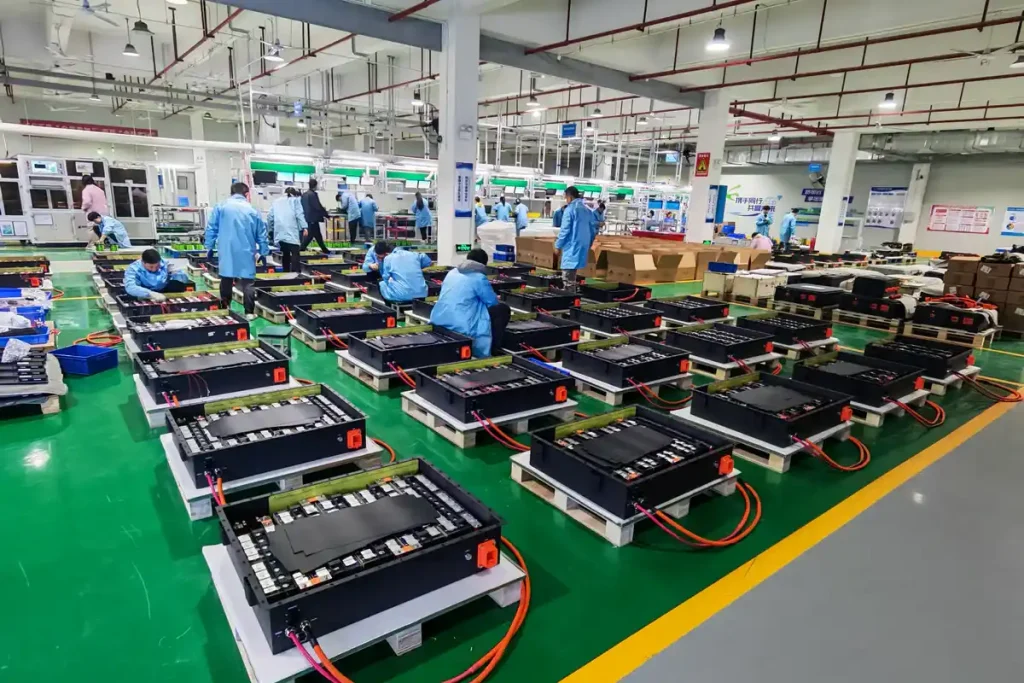
A capable battery pack manufacturer may purchase cells from established cell producers and use specialized third-party BMS components. What matters is whether the manufacturer controls the final system design, component selection, integration, testing, and production quality.
How to verify manufacturing capability
Ask the supplier:
- Where are your battery packs assembled and tested?
- Which engineering activities do you perform internally?
- Who designs the electrical architecture and enclosure?
- Who approves BMS settings and component changes?
- Can you arrange a live factory tour?
- Who takes responsibility when a design or production problem occurs?
Request real production photos, relevant process records, and examples of custom battery projects.
A factory tour is useful, but the important question is not how impressive the building looks. It is whether the company can explain and demonstrate how it manufactures and controls the battery you intend to purchase.
What to look for: Clear engineering responsibility, accessible manufacturing processes, documented quality controls, and technical staff who can answer project-specific questions.
2. Does the Manufacturer Understand Your Application Before Recommending a Battery?
One of the easiest ways to evaluate a battery manufacturer is to pay attention to the questions it asks.
Suppose you contact a supplier with this request:
“We need a 96V 200Ah lithium battery.”
A supplier might immediately send you a quotation.
A stronger engineering-oriented supplier will usually ask additional questions before confirming the design.
What equipment will use the battery? How much current does the motor draw? What is the maximum available installation space? How long must the equipment operate? Will the battery communicate with a controller?
These questions matter because two machines using the same nominal battery voltage and capacity may require very different battery designs.
Consider an electric boat and an industrial cable-pulling machine.
Both might use a battery system in the 96V class, but their operating conditions are different.
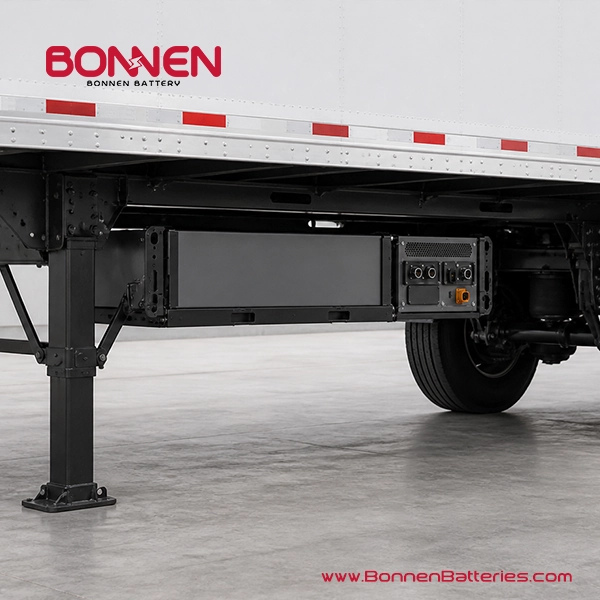
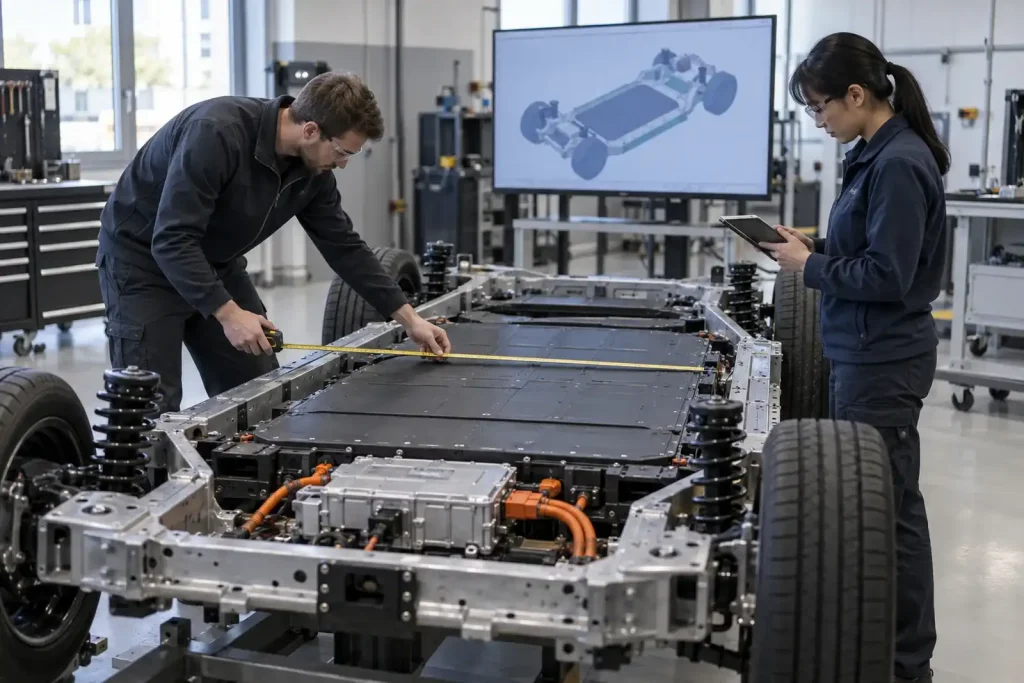
An electric boat may need sustained propulsion power, corrosion protection, and compatibility with marine control systems. A cable-pulling machine may require short periods of high current, a very low-profile enclosure, and reliable operation at outdoor worksites.
The battery architecture should reflect these differences.
What information should a manufacturer request?
| Application Requirement | Why It Matters |
| Equipment type | Defines operating conditions and integration requirements |
| Nominal and operating voltage range | Determines electrical compatibility |
| Continuous power or current | Defines sustained discharge requirements |
| Peak current and duration | Determines transient power capability |
| Required runtime | Helps calculate battery energy |
| Installation dimensions | Determines enclosure feasibility |
| Weight limit | Influences cell chemistry and mechanical design |
| Charging method | Affects charging control and protection |
| Operating temperature | Influences cell selection and thermal management |
| Communication requirements | Defines BMS and controller integration |
| Target market | Influences compliance and documentation |
| Prototype and annual quantity | Affects development and production planning |
–
A manufacturer does not need every answer before starting a conversation.
However, it should identify which information is missing and explain how that information affects the battery design.
For additional guidance, see our article on how to specify a custom lithium battery pack for an OEM project ⇱.
What to look for: A supplier that reviews the equipment requirements before confirming battery specifications, rather than treating voltage and capacity as the complete design.
3. How Strong Is the Manufacturer’s Custom Battery Engineering Capability?
Custom battery manufacturing is not simply putting lithium cells inside a metal box.
A complete battery system combines electrical, mechanical, thermal, and control engineering.
Changing one part of the design may affect several others.
For example, increasing continuous discharge current may require larger busbars, different contactors, larger cables, more suitable cells, or improved thermal management.
Reducing enclosure height may change cell arrangement, wiring routes, service access, and mounting structures.
A capable manufacturer should recognize these relationships before the battery reaches production.
Evaluate five engineering capabilities
Electrical architecture
Can the manufacturer determine the appropriate series-parallel cell configuration, operating voltage window, current path, and protection strategy?
For high-power systems, ask how it selects fuses, contactors, current sensors, high-voltage interlocks where applicable, and pre-charge components.
Battery management system
The BMS should be evaluated as part of the electrical system.
Ask about overvoltage, undervoltage, overcurrent, temperature monitoring, cell balancing, fault handling, and the behavior of contactors or other disconnect devices.
The important question is not whether the supplier uses an expensive BMS.
It is whether the BMS and the complete electrical protection system work correctly for your application.
Mechanical design
Can the manufacturer develop an enclosure that fits the actual equipment?
Important considerations include overall dimensions, mounting points, vibration, mechanical loads, service clearance, connector positions, sealing, and enclosure materials.
Request preliminary mechanical drawings before approving a prototype.
Thermal engineering
Battery performance and aging depend partly on operating temperature.
Depending on the application, a battery may require passive cooling, active cooling, heating, temperature-based current limits, or other thermal protection measures.
Ask the supplier to explain its thermal strategy rather than assuming a metal enclosure will solve every temperature problem.
System-level integration
Can the supplier design the battery around the motor controller, inverter, charger, vehicle control unit, or other connected equipment?
This is especially important for custom electric vehicles, marine propulsion, heavy machinery, and automated industrial equipment.
Documents worth requesting
Ask for the relevant technical documents at the appropriate development stage.
| Document | What It Helps Verify |
| Preliminary battery specification | Electrical and operating requirements |
| Mechanical drawing | Dimensions, mounting, and connector locations |
| Electrical architecture diagram | Major power and protection components |
| BMS specification | Protection limits and control functions |
| Interface document | Communication and signal compatibility |
| Thermal design explanation | Temperature management approach |
| Verification plan | How engineering requirements will be tested |
–
Some detailed design documents may be confidential. A manufacturer should still be able to provide enough information, under a suitable confidentiality agreement if necessary, to support a serious technical review.
What to look for: A supplier that can explain design decisions, identify engineering trade-offs, and provide relevant technical evidence.
4. Can the Battery Communicate with Your Equipment?
Communication problems are a common risk in custom battery integration.
A manufacturer may advertise CAN bus communication, but that does not automatically mean the battery will work with your equipment.
CAN is a communication interface, not a guarantee of protocol compatibility.
Two devices may both use CAN while sending different messages, using different data definitions, or expecting different control sequences.
A marine propulsion controller, for example, may require specific information about battery state of charge, voltage, current limits, temperature, and fault status.
If the BMS does not provide the expected information in the required format, the system may not operate as intended.
The same issue can occur with industrial controllers, vehicle control units, chargers, and monitoring displays.
Questions to ask about battery communication
- Which physical communication interfaces are supported?
- Which communication protocols have already been implemented?
- Can the manufacturer provide the relevant CAN message definitions?
- Are voltage, current, SOC, temperature, and alarm data available?
- Can the BMS communicate charging and discharging limits?
- Are custom communication messages possible?
- How will compatibility be tested before delivery?
For more complex systems, communication also involves fault behavior.
What happens if communication is lost? Does the battery stop discharging? Does the charger reduce current? Will the controller receive a warning before the battery disconnects?
These questions should be answered during integration design.
Example: Marine battery communication
An electric boat may use a propulsion system, battery bank, charger, and multifunction display from different manufacturers.
Even when individual components support CAN, they may not automatically exchange the information required for reliable operation.
Some systems may also require NMEA 2000 integration.
In those cases, the supplier must verify the exact communication protocol, required messages, network configuration, and compatibility with the intended equipment.
OEM buyers should therefore request evidence of compatibility with their actual equipment, not just a statement that the BMS supports CAN.
Explore custom marine lithium battery systems to understand the range of electrical and integration requirements involved in marine battery applications.
What to look for: Interface documents, communication test results, clear fault-handling logic, and a practical system integration plan.
5. How Does the Manufacturer Select and Control Battery Cells?
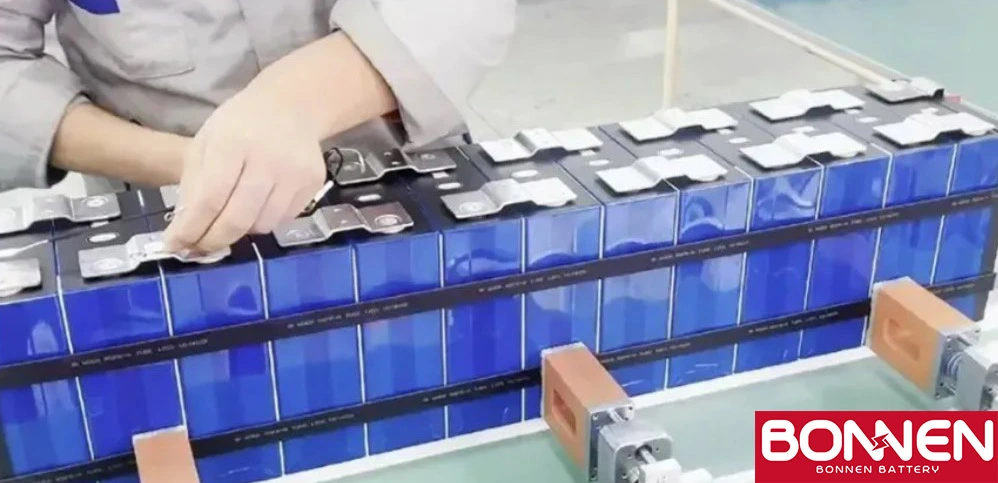
Battery cells have a major influence on pack performance, cost, energy density, weight, and expected service life.
However, choosing a well-known cell brand is only part of the evaluation.
A good manufacturer should explain why a particular cell model is suitable for the application.
Evaluate cell chemistry and suitability
Different battery chemistries offer different performance characteristics.
| Cell Chemistry | Typical Advantages | Important Considerations |
| LFP (LiFePO4) | Long cycle-life potential, thermal stability, practical cost | Lower energy density than many NMC designs |
| NMC | Higher energy density, useful for weight- or space-sensitive designs | Requires careful thermal and safety engineering |
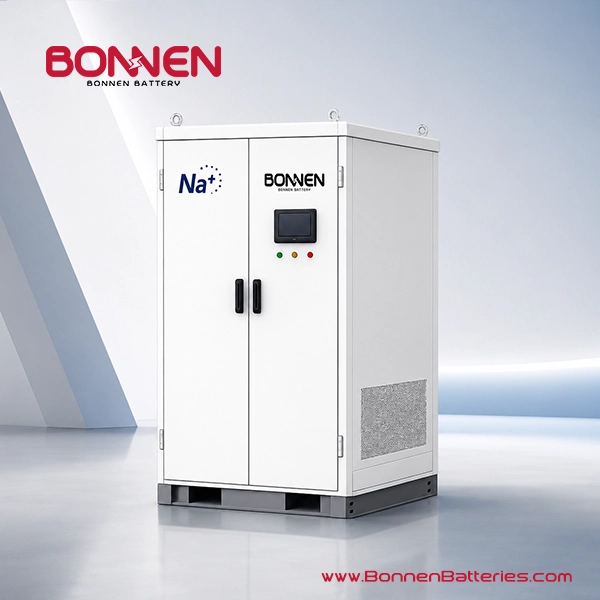
| Sodium-ion | Alternative material system with application-dependent cost and temperature characteristics | Performance, supplier maturity, availability, and applicable testing must be verified |
–
The correct chemistry depends on the specific cell model and operating conditions.
For example, an OEM developing a compact mobile machine may prioritize energy density and weight. Another project may prioritize service life, safety margins, and cost.
A capable supplier should compare these requirements before recommending a cell.
How are cells inspected and matched?
Ask whether the manufacturer has procedures for:
- Cell supplier qualification.
- Incoming cell inspection.
- Capacity and internal resistance verification.
- Voltage and state-of-charge checks.
- Cell grouping and matching.
- Batch identification and traceability.
- Handling of nonconforming cells.
Cell matching is especially important when multiple cells are connected in series and parallel.
Large differences in cell characteristics can complicate balancing and reduce the usable performance of the battery pack.
Can the supplier identify the cells inside your battery?
Request the cell manufacturer’s name, cell model, chemistry, and relevant technical specifications.
It is also useful to understand how the supplier manages cell substitutions.
If a cell becomes unavailable, will the manufacturer change the cell model without informing you?
For an OEM product, material substitutions can affect performance, dimensions, testing, certification status, and production consistency.
What to look for: Defined cell selection criteria, incoming inspection records, traceability, and controlled component substitutions.
6. What Manufacturing and Quality Control Processes Are in Place?

A successful prototype is only the beginning.
An OEM manufacturer must also be able to reproduce the approved battery design consistently.
This requires more than experienced assembly workers. It requires documented processes, appropriate equipment, inspections, and control of critical production steps.
What should you check during a factory evaluation?
Incoming material inspection
How are cells, busbars, cables, connectors, BMS components, contactors, and enclosures checked before assembly?
Assembly control
Does the manufacturer define the correct tools, fastening methods, torque requirements, insulation procedures, and other critical assembly conditions?
Process inspection
Are important assembly operations inspected before the pack is fully enclosed?
Electrical testing
Are voltage, insulation, protection functions, communication, and other relevant electrical characteristics verified?
Final inspection
Is the completed battery checked against the approved drawing and product specification?
Production traceability
Can the manufacturer connect a finished battery serial number to its major components, production records, and test results?
These processes should be appropriate for the battery design and manufacturing volume.
A small custom production line does not need to look like a vehicle manufacturer’s fully automated battery factory.
However, it still needs to control the processes that affect product safety and performance.
What evidence should you request?
| Manufacturing Area | Useful Evidence |
| Incoming inspection | Material inspection procedures or representative records |
| Assembly | Work instructions and process checkpoints |
| Quality control | Inspection criteria and nonconformance handling |
| Electrical testing | End-of-line test plan and sample report |
| Traceability | Serial-number and batch tracking example |
| Change control | Component and manufacturing revision procedure |
–
The supplier’s ability to explain these processes is often as important as the factory photos themselves.
For a closer look at Bonnen Battery’s manufacturing activities, visit our Factory Tour ⇱.
What to look for: Repeatable manufacturing processes, documented inspection criteria, controlled materials, and traceable production records.
7. How Does the Manufacturer Validate a Custom Battery Before Mass Production?
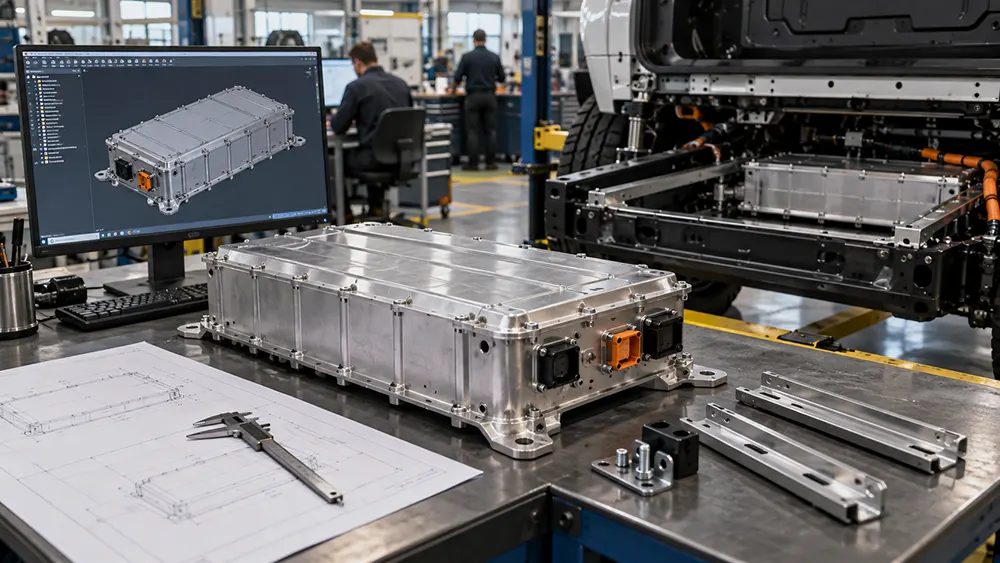
This is one of the most important parts of evaluating a custom battery manufacturer.
A battery that powers on successfully has not necessarily been fully validated.
Likewise, a battery that passes a short discharge test may still have problems during long operation, high-current peaks, charging, vibration, or extreme temperatures.
A reliable manufacturer should distinguish between three activities.
Design verification
Does the proposed design meet its electrical, mechanical, thermal, and safety requirements?
This may include checking voltage limits, current capability, protection behavior, enclosure strength, and other design characteristics.
Prototype validation
Does the actual battery perform correctly under relevant operating conditions?
For an OEM project, testing should reflect how the equipment will use the battery.
For example, an industrial machine that repeatedly draws high current may need testing around its real load cycle, not only a steady discharge at room temperature.
Production testing
Does each production battery, or an appropriate production sample where full testing is not practical, meet the approved manufacturing and acceptance criteria?
These are different questions.
A prototype validation report cannot replace all production inspection activities, and a routine end-of-line check cannot replace a comprehensive design validation program.
What tests may be relevant?
| Test Category | What It Can Help Verify |
| Capacity and energy | Available battery performance |
| Continuous discharge | Sustained current capability |
| Peak discharge | Short-duration power capability |
| Charging | Charger compatibility and charging limits |
| Thermal behavior | Temperature rise and thermal protection |
| BMS protection | Response to defined electrical faults |
| Communication | Interface and fault-message behavior |
| Vibration and mechanical | Mechanical suitability for the application |
| Environmental protection | Suitability for dust, water, or other exposure |
| Insulation and electrical safety | Protection against applicable electrical hazards |
–
Not every test applies to every project.
The test plan should be based on the battery design, application, operating conditions, and relevant standards.
Ask the manufacturer to state which tests have been completed, which are planned, and which require specialized external laboratories.
What to look for: A clear validation plan with measurable acceptance criteria, actual test evidence, and an explanation of how problems are corrected.
8. Which Certifications and Test Reports Should You Verify?
Certifications matter, but they must be evaluated carefully.
One common mistake is assuming that a supplier with several certificates can automatically supply a compliant battery for every application.
That is not how battery standards work.
Requirements depend on the battery chemistry, application, product configuration, installation, destination market, and applicable regulations.
Common standards and documents
| Standard or Document | Main Purpose | What OEM Buyers Should Verify |
|---|---|---|
| ISO 9001 | Quality management system | Certified organization, scope, version, and certificate validity |
| UN 38.3 | Lithium battery transportation design tests | Relevant tested battery design and test summary |
| IEC 62619 | Safety requirements for industrial lithium cells and batteries | Whether the product and application fall within the standard’s scope |
| UL 1973 | Batteries for relevant stationary and motive auxiliary power applications | Scope, product model, and certification or test status |
| UL 2580 | Battery assemblies for applicable electric vehicle applications | Relevant vehicle application and evaluated battery configuration |
| UNECE R100 | Electrical safety requirements for relevant road vehicles | Whether vehicle type-approval requirements apply |
| IEC 60529 | Enclosure ingress protection classifications | Claimed IP rating and relevant test evidence |
–
The correct standards must be determined for each project.
For example, IEC 62619 covers specified industrial applications, including AGVs and marine applications, but does not replace the standards used for road vehicle battery systems.
For lithium battery transportation, UN 38.3 testing is important. However, passing UN 38.3 is not equivalent to complete product safety certification.
The U.S. Pipeline and Hazardous Materials Safety Administration provides guidance on lithium battery transportation and test summaries ⇱.
The International Electrotechnical Commission explains the scope of IEC 62619:2022 ⇱.
For North American applications, the appropriate requirements can include UL 1973 ⇱ or UL 2580 ⇱, depending on the product.
Does ISO 9001 guarantee battery quality?
No.
ISO 9001 evaluates a company’s quality management system. It does not certify that every battery model meets its technical specifications or application-specific safety requirements.
ISO 9001:2026 was published in September 2026, with transition arrangements for organizations holding certification to the previous edition.
When reviewing a supplier, check the certificate’s validity, scope, certification body, and applicable transition status rather than assuming that an older edition means the supplier is automatically disqualified.
Three questions to ask about every certificate
- Does this document apply to the exact battery model or configuration being quoted?
- Is the document authentic, valid, and issued by an appropriate organization?
- Does it cover the requirements relevant to our application and destination market?
A certificate for a battery cell does not automatically certify a custom battery pack assembled from that cell.
Similarly, changing the battery’s electrical architecture, components, or configuration may require further assessment or testing.
What to look for: Accurate documentation, clear statements about what has been tested, and a supplier that understands the compliance requirements of your project.
9. Can the Manufacturer Support Prototypes, Design Changes, and Production Approval?
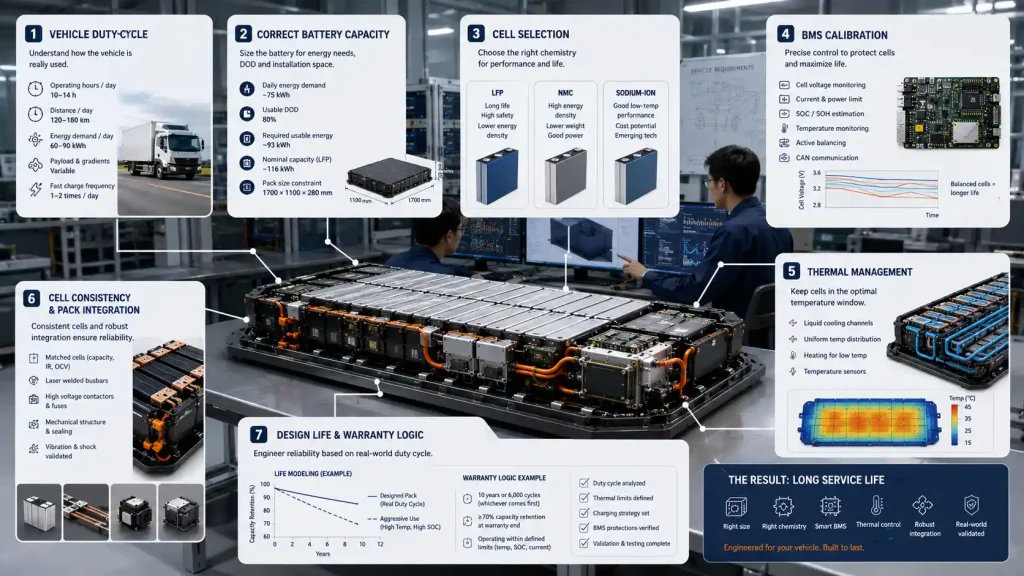
Custom battery projects rarely move directly from the first quotation to full production.
Dimensions may change. The OEM may select a different motor controller. A charger interface may need to be adjusted. Mechanical testing may reveal the need for stronger mounting points.
The manufacturer should have a practical process for handling these changes.
A typical OEM battery development process
| Stage | Main Activity | Expected Output |
| Requirements review | Define equipment and battery requirements | Agreed technical requirements |
| Feasibility assessment | Evaluate electrical, mechanical, and commercial feasibility | Preliminary solution |
| Engineering design | Develop battery architecture and interfaces | Specifications and drawings |
| Prototype manufacturing | Assemble initial battery samples | Prototype units |
| Integration testing | Test the battery with actual equipment | Findings and corrective actions |
| Design approval | Confirm the production design | Approved revision |
| Pilot production | Verify manufacturing readiness where needed | Pilot production results |
| Mass production | Manufacture against the approved design | Production and inspection records |
–
Not every project requires a long development program, but the stages should be clearly understood.
How should design changes be controlled?
Suppose the original design uses one BMS model, but the supplier proposes another model because of component availability.
The manufacturer should evaluate whether the change affects:
- Electrical protection and control.
- Communication compatibility.
- Mechanical installation.
- Thermal performance.
- Software or firmware behavior.
- Required testing and certification.
- Previously approved documentation.
The customer should approve significant changes before production where contractually required.
Ask whether the supplier maintains an approved bill of materials, drawing revisions, firmware versions, and change records.
Who owns the design and tooling?
For fully custom projects, commercial agreements should clarify relevant intellectual property, customer-owned drawings, tooling costs, and any restrictions on using project-specific designs.
Do not leave these questions until a dispute occurs.
What to look for: A documented development process, clear responsibilities, controlled revisions, and defined approval points before mass production.
10. How Should OEM Buyers Compare Battery Quotations?
Comparing battery quotations using price alone can be misleading.
Two batteries with the same nominal voltage and capacity may have different cells, BMS functions, discharge ratings, enclosures, thermal systems, communication capabilities, and testing requirements.
The cheaper quotation may not include everything your project needs.
Compare the technical scope first
Before comparing prices, verify that the quotations use the same requirements.
| Item | What to Compare |
| Battery voltage and energy | Nominal values and usable operating range |
| Discharge performance | Continuous current, peak current, and peak duration |
| Cells | Chemistry, manufacturer, model, and specification |
| BMS | Protection, monitoring, communication, and control |
| Enclosure | Material, dimensions, mounting, and protection |
| Thermal management | Cooling, heating, and operating limits |
| Connectors and cables | Included components and interface details |
| Testing | Included factory testing and additional validation |
| Certification | Existing evidence and required new testing |
| Warranty | Coverage, exclusions, and claim procedures |
Then compare the commercial terms.
Calculate total project cost
The true cost of an OEM battery project may include more than the purchase price.
Consider:
- Battery development and engineering charges.
- Prototype and sample costs.
- Tooling or custom enclosure costs.
- Compliance testing and certification.
- Chargers, displays, cables, and accessories.
- Shipping, insurance, duties, and handling.
- Integration and validation expenses.
- Replacement parts and service.
- Costs caused by delays or product failures.
A low battery price may be attractive, but unexpected integration work can quickly reduce those savings.
Ask about Incoterms
Confirm whether the quotation uses EXW, FOB, CIF, DAP, DDP, or another agreed Incoterm.
The included freight services, insurance arrangements, import clearance responsibilities, duties, and taxes may differ.
For international OEM procurement, compare the actual delivered and operational cost rather than assuming the lowest factory price is the best offer.
What to look for: Transparent specifications, clearly defined quotation scope, consistent commercial assumptions, and a realistic understanding of total project cost.
11. Can the Manufacturer Maintain Quality During Repeat Production?

A battery manufacturer may deliver an excellent prototype but struggle when production volume increases.
For an OEM, long-term consistency is critical.
Your equipment may be manufactured over several years. Batteries ordered later should remain compatible with the approved system, even when suppliers, production schedules, or component availability change.
Questions to ask about repeat production
Can the manufacturer:
- Maintain an approved battery specification?
- Control changes to important components?
- Track production batches and serial numbers?
- Supply consistent communication configurations?
- Perform routine production testing?
- Investigate field failures?
- Provide replacement components or service support?
- Communicate significant changes before shipment?
Annual production volume also matters.
A supplier making thousands of standard batteries may not necessarily be the best fit for an OEM that needs 20 specialized systems per year.
Conversely, a manufacturer experienced only in prototypes may need additional process development before supporting larger orders.
Evaluate the supplier’s experience with your expected order volume and product complexity.
Evaluate the warranty realistically
Battery warranties should explain what is covered and under which conditions.
Ask about capacity retention, operating temperature, cycle definitions where relevant, current limits, exclusions, documentation requirements, and how claims are handled.
For example, a cycle-life claim should not be treated as a guaranteed field-service life without understanding the test conditions.
A battery used at moderate temperatures and discharge rates may age differently from one operating continuously under heavy loads.
What to look for: Production consistency, traceable revisions, defined after-sales processes, and clear warranty terms.
12. What Should You Check During a Battery Manufacturer Factory Audit?
A factory audit does not always require an international flight.
For early-stage supplier screening, a structured remote evaluation can provide useful information.
A live video tour, technical meeting, sample quality documents, and review of a completed battery can help determine whether a supplier deserves further qualification.
For larger or safety-critical programs, an on-site audit or independent third-party assessment may be appropriate.
Practical factory audit checklist
| Audit Area | Questions to Ask |
| Engineering | Who approves the design and technical specifications? |
| Procurement | How are critical suppliers qualified? |
| Incoming inspection | How are cells and components checked? |
| Production | Are critical assembly steps documented and controlled? |
| Equipment | Are relevant measurement and assembly tools calibrated or verified? |
| Quality | How are defects recorded and corrected? |
| Testing | Which tests are performed before shipment? |
| Traceability | Can the factory trace a pack to its production batch? |
| Change control | How are BOM, drawing, and firmware changes approved? |
| After-sales | How are warranty claims and field failures investigated? |
–
It is also useful to ask the supplier to demonstrate a complete traceability example.
Select a sample battery serial number and request an explanation of how the company identifies the relevant production date, major component batches, test records, and product revision.
This can be more informative than a general factory presentation.
How should you evaluate audit findings?
Not every observation has the same importance.
A missing label on a storage shelf is not equivalent to missing insulation testing for a high-voltage battery.
Classify findings according to their potential impact on safety, compliance, performance, traceability, and production reliability.
Require corrective actions for significant issues before supplier approval.
What to look for: Evidence of functioning processes, openness during technical reviews, and a willingness to address findings with measurable corrective actions.
13. What Are the Warning Signs of an Unreliable Battery Supplier?
No supplier is perfect.
However, some warning signs deserve serious attention before placing an OEM battery order.
10 red flags to watch for
| Warning Sign | Why It Matters |
| Immediate quotation without reviewing application requirements | Important engineering requirements may be missed |
| Unclear cell manufacturer or cell model | Makes technical verification difficult |
| No explanation of continuous and peak current ratings | Actual equipment performance may not be supported |
| Claims that all CAN devices are compatible | Communication integration may fail |
| Certificates that do not match the quoted battery | Compliance evidence may be irrelevant |
| No documented prototype or validation process | Design weaknesses may remain undiscovered |
| No traceability or production test records | Quality problems may be difficult to investigate |
| Uncontrolled component substitutions | Repeat orders may differ from approved samples |
| Vague warranty or service responsibility | Problems may be difficult to resolve after delivery |
| Refusal to address reasonable engineering questions | May indicate limited technical transparency |
–
A warning sign is not always proof that a supplier is unreliable.
For example, a small manufacturer may lack formal marketing materials but still have strong engineering and manufacturing processes.
The important distinction is whether the supplier can provide relevant evidence and resolve reasonable concerns.
The most important warning sign
A manufacturer that promises everything without discussing engineering limitations should be evaluated carefully.
Every battery design has trade-offs involving energy, power, weight, cost, charging, temperature, service life, and safety.
An experienced engineering team should be willing to explain these trade-offs.
Sometimes the most useful response from a battery manufacturer is:
“That configuration may not meet your operating requirements. Here is what we recommend instead.”
That answer can prevent an expensive mistake.
14. OEM Battery Manufacturer Evaluation Scorecard: Compare Suppliers Objectively
Evidence-based supplier screening
OEM Battery Manufacturer Scorecard
Review the evidence, check essential qualifications, and rate seven areas of supplier capability. Use the result to plan your next steps before committing to an OEM battery project.
How to score: Rate each area from 1 to 5 based on evidence you have reviewed. Leave an area unscored if you do not have enough information.
This is a suggested screening framework from Bonnen Battery, not an industry standard or a supplier approval. A high score cannot override unresolved safety, compliance, or validation issues.
Interactive scoring is currently unavailable. You can still read the checklist and evaluation criteria below.
Assessment Information Optional
Step 1
Essential Qualification Checks
Mark Yes only when the evidence is sufficient for the current project stage. A documented plan for later work does not replace requirements that must already be met.
Step 2
Manufacturer Evaluation
Rate each area only after reviewing relevant evidence. Leave it Not Scored when information is insufficient; a rating of 1 means you reviewed the area and found serious gaps.
- 1: Serious gaps or inadequate evidence
- 2: Partly addressed; major questions remain
- 3: Basic needs met with some supporting evidence
- 4: Strong capability with a few points to verify
- 5: Thorough, relevant, and verifiable evidence
Step 3
Results & Recommended Next Steps
Answer the qualification checks and rate the evidence to begin.
Qualification Issues & Missing Checks
- Complete the qualification checks to identify unresolved issues.
- Rate the evidence for all seven areas to calculate a total.
Priority Follow-ups
- Begin the assessment to receive evidence-based follow-ups.
Rating Breakdown
| Area | Weight | Rating | Weighted Contribution |
|---|---|---|---|
| Engineering & Application Fit | 25% | Not Scored | — |
| System Integration & BMS Capability | 15% | Not Scored | — |
| Manufacturing & Quality Control | 20% | Not Scored | — |
| Validation & Compliance Evidence | 15% | Not Scored | — |
| Traceability & Supply Chain Control | 10% | Not Scored | — |
| Prototype & Lifecycle Support | 10% | Not Scored | — |
| Commercial Clarity & Delivery Planning | 5% | Not Scored | — |
This result supports preliminary screening only. It does not approve a purchase, establish legal compliance, replace a factory audit, or prove battery safety.
Step 4
Save Your Assessment
Start by answering one qualification check or rating one area. You can export an incomplete assessment.
Automatic copying was unavailable. Select and copy the report below manually.
This tool does not send your assessment entries to Bonnen Battery. Copy or print your assessment if you want to keep a record.
Need a Second Opinion on Your Battery Project?
Bonnen Battery helps OEM teams review custom battery requirements, engineering feasibility, system integration, and production planning.
15. Real Engineering Example: A Custom Battery for an Industrial Cable-Pulling Machine
Consider an industrial cable-pulling machine with restricted battery installation height and demanding current requirements.
A conventional battery enclosure may offer enough energy but still be unsuitable because it is too tall, too heavy, or unable to fit the available mounting arrangement.
This is a good example of why OEM battery evaluation should focus on engineering capability rather than nominal voltage and capacity alone.
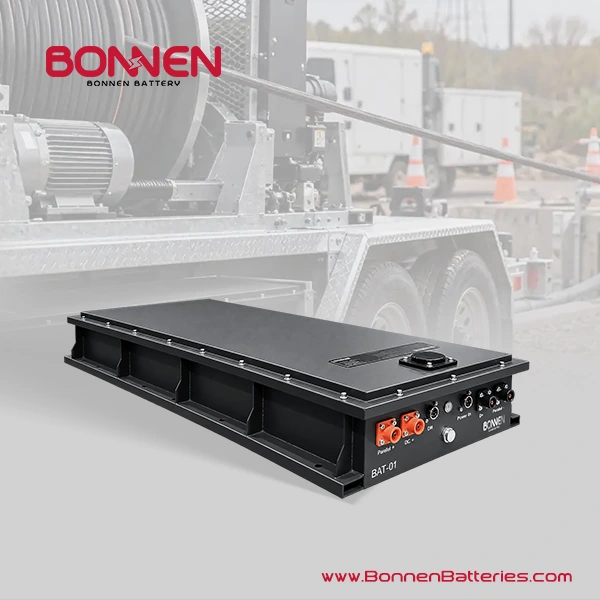
Bonnen Battery’s 96V lithium battery system for cable-pulling machines and industrial winches ⇱ illustrates this type of application-specific design.
The published platform uses a nominal 97V NMC battery architecture in the 96V equipment class, with a low-profile enclosure designed around space-constrained industrial equipment.
What makes this type of project different?
Mechanical constraints
The battery must fit within a limited installation height while allowing secure mounting, electrical connections, and appropriate clearances.
Current requirements
Cable-pulling equipment may experience short periods of demanding load.
The manufacturer must evaluate continuous current, peak current, peak duration, and the machine’s actual operating pattern.
Environmental exposure
Outdoor equipment may encounter dust, water, vibration, and changing temperatures.
Enclosure and interface protection need to match these conditions.
Electrical integration
The battery, BMS, motor controller, charging system, and any monitoring equipment must work together.
System architecture
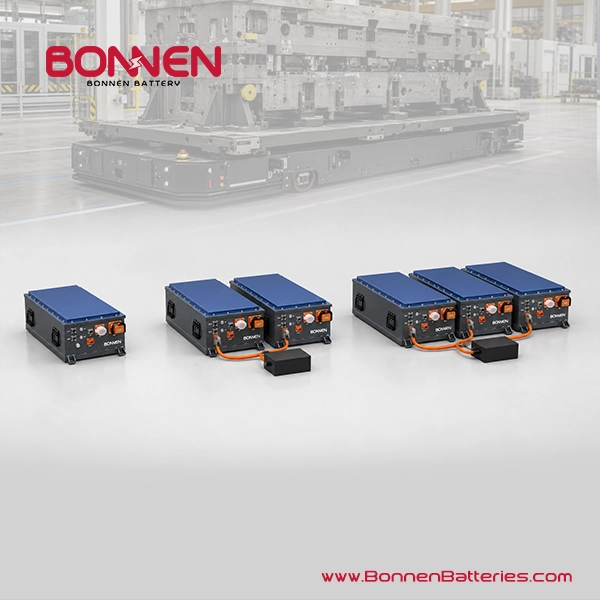
When multiple battery modules are used, the design must address current sharing, protective devices, monitoring, and the operating behavior of the complete battery system.
What can OEM buyers learn from this example?
When evaluating a supplier for a similar project, ask for evidence of how it approaches each constraint.
A useful engineering proposal should show more than the final battery dimensions.
It should explain how the electrical and mechanical design addresses the application’s main requirements, and which aspects still require validation.
That is the difference between buying a battery with the right label and developing a battery system for the right machine.
Bonnen Battery focuses on custom lithium battery pack and system development ⇱ for OEM and industrial applications, including electrical architecture, BMS integration, enclosures, thermal requirements, and equipment interfaces.
The final design and verification requirements still depend on each customer’s project.
16. Frequently Asked Questions About Evaluating a Custom Lithium Battery Pack Manufacturer
1. How can I verify that a lithium battery pack manufacturer is genuine?
Ask where the company assembles and tests its battery packs, who is responsible for engineering, and whether production can be reviewed through a live factory tour or independent audit. Request examples of relevant manufacturing documents, quality processes, and technical drawings. A genuine manufacturer should be able to explain its actual responsibilities and how it controls production. Factory ownership alone does not prove that the company is suitable for your project.
2. What is the difference between a battery cell manufacturer and a battery pack manufacturer?
A battery cell manufacturer produces individual electrochemical cells. A battery pack manufacturer combines cells with mechanical structures, electrical connections, protection systems, monitoring equipment, and other components to create a complete battery pack. Custom pack manufacturers may also handle application engineering, BMS integration, enclosure design, and validation. OEM buyers usually need a manufacturer capable of delivering the complete system required by their equipment.
3. Is it risky to buy custom battery packs from a trading company?
Not necessarily, but engineering responsibility and manufacturing control may be less direct. A trading company can be useful if it has qualified manufacturing partners and strong technical support. OEM buyers should identify the actual manufacturer, determine who approves the design, and understand who handles testing, quality problems, component changes, and warranty claims. The risk increases when the supplier cannot clearly identify these responsibilities.
4. What information should I provide before requesting a custom battery quotation?
Start with the application, nominal system voltage, operating voltage range, continuous and peak power, required runtime, available installation space, charging method, operating temperature, and communication requirements. Include estimated prototype and annual quantities if available. Motor controller specifications, existing battery drawings, and equipment CAD files are also useful. If some details are unknown, a capable manufacturer should help identify what must be confirmed before finalizing the design.
5. What documents should I request from a custom lithium battery manufacturer?
Useful documents include the battery specification, preliminary mechanical drawing, cell information, BMS functions, interface definitions, validation plan, relevant test reports, and applicable compliance evidence. For more advanced projects, you may also request information about production inspection, traceability, design revisions, and warranty procedures. The exact documentation package should reflect the project stage, technical risks, and commercial agreements.
6. Does a good battery pack manufacturer need to produce its own lithium cells?
No. Many capable custom battery pack manufacturers source cells from specialized cell producers. Their value comes from selecting suitable cells and integrating them into a complete battery system. Evaluate how the manufacturer qualifies cell suppliers, verifies incoming materials, controls cell matching, and manages traceability. The important issue is whether the final battery meets the required performance, safety, and production requirements.
7. Can a manufacturer use a third-party BMS in a custom battery pack?
Yes. Using a third-party BMS is common and does not automatically indicate weak engineering capability. What matters is whether the BMS is suitable for the selected cells, electrical architecture, operating limits, communication requirements, and protection strategy. The battery manufacturer should take responsibility for integration, configuration, verification, and system behavior. OEM buyers should request the relevant functional specifications and test evidence.
8. Does CAN bus support guarantee battery compatibility with my equipment?
No. CAN provides a communication interface, but connected devices must also use compatible protocols, message definitions, timing, and control logic. A battery BMS and motor controller may both support CAN without exchanging the information needed for correct operation. Ask for protocol documentation and verify important functions such as SOC reporting, current limits, charging control, alarms, and communication-loss behavior during equipment integration testing.
9. How do I know whether LFP or NMC is better for my OEM project?
Compare the application’s energy density, weight, installation space, power demand, temperature range, expected service life, safety requirements, and cost targets. LFP is often attractive for applications prioritizing cycle life and thermal stability, while NMC can be useful where higher energy density matters. The final choice must consider the specific cell model and complete battery design rather than chemistry alone.
10. What does Grade A lithium battery cell quality mean?
Grade A is widely used as a commercial description, but it is not a complete technical specification by itself. Ask for the cell manufacturer, model, datasheet, relevant performance criteria, incoming inspection procedures, and traceability. Capacity, internal resistance, production batch consistency, and the cell’s suitability for your operating conditions are more useful than a general Grade A claim without supporting evidence.
11. How can I verify a manufacturer’s continuous and peak discharge ratings?
Request clear current ratings with their test conditions. A peak current specification should include its allowed duration, starting temperature, state of charge where relevant, and any repetition or cooling limitations. Ask whether the published rating applies to the cells, BMS, or complete battery system. For demanding applications, validation under a representative equipment load profile is more useful than relying on a single maximum-current number.
12. Does an IP67 battery enclosure guarantee suitability for outdoor or marine equipment?
No. IP67 describes protection against dust and temporary water immersion under defined test conditions. It does not automatically demonstrate resistance to saltwater corrosion, long-term immersion, pressure washing, vibration, condensation, or every outdoor operating condition. OEM buyers should also evaluate connector sealing, cable entries, mounting, enclosure materials, and environmental test evidence. The complete installed system must be assessed, not just the battery enclosure.
13. Which battery certifications are required for an OEM project?
Requirements depend on the battery chemistry, application, destination market, installation, and relevant regulations. UN 38.3 addresses lithium battery transport testing, while standards such as IEC 62619, UL 1973, and UL 2580 apply to different battery applications. Ask the manufacturer to identify which requirements apply to the actual product and provide supporting documents. Never assume that one certification covers every possible battery configuration or market.
14. Does ISO 9001 certification guarantee that a battery manufacturer is reliable?
ISO 9001 demonstrates that a quality management system has been evaluated against the applicable standard requirements. It does not guarantee that a particular battery pack meets its electrical, mechanical, safety, or lifetime requirements. ISO 9001:2026 was published in September 2026, with transition arrangements for existing certificates. OEM buyers should verify certificate validity and scope while independently evaluating manufacturing quality and product testing.
15. Is UN 38.3 certification enough to prove a lithium battery is safe?
No. UN 38.3 addresses specified tests related to the transportation of lithium cells and batteries. It does not replace all applicable product safety standards or application-specific validation. A battery that satisfies transportation requirements may still need additional evaluation for electrical protection, mechanical loads, thermal behavior, communication, and equipment integration. Request the relevant test summary and confirm that it applies to the battery design being supplied.
16. Should I order a prototype before committing to mass production?
For a new custom battery design, a prototype is usually an important step before volume purchasing. It allows the OEM to check installation, electrical performance, charging, communication, thermal behavior, and other integration requirements. The test scope should reflect the project’s risks. Prototype approval alone may not complete every regulatory or production validation requirement, so confirm what additional verification is needed before the production release.
17. How can I tell whether a battery manufacturer has good quality control?
Look for defined incoming inspection, controlled assembly operations, documented checkpoints, suitable test equipment, final acceptance testing, and traceability. Ask the manufacturer to explain how nonconforming products are handled and how corrective actions are verified. A well-organized factory is encouraging, but actual records and process demonstrations provide stronger evidence than promotional photographs.
18. Can the manufacturer change cells or BMS components after prototype approval?
Component changes may be necessary, but important substitutions should be controlled. A different cell or BMS can affect electrical performance, dimensions, communication, protection behavior, and previous testing or compliance evidence. OEM agreements should define which changes require customer notification or approval. Ask the manufacturer to maintain an approved bill of materials, design revisions, and suitable change records.
19. Do I need to visit the battery factory before placing an order?
An on-site visit can be valuable, particularly for high-value, safety-critical, or long-term OEM programs. However, initial qualification can often begin with a live remote factory tour, technical meetings, sample documents, and prototype evaluation. The required audit depth should depend on project risk and purchasing volume. Independent third-party audits may also be appropriate when direct factory visits are difficult.
20. How should I choose between two battery manufacturers with similar quotations?
Compare both suppliers against the same approved technical requirements. Evaluate engineering capability, manufacturing control, validation evidence, applicable compliance, integration support, project cost, and long-term service. Use a weighted scorecard to make the comparison more consistent, but treat critical safety and regulatory gaps separately. If two quotations appear similar, the supplier providing clearer engineering evidence and more reliable production support may offer lower overall project risk.
17. Final Takeaway: Choose a Battery Engineering Partner, Not Just a Battery Price
Choosing a custom lithium battery pack manufacturer is an engineering and procurement decision.
Price, delivery time, and certifications are important. But they cannot replace application understanding, electrical and mechanical engineering, system integration, testing, manufacturing control, and long-term support.
A strong manufacturer should be able to explain how its battery design meets your equipment requirements and provide evidence supporting its claims.
Before selecting a supplier, review the technical requirements, compare manufacturing capabilities, evaluate the proposed validation plan, and verify the relevant safety and compliance documentation.
Use the OEM Battery Manufacturer Evaluation Scorecard to organize your findings, compare shortlisted suppliers, and identify areas that need further investigation.
Most importantly, remember this:
A good battery pack manufacturer does more than build what you request. They help you determine whether what you request will actually work.
Need a Custom Battery System for Your OEM Project?
Bonnen Battery develops custom lithium battery packs and integrated battery systems ⇱ for electric vehicles, marine propulsion, heavy equipment, industrial machinery, AGVs, AMRs, and other OEM applications.
Our approach begins with your equipment requirements, including voltage, power, runtime, installation space, charging, communication, and operating conditions.
From there, we can discuss suitable battery architecture, BMS integration, mechanical design, prototype development, and production considerations.
You do not need a complete battery design before starting the discussion.
Share your equipment specifications, drawings, or project requirements with our engineering team.
Contact Bonnen Battery↓ now and let us help you power your adventures with the best lithium battery technologies.
© [Bonnen Battery] and [www.bonnenbatteries.com]. Unauthorized use and/or duplication of this material without express and written permission from this site’s author and/or owner is strictly prohibited. Excerpts and links may be used, provided that full and clear credit is given to [Bonnen Battery] and [www.bonnenbatteries.com] with appropriate and specific direction to the original content.