
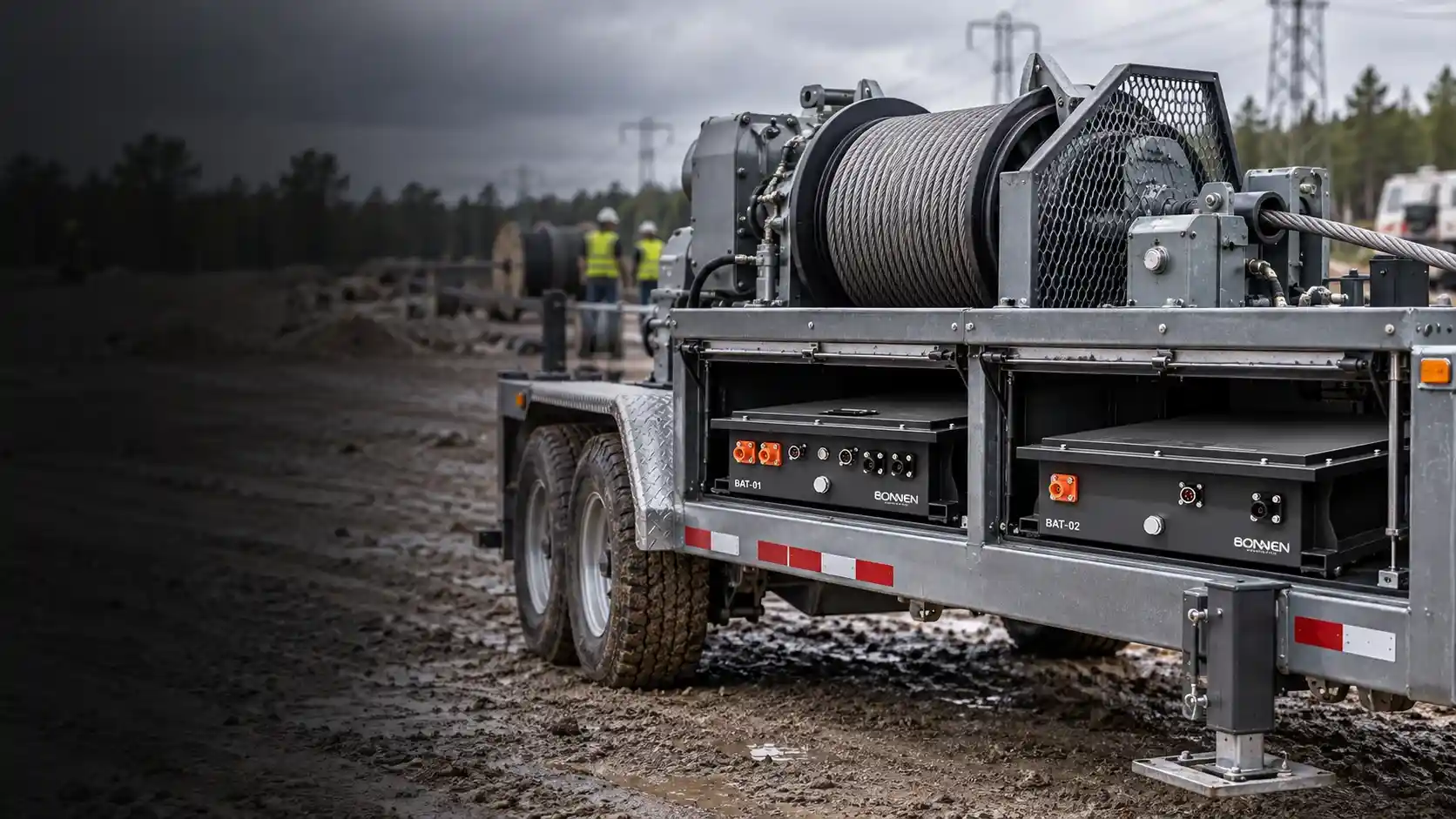
Battery systems for cable handling equipment
96V Lithium Battery Systems for Cable Pulling Machines & Industrial Winches
Ultra-thin, high-current battery modules for cable pullers, industrial winches and mobile utility equipment. Built around a 97V nominal NMC module with engineered single- and dual-pack options.
Start with the machine
Built for Space-Constrained, High-Current Equipment
Cable handling equipment combines packaging limits with demanding, intermittent loads. Battery selection therefore starts with the machine—not with a generic voltage label.
Restricted installation height
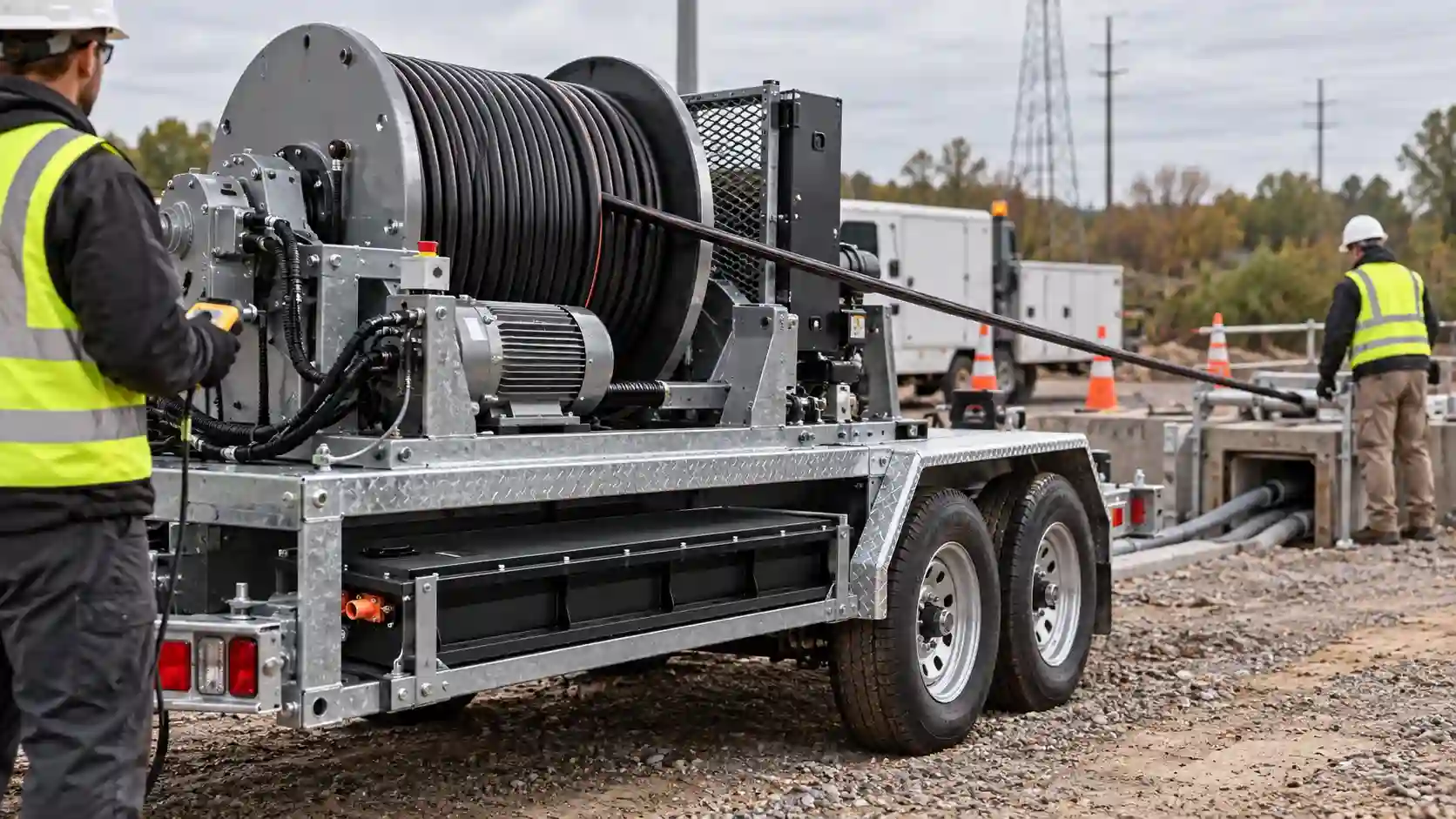
A 135mm enclosure can support layouts beneath decks or inside shallow equipment bays, subject to clearance and mounting review.
Intermittent high current
200A maximum continuous discharge and 300A for 10 seconds per module create defined inputs for duty-cycle calculations.
Dust and rain exposure
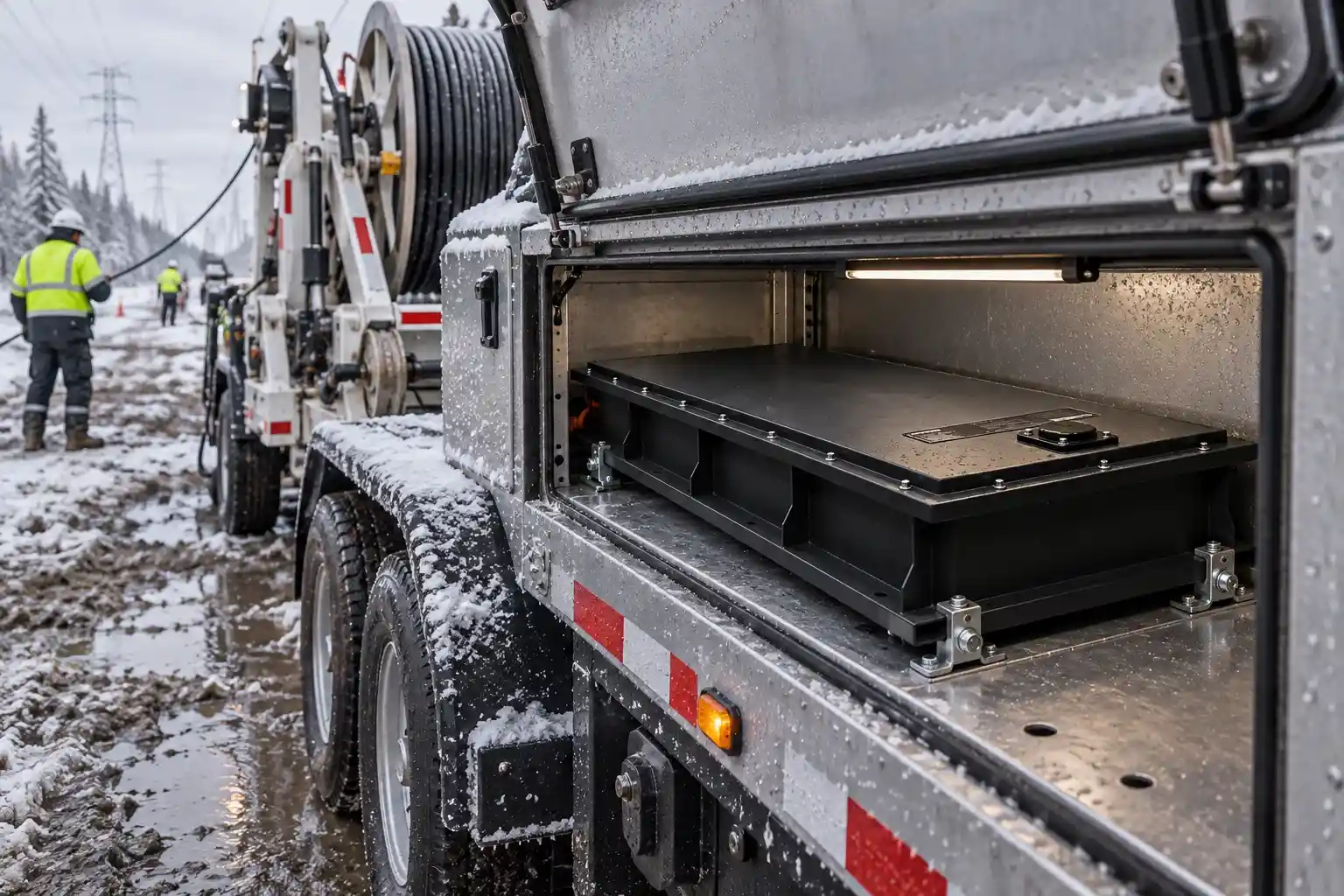
An IP67 aluminum-alloy enclosure supports evaluation for outdoor work sites; it is not a claim of indefinite immersion.
Cold-weather planning
Charging and discharging ranges define the starting boundary for charger, BMS and operating-strategy review.
Machine communication
CAN and a configurable 4G IoT option can support integration and maintenance after required BMS data is confirmed.
Verified single module
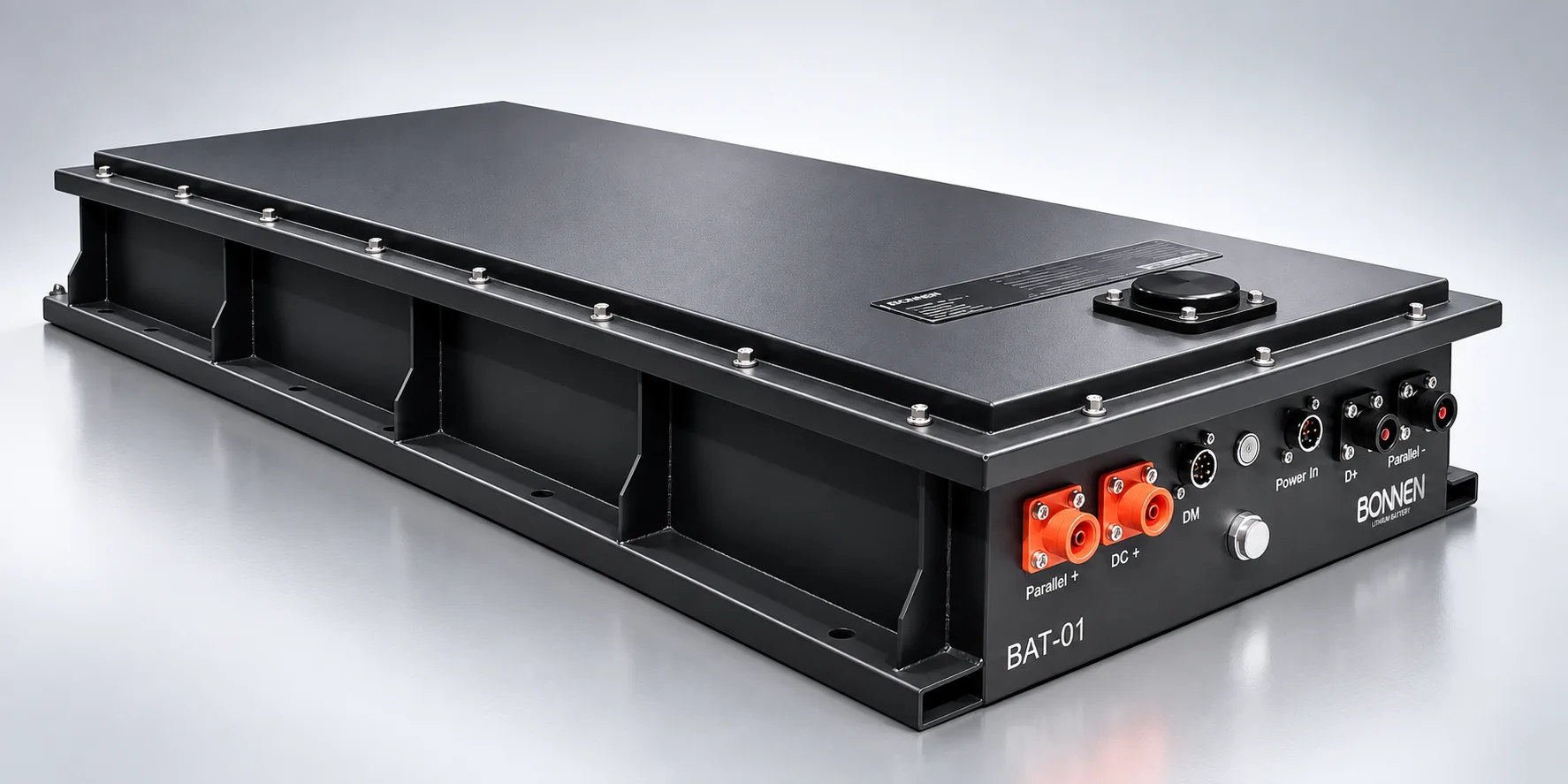
96V-Class / 97V Nominal Ultra-Thin NMC Battery Module
The verified module combines an 11.4kWh energy rating with a low-profile aluminum-alloy enclosure. The specification applies to one module.
Swipe horizontally to review the complete specification table.
| Equipment voltage class | 96V class |
|---|---|
| Nominal voltage | 97V nominal NMC |
| Rated capacity | 118Ah |
| Nominal energy | 11.4kWh |
| Recommended charge current | 50A |
| Maximum continuous discharge current | 200A per module |
| Peak discharge current | 300A for 10 seconds per module |
| Communication | BMS with CAN communication |
| Enclosure / ingress rating | Aluminum alloy / IP67 |
| Cycle life | More than 1,500 cycles at 80% DoD |
| Charging ambient temperature | −10°C to 50°C |
| Discharging ambient temperature | −20°C to 60°C |
| Parallel connection | Supported; complete-system engineering required |
| Remote monitoring | Configurable 4G IoT option |
| Dimensions | 1060 × 430 × 135mm (L × W × H) |
Configuration choice
One Battery Module. Two System Configurations.
Choose the architecture after energy, duty cycle, available space and system-current requirements are known.
Single module
97V nominal / 118Ah / approximately 11.4kWh
Evaluate for compact machines, shorter working cycles and prototype integration after power, runtime and thermal requirements are calculated.
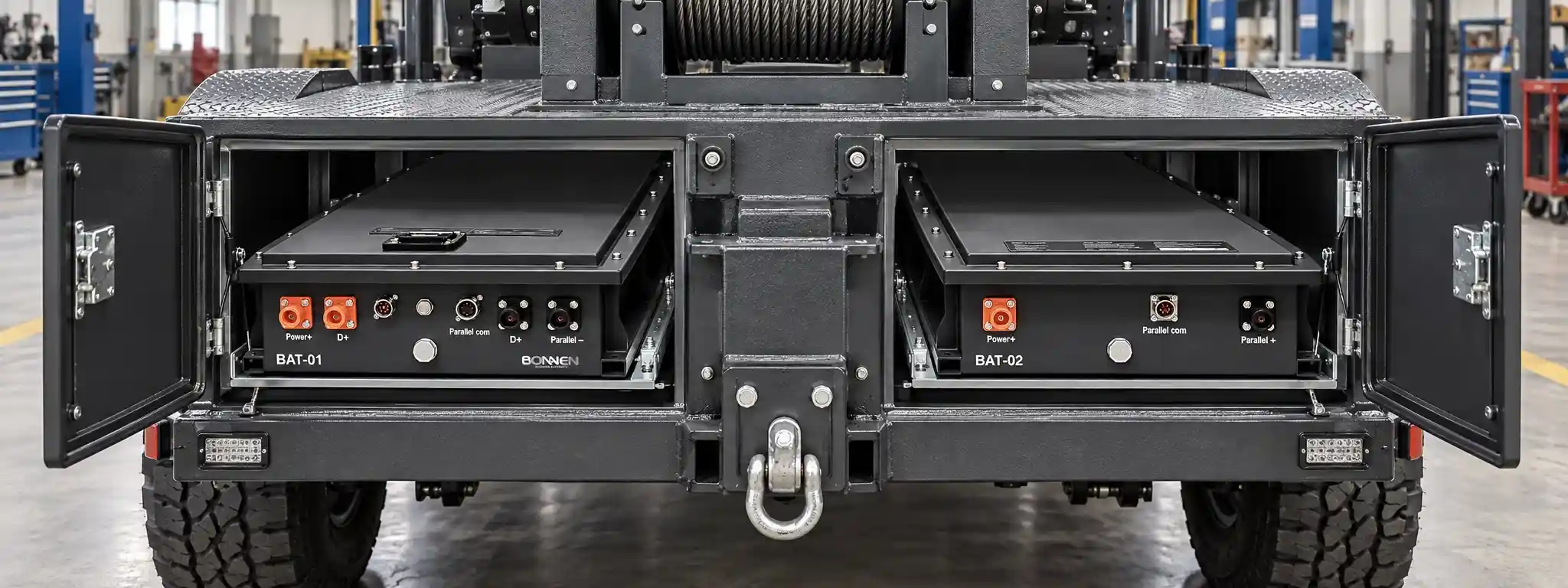
Two matched modules in parallel
97V nominal / 236Ah / approximately 22.8kWh
Evaluate for longer operating targets, separated installation spaces and designed current sharing. Parallel connection does not create a higher-voltage series pack.
Mechanical packaging
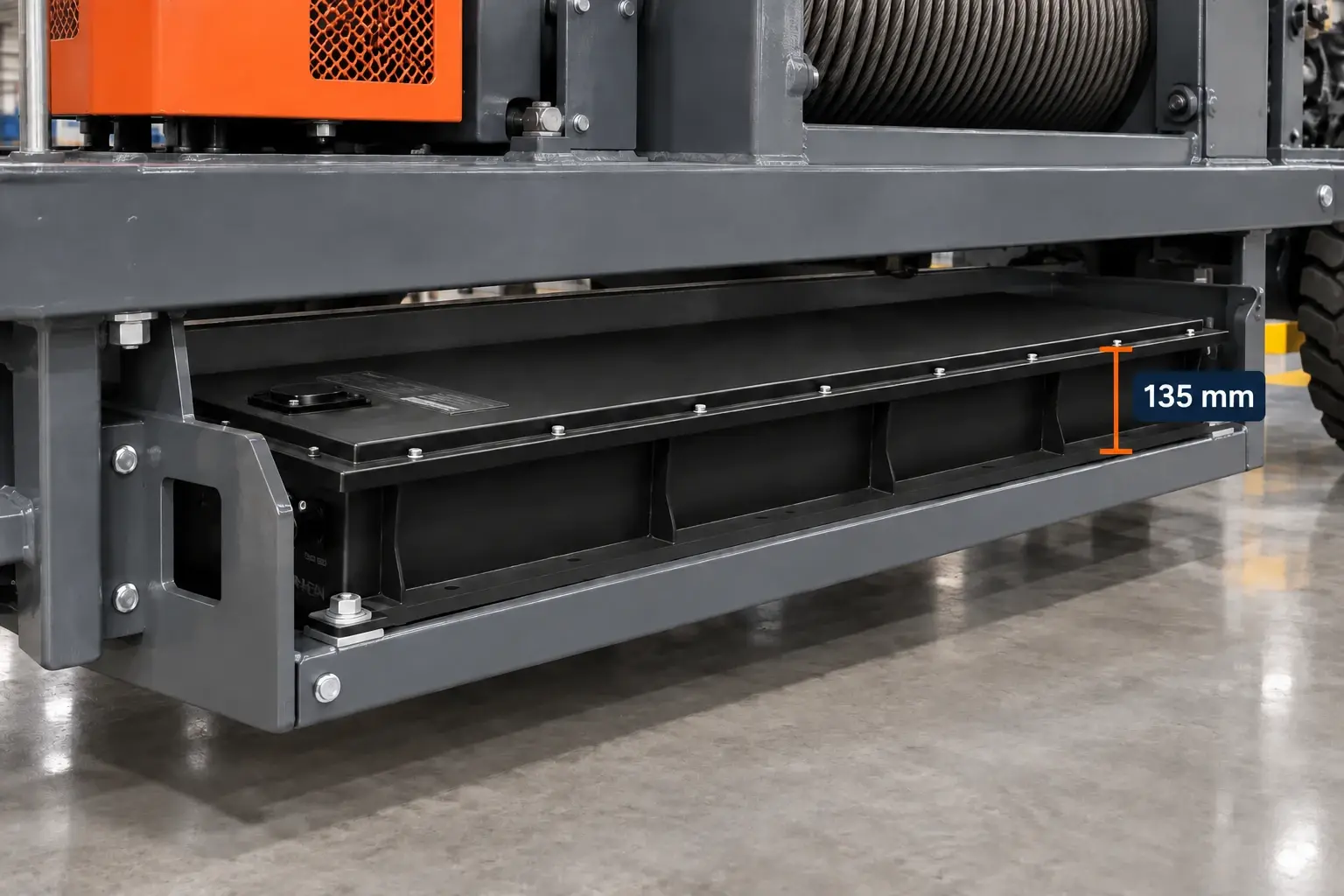
Only 135mm High—Packaging That Works With the Machine
At 1060 × 430 × 135mm, the enclosure prioritizes a low installed profile for beneath-deck or shallow-bay layouts.
Load profile matters
Define the Pulling Duty Before Sizing Energy
Starting events, sustained pulls, pauses, line load and gearing shape both current demand and useful runtime. The module ratings establish engineering inputs; they do not replace a machine duty-cycle calculation.
Field conditions
Engineered for Outdoor and Low-Temperature Evaluation
The IP67 aluminum-alloy enclosure supports projects that must account for dust, rain and field handling. Temperature limits remain part of the charging and operating strategy.
The same charge rate is not assumed across the full temperature range. Review site temperature, storage, condensation and charger/BMS behavior.
Integration and maintenance
CAN Integration and Configurable 4G IoT
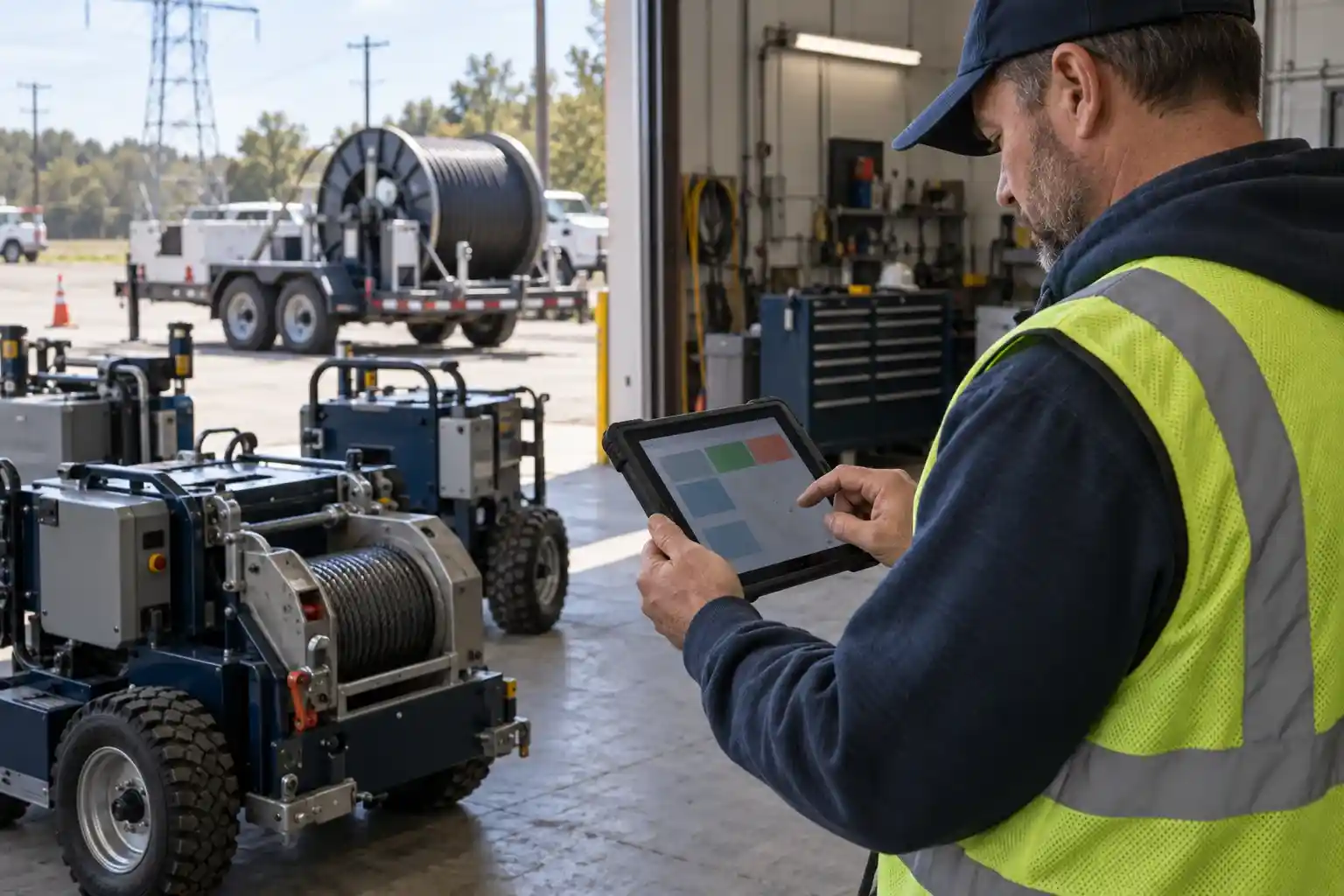
CAN communication gives the host machine a path for battery status and control integration. A configurable 4G IoT option can also be evaluated for remote maintenance workflows.
State of charge, temperature, alarms, location and combined pack views must be confirmed against the selected BMS, gateway and platform. SIM availability, network coverage, cloud services and subscription terms are project-specific.
Potential fit categories
Applications to Evaluate
These categories describe relevant operating problems, not completed customer deployments. Verify each motor, controller, duty cycle and installation space.
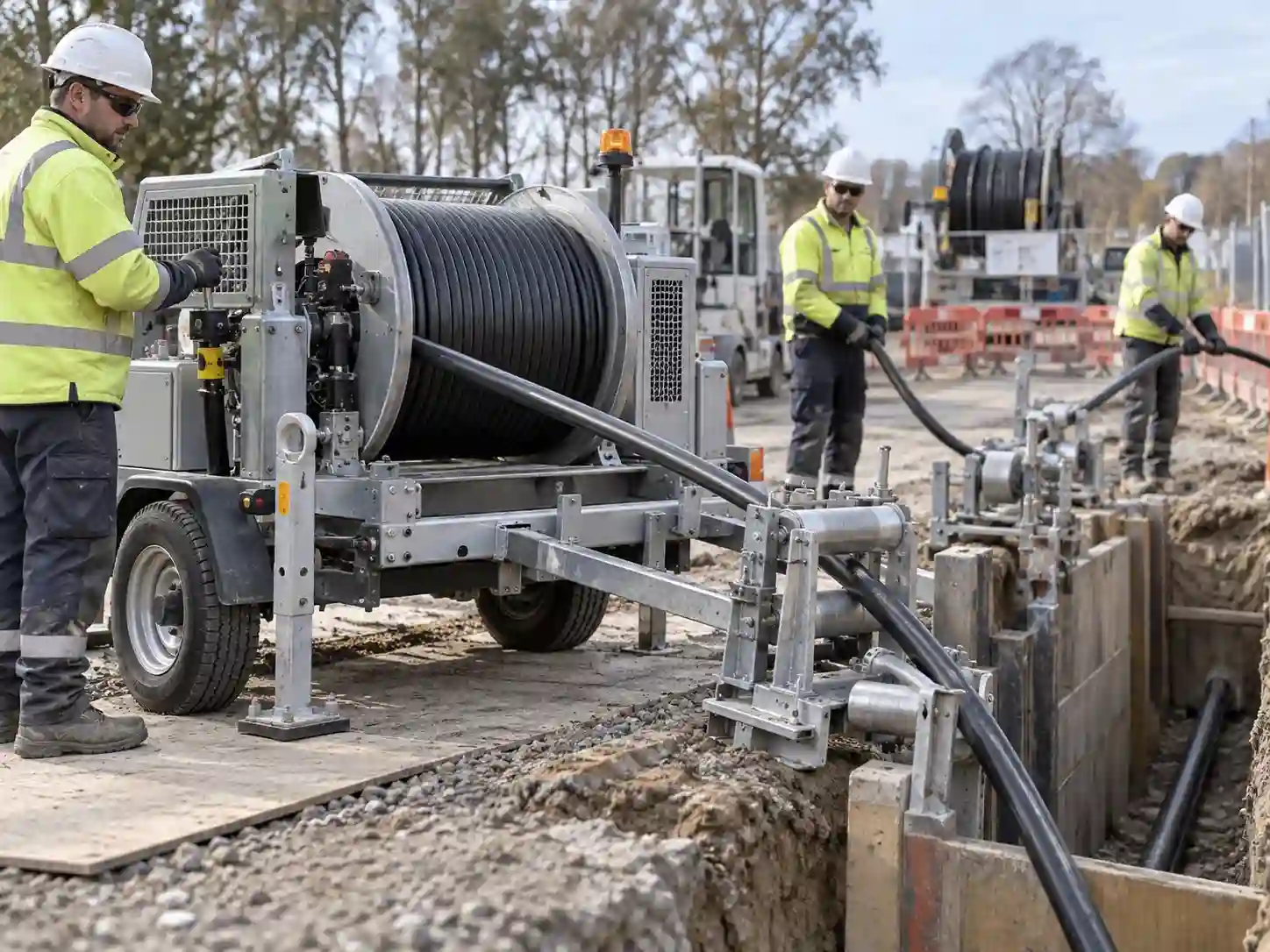
Cable Pulling Machines
Evaluate controller voltage, pulling profile, cable length, setup time and available bay height.
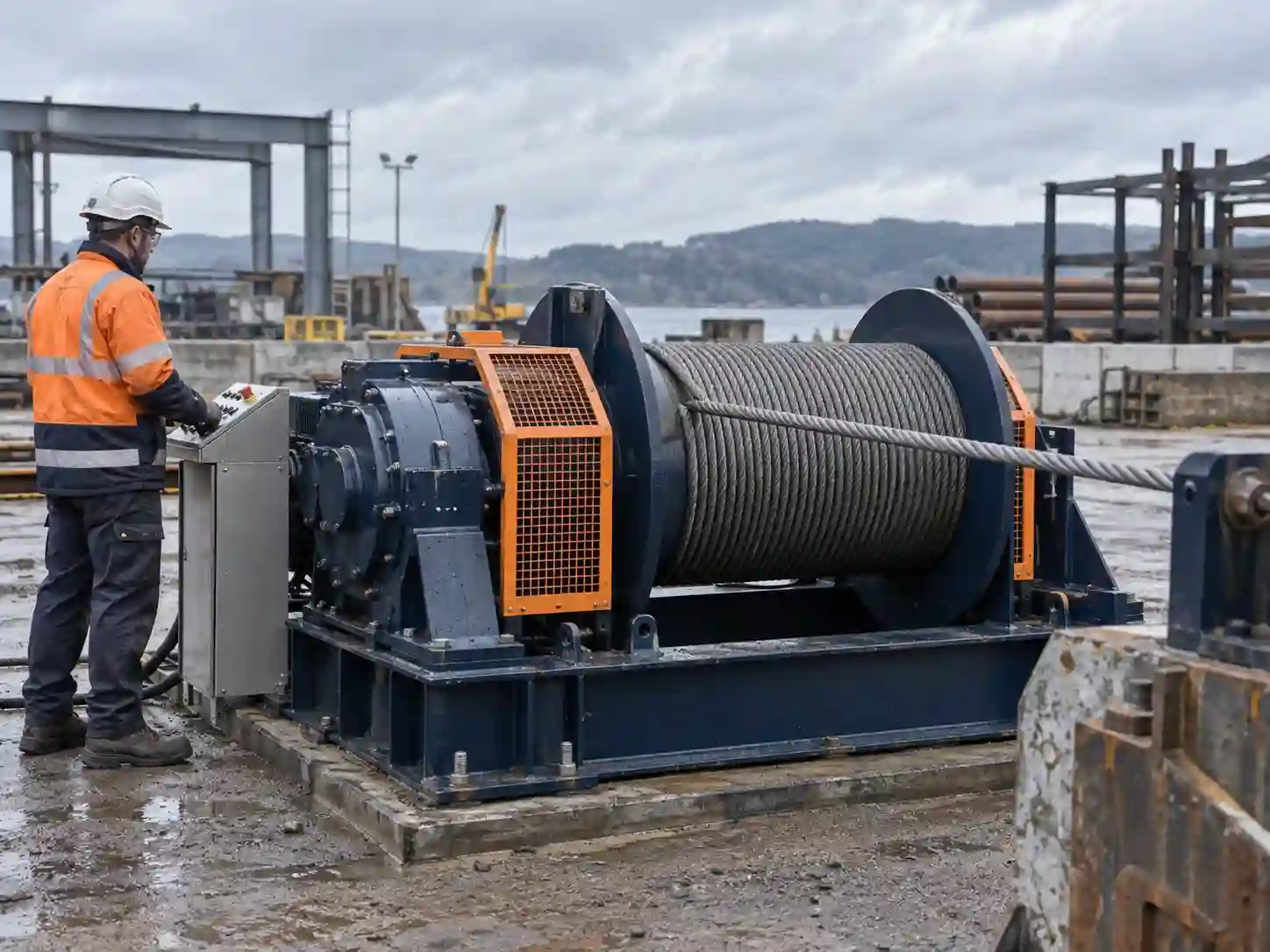
Industrial Electric Winches
Size energy and current around line pull, gearing, working cycle and cooling intervals.
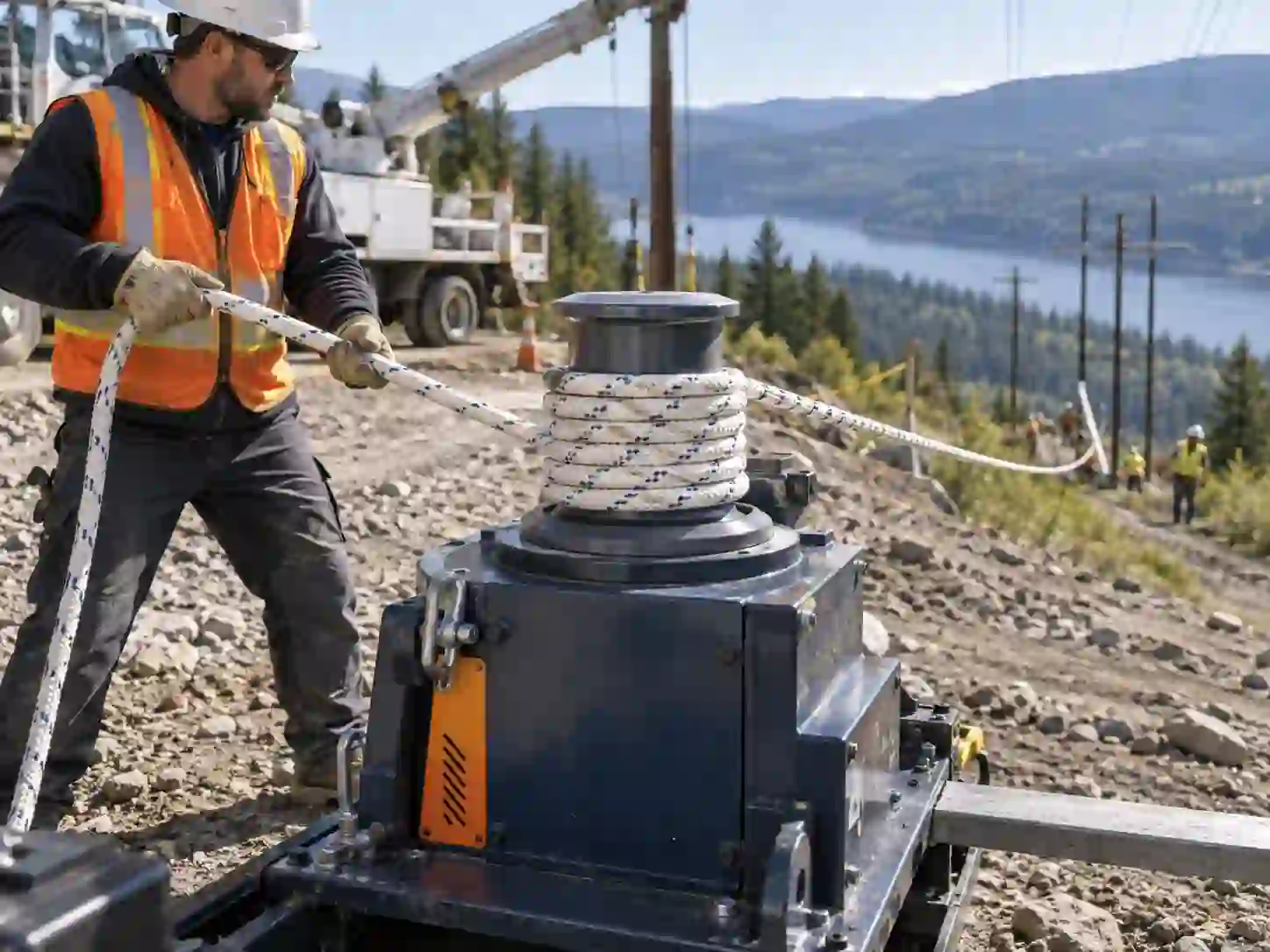
Capstan Winches
Review transient load, operator cycle, mechanical layout and charging access.
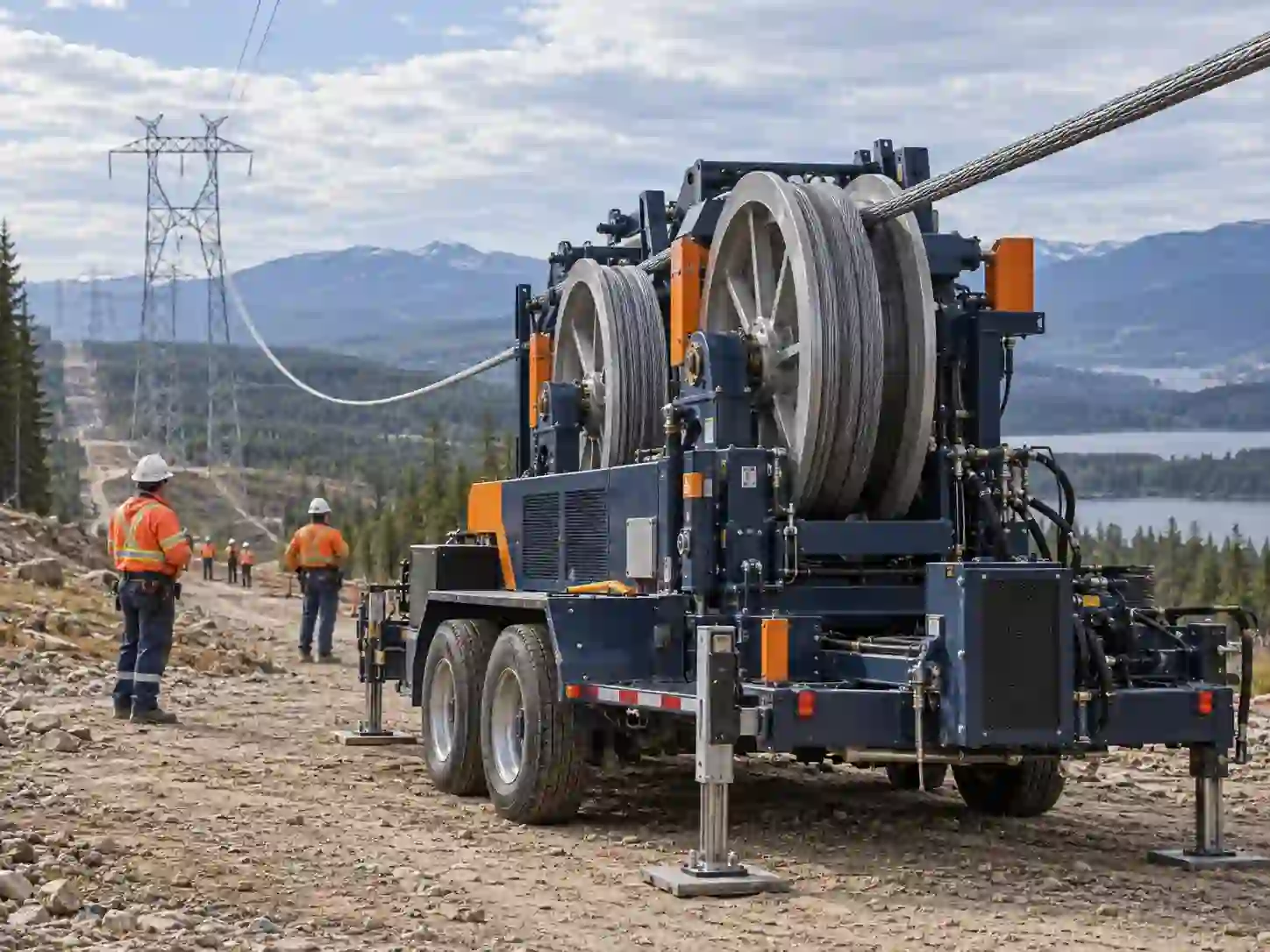
Cable Tensioners & Pullers
Coordinate the battery with tension control, drive electronics and separated equipment spaces.
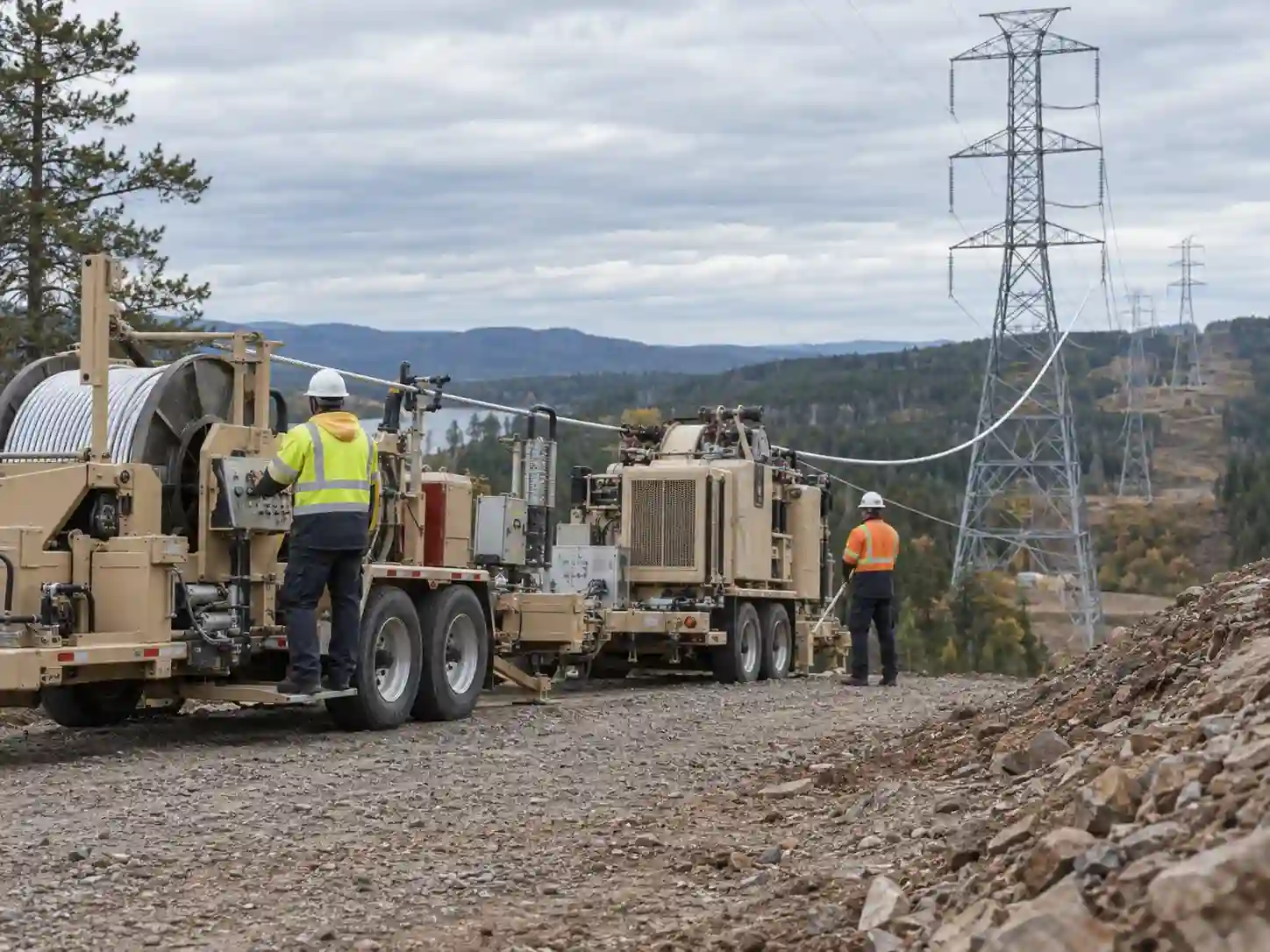
Power Line Stringing Equipment
Include temperature, operating window, transport requirements and service access in the review.
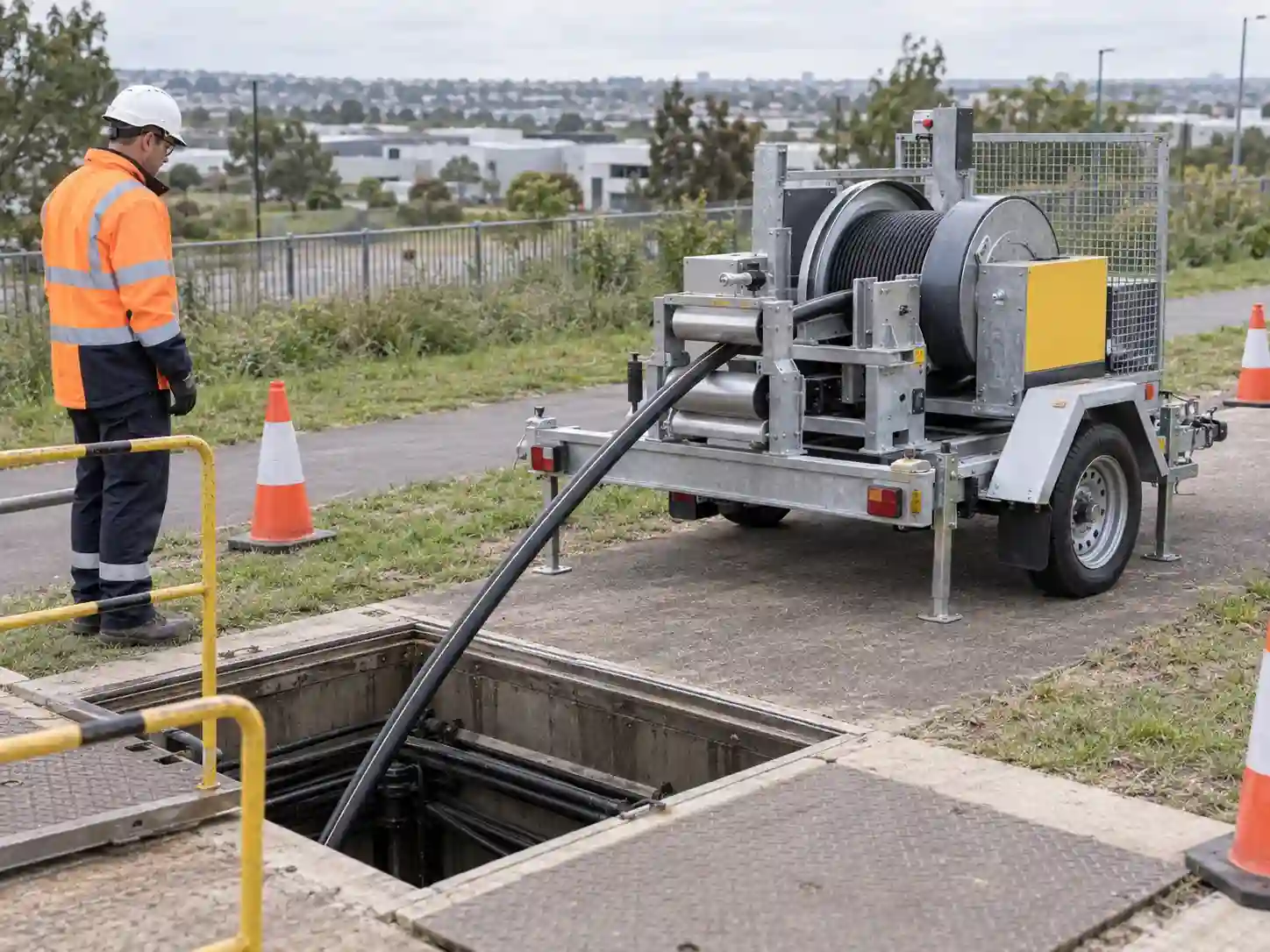
Trailer-Mounted Utility Equipment
Explore under-deck or side-bay layouts while maintaining protected access and mounting clearance.
Project inputs
Custom Engineering Around Your Machine
Bonnen can evaluate mounting, interfaces, connectors, CAN integration, monitoring, single- or dual-module architecture, and other voltage or capacity targets. Each option remains subject to project engineering.
What We Need to Size Your Battery
- Motor and controller voltage range
- Rated and peak power or current
- Required runtime and duty cycle
- Battery-compartment dimensions
- Single or separated installation spaces
- Minimum ambient temperature
- Charging setup and available window
- Communication and monitoring requirements
Explore Other 96V Battery Platforms

FAQs About 96V Lithium Battery Systems for Cable Pulling Machines & Industrial Winches
Next engineering step
Get an Engineering Recommendation
Send the machine voltage limits, load profile, operating target and installation space. Bonnen engineers can evaluate the most appropriate single-module or engineered dual-parallel direction.