Last Updated on 04/06/2025 by Bonnen Battery

How Depth of Discharge (DOD) Affects EV Lithium Battery Lifespan
Introduction
● Battery life is a top concern for EV drivers. Electric vehicles EVs rely on lithium battery packs ⇱ whose health depends on how deeply they are cycled (charged and discharged). Fully draining a battery too often can dramatically shorten its lifespan. Bonnen Battery (a leading global EV battery maker with 10+ years of experience) emphasizes that careful battery management is key to long-lasting performance. This post will explain Depth of Discharge (DOD) ⇱, why it matters for EV batteries, and how to use it to maximize battery life. (Visual suggestion: an EV battery icon showing charge levels.)
● What readers will learn: Simple definitions (what is DOD vs State of Charge), why DOD is important, how deeper discharges stress batteries, real examples (100% vs 80% DOD), tips to reduce DOD, and how Bonnen Battery’s designs address these issues. We’ll conclude with common questions (FAQs) and a call to action for Bonnen’s custom solutions.
What is Depth of Discharge (DOD)?
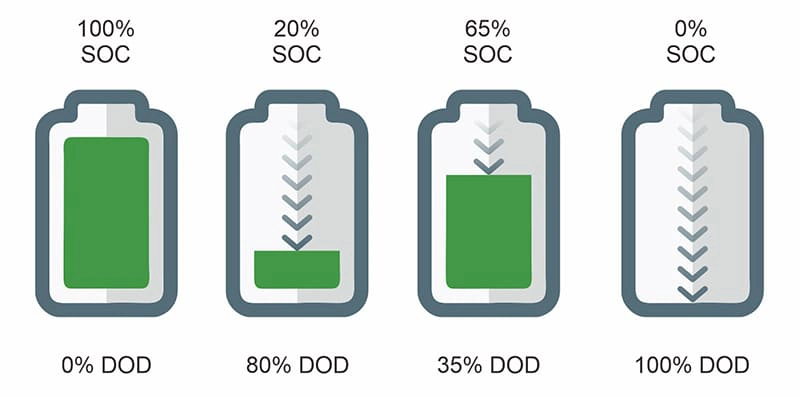
● Definition (easy language): Depth of Discharge (DoD) is the percentage of a battery’s capacity that has been used (discharged). For example, if an EV’s 100 kWh battery uses 30 kWh, that is 30% DOD. In other words, DoD = (energy used ÷ total capacity)×100. A DOD of 0% means the battery is still full (100% State of Charge, SoC), while 100% DoD means it was drained completely (0% SoC). (Visual: Infographic: a battery icon showing SoC vs DoD – top full bar labeled “100% charge (0% DoD)”, bottom empty bar “0% charge (100% DoD)”.)
● Relation to State of Charge (SoC) ⇱: DoD is simply the complement of SoC. If electric cars show 30% SoC, it means 70% DoD has been used. Most EVs never use full 0–100% range in practice, partly to protect the battery. (For example, many systems leave a ~10–20% buffer to avoid full drain.)
● Units: Usually expressed in percent (%). Sometimes you’ll see DoD given in amp-hours (Ah), but percentage is most common.
Why DOD Matters in EV Batteries
● Stress on cells: Every time you discharge a battery, its cells undergo stress. Deeper discharges (high DoD) strain the electrodes and increase internal resistance. Over time, this stress accumulates and the battery capacity fades faster. In plain terms: more of the battery used per cycle means more wear per cycle. Even charging to 100% each time can hurt longevity (higher voltage stresses the cell).
● Key principle: “Shallow DoD prolongs cycle life ⇱”. Battery University ⇱ notes that the number of cycles a lithium battery can endure depends on DoD – smaller cycle depths allow far more cycles. In other words, if you only use 20–40% of your battery each day, you may get many more charge cycles (years of life) than if you drained it 0–100%.
● Battery chemistry: This holds for lithium chemistries (NMC, LFP, etc.). For example, LiFePO₄ (LFP) cells are known for high cycle life even at deep discharge. Other chemistries (NMC, NCA) also benefit from partial cycling, but their raw cycle life at full depth is typically lower.
● Design trade-offs: To protect battery life, many EV systems intentionally avoid extreme SoC. Battery University explains that industrial devices (like EVs) “limit the charge to 85% and discharge to 25%, or 60% energy usability, to prolong battery life”. In practice, an EV might only let you charge to ~80–90% and might prevent it from dropping below ~10–20%. This reserves a safety buffer (protects against full drain or overcharge) and keeps DoD in a moderate range.
● Energy vs longevity: Operating in a mid-range SoC (e.g. 25–75%) means not using 100% of the rated capacity on each cycle, but it dramatically extends lifetime. This trade-off (less range per cycle vs more cycles overall) is by design. EV manufacturers (and battery system designers like Bonnen) balance range and durability when choosing battery controls.
DOD and Battery Lifespan (How They Relate)
● Cycle life basics: A battery’s lifespan is often measured in charge/discharge cycles ⇱ until it falls below a given capacity (e.g. 80% of original). Crucially, how “deep” those cycles are makes a big difference. In general, shallower cycles (low DoD) allow many more cycles before degradation.
● Data snapshot: According to Battery University testing, a lithium-ion cell might achieve only ~300–600 cycles at 100% DoD, but ~1000–3000 cycles at 40% DoD. For example, fully cycling a battery (0–100% every time) is much harsher than only cycling it 60–20%.

● Real example: Battery University’s modeling shows that cycling between 25% and 75% SoC (50% DoD) can maintain ~74% capacity even after ~14,000 cycles, whereas full 0–100% cycles drop capacity to ~48% in the same model. This highlights how keeping batteries in a mid-range significantly slows ageing.

● Energy throughput concept: Some argue that total energy moved through a battery (kWh throughput) is what matters most. However, peer reviews show higher DoD still accelerates ageing even if total energy throughput ⇱ is constant. In short: it’s not just how much energy you use each day, but how the battery is stressed. Frequent deep cycles cause more aging than many shallow cycles delivering the same total energy.
Scientific Reasons Why High DOD Reduces Battery Life
● Stronger material stress: At deep discharge levels, both electrodes undergo extra damage. Deep cycles make lithium coat the anode in metallic deposits (lithium plating ⇱) and cause tiny cracks in the crystal structure. These effects trap lithium where it can’t move back during charging and physically break down electrode materials. In short, each deep cycle irreversibly reduces how much charge the battery can hold.
● Higher resistance and heat: Batteries discharged deeply develop higher internal resistance ⇱. That means more of the energy is wasted as heat rather than delivered as power. The extra heat accelerates ageing, overheating cell components and degrading them faster. Over many cycles, this makes the battery lose capacity much sooner.
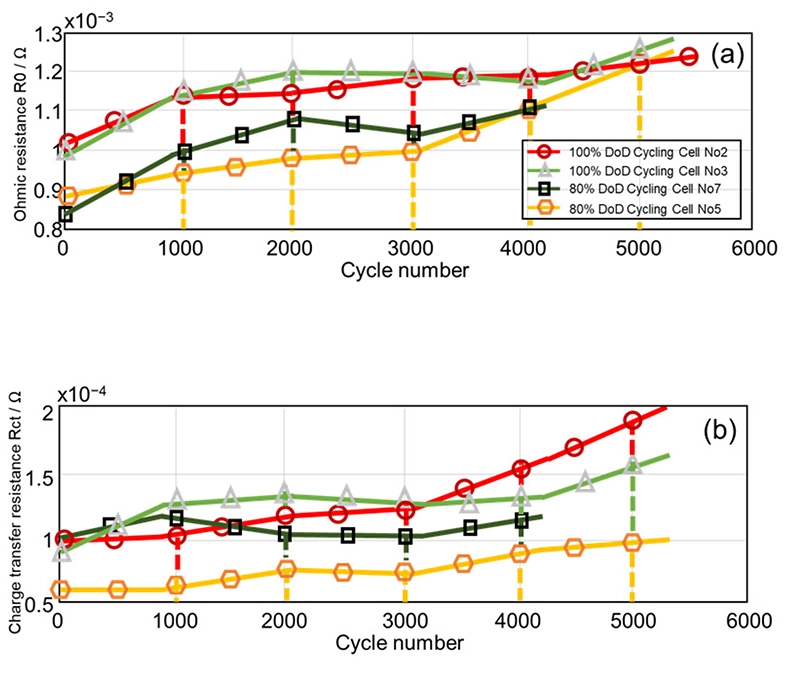
● Drastically shorter cycle life: All these stresses add up. For example, Battery University shows that fully deep cycling to 0% (100% DOD) might only last on the order of 300–500 cycles, whereas limiting discharge to 50% DOD can give around 1,200–1,500 cycles. In plain terms, shallow cycling (recharging well before empty) yields many times more life. It’s generally advised to avoid going below ~20% charge (80% DOD) in everyday use. By never hitting the bottom of the gauge, you stretch the pack’s lifetime.
What Really Happens Inside a Battery During Deep Discharge
You might not see it, but very deep battery drains cause real microscopic damage. For instance, if your smartphone suddenly drops from 100% to 80%, that jump often means hidden stress has occurred inside the battery. In an EV lithium cell, cycling below ~20% state-of-charge (over 80% DOD) triggers several damaging processes:
● Lithium plating on the anode ⇱: At very low charge, lithium ions can stop intercalating into the anode and instead deposit as a thin metal layer on its surface. It’s like electroplating the inside of the battery with lithium metal. This lithium can’t easily turn back into ions, so it’s effectively lost. Studies show this “plating” ties up active lithium and raises the cell’s resistance. Over time the metal can grow into needle-like dendrites, risking short circuits. In practice, every deep drain causes some irreversible capacity loss from this plating process.
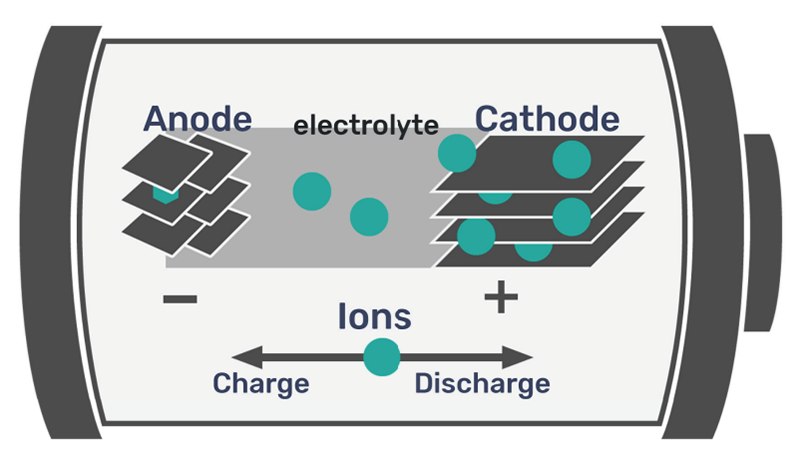
● Cathode lattice damage ⇱: The battery’s positive electrode (cathode), especially high-energy NCM/NCA materials, has a crystalline metal-oxide structure. Deep discharges pull out more lithium ions than the lattice was designed for, straining it severely. It’s like bending a metal sheet repeatedly – eventually it cracks or partially collapses. Experiments confirm that Ni-rich cathodes degrade much faster under deep cycling than more stable ones. In other words, each severe cycle can fracture the cathode’s lattice so it can’t hold as much lithium afterward.
● Electrolyte/SEI breakdown ⇱: The liquid electrolyte and the anode’s protective SEI layer also suffer. Every deep cycle accelerates SEI thickening and decomposition. A thicker SEI layer consumes lithium and electrolyte, effectively stealing charge from the battery. At the same time, the electrolyte itself can chemically break down at low charge, creating gas bubbles or solids. These byproducts block ion flow and add resistance. The net effect is a lower capacity and higher internal resistance from inside.
Real-World Examples (100% vs 80% DOD)
● Scenario comparison: Suppose two EV owners: one uses the full battery each trip (100% DOD), another limits use to 80 depth of discharge (leaving 20% as buffer). Roughly speaking, the “80% user” could see 1.5–2× the cycle life of the 100% user. For example, the table above suggests ~500 cycles at 100% DOD vs ~800 at 80% DOD (midpoint of ranges). In real terms, this might mean 1,000 km fewer range per charge but double the years of battery life for the 80% user.
● EV practice: Many EV manufacturers implicitly use this trade-off. For instance, Tesla recommends charging daily to around 80–90% and only going to 100% for long trips. This “20–80 rule ⇱” is a widely cited best practice (see Tips below). By contrast, occasionally using a full charge or discharge is okay, but not as the norm.

● High-quality cells: Some batteries are rated for very high cycles at 80% DOD. This illustrates that using good cell chemistry and quality manufacturing can greatly enhance longevity even with relatively deep cycling.
● Visualization: An infographic or chart here could show two batteries (one labeled “0–100% use” vs “20–80% use”) with respective cycle numbers above them. (Idea: Battery icon at 100% gets a shorter bar of lifetime, at 80% a taller bar.) This would concretely illustrate “deeper discharge = shorter life.”
● Summary: In practice, limiting DOD in EV use is a simple way to prolong battery lifespan. Even if it costs a bit of range per charge, it pays off by delaying capacity fade. As one source notes, frequently charging to 100% or draining to 0% can strain the battery and reduce its lifespan.
Tips to Maximize EV Battery ⇱ Life by Managing DOD
● Charge smart (use the 20–80% rule): Most experts recommend keeping battery SoC between ~20% and 80% for daily use. This avoids extreme SoC stresses. In practice, use your EV’s charging limit settings (many EVs allow you to set a maximum charge, e.g. 80%). This greatly reduces stress on the cells while still giving ample range.
● Avoid deep discharges: Don’t wait for the battery to hit 0%. Regularly running an EV down to nearly empty puts excessive strain on the battery. Instead, plug in when you reach low battery (say 20–30% left). Frequent partial charges are fine (lithium batteries have no “memory effect”), so it’s better to top up often rather than doing one full drain-charge.
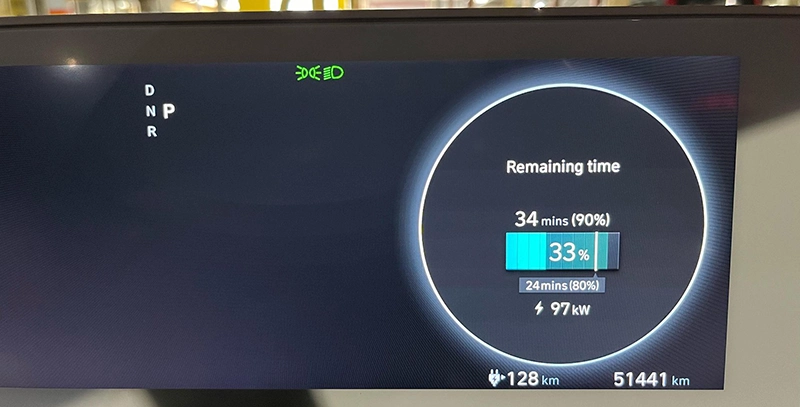
● Don’t stay at 100% too long: If you must charge to 100% (for a long trip), try not to leave the car at 100% SoC for hours at a time, especially in hot weather. A battery kept at full charge and high temperature will age faster. (Battery University data shows a Li-ion at 100% SoC and 40°C retaining only 65% capacity after 1 year, versus 85% if held at 40% SoC.) After reaching 100%, it’s good practice to drive off or reduce charge.
● Keep it cool: High temperatures accelerate ageing. Park in shade or garages, especially after charging. Extreme heat + full charge is particularly harmful. If driving in hot conditions, avoid “topping off” to 100%.
● Use on-board BMS limits: Modern EVs and battery packs have Battery Management Systems (BMS) ⇱ that protect cells (disconnect below certain voltage, etc.). Trust these safeguards. Some vehicles offer “Extended Range” or “Lifetime” charging modes that enforce shallower cycles. Use them if available.
● Regular maintenance and updates: Keep the vehicle’s software up to date. Manufacturers sometimes push updates that optimize battery charging algorithms (e.g. charging slower above 80% or learning driving patterns).
● Monitor battery health: Many EVs display estimated battery health or allow you to check it via app. Watching trends (e.g. how range per charge changes year to year) can alert you if something unusual happens.
● Visual Aid: A helpful graphic could be a line chart or bar chart comparing “Usage (DoD) per cycle” vs “Estimated cycles until 80% capacity”. This would reinforce the idea of more shallow cycles = more cycles.
● Key takeaway: Consistent shallow cycling and avoiding extremes will maximize battery lifespan. As one battery care guide advises: “to extend lifespan, it’s best to avoid deep discharges”. Small daily driving cycles, with top-ups, are better than repeatedly draining to zero.
How Bonnen Battery Designs for Optimized DOD and Longevity
● Durable cell selection: Bonnen Battery uses high-quality lithium cells (often LiFePO₄ or premium NMC) chosen for long cycle life and stability. For example, our EV, boat battery is rated for 4000+ cycles at 80% DoD. This shows that even if users occasionally run to deep discharge, the cells can still last many years.
● Battery Management & BMS: In its EV battery packs, Bonnen integrates intelligent Battery Management Systems (BMS) that monitor each cell’s voltage and temperature. The BMS can enforce safe SoC limits (e.g. stopping at 85% charge or blocking discharge below 15%) to avoid damaging DoD extremes. Robust thermal management is also used so packs stay cool, which reduces stress at any given DoD.
● Design for durability: Bonnen’s engineering process explicitly focuses on lifespan & durability as key factors. Cells are derated (not pushed to maximum current) and mechanical design ensures even cell use. They test packs with accelerated cycles to verify longevity. The company’s decade of experience has resulted in many hundreds of successful EV battery projects globally.
● Customization: Bonnen offers custom solutions, meaning they can tailor the battery’s usable capacity and DOD range to customer needs. For instance, if a client prioritizes lifespan, Bonnen can add extra capacity so the user only cycles 80% even if 100% range is occasionally needed. (Call-out box suggestion: “Bonnen Battery can design a pack with your ideal size and BMS settings to balance range vs life.”)
● Quality control: Strict quality control (cell sorting, precise assembly) ensures every module has balanced cells, so no weak cells get over-stressed. This uniformity means the whole pack ages more gracefully under any DoD.
● Global reliability: As a proven international supplier (90%+ exports) Bonnen’s products meet global standards (like UN38.3 for shipping). Their reputation for reliability comes from such design rigor. In short, Bonnen’s EV battery packs are engineered so that DOD’s impact on life is as small as possible through design choices and safeguards.
FAQs: Common Questions About DOD
Q: What exactly is DOD, and how is it different from State of Charge?
A: DOD (Depth of Discharge) is just the opposite of State of Charge (SoC). If a battery is at 70% SoC, it has used 30% of its capacity – i.e. 30% DOD. SoC tells you how full it is; DOD tells you how empty it is.
Q: Why is fully draining (100% DOD) bad?
A: Because each full discharge cycle stresses the battery cells the most. Experts point out that repeatedly running a battery to 0% can “dramatically shorten” its useful life. It forces high current flows and high voltage swings in the cells, which accelerates wear.
Q: I heard lithium batteries have no memory effect. Do I still need to avoid deep cycles?
A: It’s true lithium batteries don’t have the old NiCd memory issue, so you don’t need to fully discharge on purpose. However, “no memory effect” doesn’t mean deep cycling is harmless. On the contrary, deep cycling (high DOD) is exactly what wears the battery faster. It’s best to charge when convenient rather than waiting to go empty.
Q: What’s considered a “cycle” for battery manufacturers?
A: A cycle is often defined as 0–100% discharge. However, manufacturers usually specify cycle life at a certain DOD (commonly 80% DoD) because full cycles are harder on the battery. Some define any 100% equivalent of partial discharges as one full cycle. (E.g., three 33% discharges ≈ one full cycle in terms of total energy.)
Q: How does DOD affect the warranty or rating of an EV battery ⇱?
A: Many warranties are expressed in total energy throughput or retained capacity after a number of cycles. Higher DOD per cycle uses up that allowance faster. Some EV battery warranties assume a certain typical use profile (not full 0–100 cycles every day). Always check your vehicle manual – often they advise not to max out charging for daily use.
Q: If I only use 50% of my battery each day (50% DOD), will my battery last twice as long?
A: Not exactly double, but much longer. Because cycling life does not scale linearly, using only half the depth per cycle generally more than doubles the cycle count (per Battery University data). In simple terms: lots of small cycles give far more life than the same total energy in fewer big cycles.
Q: Is “cycle life” the only thing that matters? What about calendar life or temperature?
A: Cycle life (affected by DOD) is crucial, but other factors matter too. High temperature and high SoC also cause faster aging. In fact, keeping a battery at 100% charge in heat can be even worse than cycling it. That’s why battery managers also limit charging in extreme conditions.
Q: Can I ignore DOD if my EV only does short trips?
A: Short trips usually mean shallow cycling (low DOD each trip), which is good. But the battery still ages per calendar time and temperature. So while you may get many cycles, still avoid leaving the car unused at 100% charge or in hot weather for long.
Q: Will charging to 100% occasionally hurt the battery?
A: Occasional full charges (e.g. before a long trip) are fine. Most BMS systems are designed to handle occasional full SoC safely. The main advice is to avoid making that your daily habit.
Contact Bonnen Battery↓ now and let us help you power your adventures with the best in lithium battery technologies.
© [Bonnen Battery] and [www.bonnenbatteries.com]. Unauthorized use and/or duplication of this material without express and written permission from this site’s author and/or owner is strictly prohibited. Excerpts and links may be used, provided that full and clear credit is given to [Bonnen Battery] and [www.bonnenbatteries.com] with appropriate and specific direction to the original content.