Last Updated on 19/08/2026 by Bonnen Battery
EV Lithium Battery Lifespan Explained: Theory vs. Facts
As the adoption of lithium battery electric vehicles continues to rise, there is a growing recognition of the significance of power batteries, which serve as the cornerstone of these vehicles. Their lifespan has emerged as a critical concern within the industry. Today, we will explore a comprehensive analysis of various factors influencing the longevity of EV battery packs. This includes examining the effects of fast charging and storage duration on battery lifespan, alongside addressing other pertinent issues relevant to battery performance and durability.
1. What Does “EV Battery Lifespan” Actually Mean?
When discussing EV battery lifespan, it is important to separate three different concepts: cycle life, calendar life, and real-world service life. They are related, but they are not the same thing.
1.1 Cycle Life
Cycle life describes how many charge and discharge cycles a battery can complete before its usable capacity falls to a defined level, commonly around 70–80% of its original capacity.
However, a cycle-life number should never be considered alone.
The result depends heavily on the test conditions, including:
- Depth of discharge (DOD)
- Charge and discharge rate
- Battery temperature
- State of charge (SOC) operating window
- Cell chemistry
- End-of-life capacity threshold
For example, the same battery cell may achieve very different cycle-life results when tested at 100% DOD compared with a narrower operating SOC window.
1.2 Calendar Life
Calendar life is the battery degradation that occurs simply as time passes, even when the battery is not being actively cycled.
A vehicle that only travels a short distance every day may accumulate relatively few full cycles, but its battery will still age.
Calendar aging is influenced by factors such as:
- Storage temperature
- Average SOC
- Time spent at very high SOC
- Cell chemistry
- Battery design
This is why a battery cannot be expected to last indefinitely simply because it has a very high theoretical cycle-life rating.
1.3 Real-World Service Life
For an EV battery pack, the most useful number is its real-world service life.
Real-world battery life is determined by the interaction of:
cell cycle aging + calendar aging + operating temperature + charge/discharge rate + SOC/DOD strategy + BMS control + thermal management + cell consistency + system reliability.
The battery pack is therefore more than a collection of cells. BMS calibration, thermal design, cell matching, busbars, contactors, connectors and mechanical design can all affect how well the battery performs over many years.
A battery with an impressive laboratory cycle-life number can still experience premature degradation if it is continuously exposed to excessive heat, aggressive charging or an unsuitable operating SOC range.
For EV projects, it is therefore better to ask:
“How long will this battery last under my vehicle’s actual operating conditions?”
rather than simply asking:
“How many cycles does this battery have?”

2. LFP vs. NMC vs. Sodium-Ion: Which Chemistry Is Better for Battery Life?
There is no battery chemistry that is best for every electric vehicle.
The correct choice depends on whether the project prioritizes cycle life, energy density, weight, available installation space, operating temperature, power or cost.
| Battery Chemistry | Lifecycle Tendency | Energy Density | Low-Temperature Performance | Main Advantage | Typical EV Applications |
| LFP (LiFePO4) | High cycle durability | Medium | Good with correct thermal design | Long life, safety and durability | Utility vehicles, commercial EVs, electric conversions, fleets and heavy-duty applications |
| NMC | Moderate to high, depending on cell and operating conditions | High | Good with appropriate thermal management | Higher energy density and smaller/lighter packs | Passenger EVs, performance vehicles and space-constrained applications |
| Sodium-Ion | Cell and product specific; technology is still developing | Lower than mainstream lithium-ion EV chemistries | Particularly interesting for cold-climate applications | Low-temperature capability and alternative material system | Cold-climate fleets, industrial vehicles, utility vehicles and selected low-speed EV projects |
–
For applications where long cycle life and durability are the main priorities, LFP is often a strong starting point.
Where battery weight and installation volume are more critical, an NMC battery can provide an advantage because of its higher energy density.
Sodium-ion is becoming another option for selected EV and industrial vehicle projects, particularly when low-temperature operation is a major engineering requirement.
The final chemistry should always be selected according to the vehicle duty cycle rather than chemistry name alone.
3. The 5 Operating Factors That Have the Biggest Impact on EV Battery Life
Battery chemistry sets the starting point, but operating conditions often determine how much of the theoretical lifespan is actually achieved.
3.1 Temperature
Temperature is one of the most important factors affecting battery degradation.
High temperatures accelerate unwanted chemical reactions inside lithium-ion cells. At the same time, very low temperatures reduce electrochemical reaction rates and can limit how much charging current the battery can safely accept.
This is why battery thermal management is not only a performance feature — it is also a battery-life feature.
For vehicles operating in hot, cold or highly variable climates, the battery pack should be designed with appropriate temperature monitoring, heating and/or cooling strategies.
3.2 State of Charge (SOC)
Keeping a lithium-ion battery at very high SOC for long periods can increase electrochemical stress.
This does not mean that every EV must always operate between exactly 20% and 80%.
The correct SOC window depends on the cell chemistry, vehicle range requirements, battery sizing and BMS strategy.
For commercial vehicles, increasing battery capacity slightly can sometimes allow the vehicle to achieve its required daily energy while operating within a less demanding SOC window.
3.3 Depth of Discharge (DOD)
Depth of discharge describes how much of the battery capacity is used during a cycle.
For example:
- Using a battery from 100% SOC to 20% SOC represents approximately 80% DOD.
- Using it from 80% SOC to 30% SOC represents approximately 50% DOD.
Repeated deep cycles generally place more stress on a battery than shallower cycles under otherwise comparable conditions.
This means battery sizing has a direct relationship with battery life.
A battery that is too small may be forced to complete deep charge/discharge cycles every day, while a correctly sized battery may deliver the same required energy using a more moderate operating window.
3.4 Charge and Discharge Rate
Higher current generates more heat and increases electrochemical stress.
Fast charging is not automatically harmful. A correctly designed battery can safely support fast charging when the cell chemistry, SOC, battery temperature and BMS charging strategy are properly coordinated.
Problems occur when charging or discharging exceeds the conditions for which the cells and battery system were designed.
This is why EV battery selection should consider both:
- Continuous current
- Peak current and duration
rather than battery capacity alone.
3.5 Thermal Management and BMS Strategy
Two battery packs using similar cells can achieve very different service lives if their system designs are different.
A well-designed BMS should monitor parameters such as:
- Individual cell voltage
- Pack voltage
- Charge and discharge current
- Cell temperature
- SOC
- Fault conditions
Depending on the application, the battery system may also control cooling, heating, contactors and charging-current limits.
Good thermal uniformity is equally important. If one area of a large battery pack consistently operates hotter than another, cells may age at different rates, eventually reducing usable pack performance.

4. How many cycles can a retired car LFP or NCM battery perform after its initial capacity degrades to below 80%?
The cycling performance of power batteries is influenced by various factors. Different cathode materials, anode materials, electrolytes, cycle conditions, and even processing consistency states can significantly impact their cyclic degradation curves ⇱ . There are three common patterns observed in cyclic degradation curves. One pattern shows a proportional decrease with a diagonal line, another exhibits fast degradation in the early stages followed by slow degradation later on, and the third type demonstrates slow degradation in the early stages (with some potentially experiencing a slight increase) followed by fast degradation in the later stages.

The rapid degradation trend in the later stage of type 3 is generally referred to as “cycle plummet ⇱“. After the cycle plummets, the remaining lifespan will be very short.
It is generally believed that two types of degradation curves, 1 and 2, will also experience a cycle plummet, but after reaching an 80% capacity retention rate ⇱, at which stage will the cycle plummet, the design status and cycling conditions of different batteries are also different.

Therefore, the trend of degradation curves for power battery cells is a highly complex issue, and currently, it can only be estimated through extensive testing of cycling performance. Additionally, during the vehicle’s usage, the battery system is also affected by the BMS, cooling system, and ageing of other vehicle components.
Hence, whether it is LFP or NCM batteries, predicting the late-cycle lifespan is challenging, and even different batches of the same design status may not be the same.

5. A Simple Way to Estimate EV Battery Lifespan
You can make a preliminary battery-life estimate using Equivalent Full Cycles (EFC).
An Equivalent Full Cycle represents energy throughput equal to 100% of the battery’s nominal energy.
Step 1: Calculate Annual Battery Energy Throughput
Annual Energy Throughput = Average Daily Battery Energy Used × Operating Days per Year
Step 2: Calculate Equivalent Full Cycles per Year
Equivalent Full Cycles per Year = Annual Energy Throughput ÷ Nominal Battery Energy
Step 3: Estimate Cycle-Limited Life
Cycle-Limited Life ≈ Expected Cycle Life ÷ Equivalent Full Cycles per Year
Example
Assume an electric utility vehicle uses:
- Battery capacity: 30 kWh
- Average daily battery energy: 18 kWh
- Operating days: 300 days/year
Annual energy throughput:
18 kWh × 300 = 5,400 kWh/year
Equivalent full cycles:
5,400 ÷ 30 = 180 EFC/year
If the selected cell has an expected cycle life of approximately 3,000 equivalent cycles under the relevant operating conditions:
3,000 ÷ 180 ≈ 16.7 years
However, this does not mean the battery can automatically be guaranteed for 16.7 years.
Calendar aging, temperature, SOC, charging rate, thermal management and other battery-system components may become the limiting factors before the theoretical cycle limit is reached.
Therefore:
Practical Battery Life ≈ the lower of cycle-limited life and calendar-limited life, adjusted for actual operating conditions.
This calculation is useful because it explains why simply asking for “the battery cycle life” is not enough when designing a commercial EV battery system.
Need a Battery-Life Estimate for Your EV Project?
If you are developing an electric vehicle, conversion vehicle, utility EV or industrial electric vehicle, Bonnen Battery can evaluate battery life based on your actual duty cycle instead of relying only on a generic cycle-life number.
Our engineers can then evaluate whether LFP, NMC or sodium-ion is the better direction for your application and recommend an appropriate battery configuration.

6. Does fast charging have any impact on the lithium battery lifespan?
Under normal circumstances, the fast charging power is set strictly according to the reasonable charging rate that the battery can withstand, but it does not rule out that some models set the fast charging power too high for sales needs. The former’s fast charging does little damage to the battery and will not significantly damage the battery life, while the latter should try to avoid using fast charging. Power battery systems generally consist of battery cells, BMS (power management system) and structural parts (boxes, connectors, connectors, etc.). Without considering the power limitations of the charging pile, its fast charging capability is mainly determined by the fast charging performance of the battery cell ⇱. The following will focus on the fast charging performance of the battery cell. Let’s first explain two concepts:
● Charging rate: The multiple of the charging current relative to the rated capacity (Ah) of the battery cell, expressed in C; For example, a 100Ah battery cell can be charged with 100A to 1C, which can be simply understood as being fully charged in 1 hour; 200A charging is 2C, which can be simply understood as 0.5h to fully charge; 50A charging is 0.5C, which can be simply understood as 2 hours of full charge;
● State of Charge: It can be simply understood as the proportion of residual capacity of a battery cell to its full capacity. For example, a 100Ah battery cell with an actual 20Ah of internal power is called a 20% SOC. The charging rate that a battery cell can withstand in different states is different. If charged at a rate that exceeds the allowable limit, irreversible damage will occur to the battery cell. That is, lithium elements will plate at the anode electrode, producing “dead lithium”. It is generally believed that the lithium plating will seriously damage the cycle life, and there is also a risk of puncturing the separator, which can trigger safety accidents.
Factors affecting the charging capacity of the battery cell (mainly temperature and state of charge ⇱)
● The lower the temperature, the lower the charging rate that the battery cell can withstand;
● The temperature is too high. The heat generated by continuing to charge with high current will continue to increase the temperature, damaging the life of the battery cell and posing safety hazards;
● The higher the state of charge, the lower the charging rate the battery can withstand.
Actual fast charging power
The actual fast charging power of the battery pack is determined by the BMS based on the state of the battery cells (temperature, state of charge). When designing a battery system, a detailed fast-charging power meter is usually developed. The BMS selects the appropriate charging current based on the monitored battery pack temperature, state of charge, and other information, and interacts with the charging station to control its current output size. It should be noted that the following three points are:
● When designing a fast-charging power meter, it is generally not allowed to exceed the charging capacity of the battery cell. Because battery cells have a characteristic that their lifespan varies when charged at different rates. For example, a battery cell with a cycle of 0.5C charging and 1C discharging has a lifespan of 2000 cycles. However, when the charging rate is increased to 1C, this lifespan will decrease to 1800 cycles. The “charging rate that a battery cell can withstand” here refers to the reasonable range of battery life even if this rate is continuously used for fast charging throughout its entire life cycle. For example, the difference between 1800 and 2000 weeks in the above example is difficult to reflect in practical applications. But if the charging rate increases to 2C, the lifespan of the battery cell will decrease to 1000 cycles or even 800 cycles, then the 2C rate is unreasonable;
● The maximum fast charging rate of a battery pack is generally set to be lower than the charging rate that the battery cells can withstand. This is mainly due to the consistency of the battery cells. Due to the influence of the processing process, the ability of different cells varies, and it is necessary to take into account the part of cells with poor performance;
● In fact, the power meter set-up is usually a stepped or multi-stage charging ⇱, which means that the current is maximum when the battery is in the most suitable state, while the current in other states will decrease. This is also why our fast charging usually stops when it reaches 80%. Below, we will show an explanation of the simplified charging rate.

Therefore, under normal circumstances, using fast charging for charging should not affect the life of the battery pack. If the capacity of the battery pack decays quickly after using fast charging for a period of time, it means that there is a problem with the battery pack and it needs to be checked by after-sales service as soon as possible.

7. If lithium iron phosphate (LFP) batteries are maintained with a charge and discharge cycle every 3 to 6 months, how much impact does storage for one year, two years, or three years have on battery performance and lifespan?
The irreversible capacity loss ⇱ during the room temperature storage process of lithium iron phosphate batteries is primarily caused by internal side reactions. The most significant factor is the continuous decomposition and regeneration of the SEI film ⇱ on the anode electrode, resulting in changes in its composition.
In addition to causing irreversible capacity loss, these side reactions also produce trace amounts of gas (negligible at room temperature) and increase the impedance of the SEI film, directly leading to increased internal resistance ⇱.
Short-term storage is generally beneficial for batteries, as the internal stability improves. The SEI film formed during formation becomes denser, resulting in lower impedance. This is why the internal resistance tends to decrease slightly after short-term storage.
During long-term storage, irreversible capacity loss is expected to change according to the following trend: large initial capacity decrease followed by a gradual decrease in capacity decrease over time.

The aforementioned degradation trend pertains to the long-term storage of batteries in a fully charged state. If stored in a less-than-full state, the degradation will be slower.
The overall trend of internal resistance changes is opposite to the aforementioned trend, indicating an increase. However, the initial trend may differ slightly within the first month, initially decreasing before rising.
The impact on lifespan is primarily attributed to the irreversible capacity loss mentioned earlier. For instance, if a battery experiences a 4% capacity decay after 300 cycles, reaching a 4% irreversible capacity loss during storage would likely result in the loss of approximately 300 cycles of lifespan (typically, lifespan termination is when capacity decays to 80% of the initial capacity).
Additionally, there is another factor to consider: the plastic sealing components on aluminium-cased cells (square/cylindrical) or the sealing gel layer on pouch cells, both of which are polymers and have a certain level of porosity. Water molecules may gradually penetrate, but this impact is minimal. Unless there are processing issues or the battery is not constructed with plastic casings like those used in prismatic cells, there should be no significant problems.
In conclusion, as the automotive industry transitions towards new energy electric vehicles, the importance of power batteries cannot be overstated. The lifespan of these batteries has become a central concern within the industry. Through our exploration today, we have delved into various factors influencing the longevity of new energy power batteries, including the effects of fast charging and storage duration on battery lifespan, among other pertinent issues.
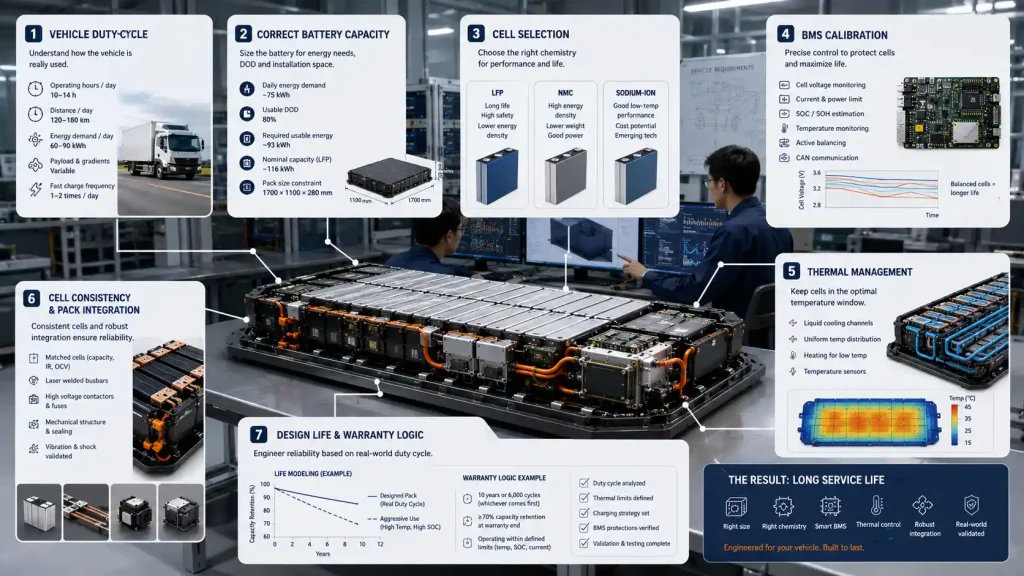
8. How Bonnen Designs EV Battery Packs for Long Service Life
At Bonnen Battery, battery lifespan is not determined from cell chemistry alone.
For a custom EV battery project, our engineers evaluate the complete operating environment before defining the battery configuration.
Important design parameters include:
8.1 Vehicle Duty Cycle
A delivery vehicle operating eight hours per day requires a different battery-life strategy from a recreational vehicle used only on weekends.
Daily operating time and annual energy throughput are therefore important inputs during battery sizing.
8.2 Correct Battery Capacity
Increasing battery capacity is not only about increasing driving range.
In some applications, a larger battery can reduce the average DOD required each day and reduce continuous stress on the cells.
The objective is not simply to install the largest possible battery, but to find the correct balance between:
energy requirement + available space + weight + cost + expected service life.
8.3 Cell Selection
Bonnen can evaluate different cell chemistries and cell formats according to the project.
LFP may be preferred when long cycle life, durability and safety are priorities.
NMC may be more suitable when higher energy density and limited installation space are more important.
Sodium-ion can also be evaluated for selected projects where low-temperature operation is a major requirement.
8.4 BMS Calibration
The BMS operating limits should match the characteristics of the selected cells.
Depending on the EV system, parameters can include:
- Maximum and minimum cell voltage
- Charge-current limits
- Discharge-current limits
- Temperature protection
- SOC limits
- Cell balancing
- CAN communication
- Contactor control
- Charger communication
This allows the battery to operate inside an appropriate electrical and thermal envelope.
8.5 Thermal Management
For high-power, high-energy or demanding-duty applications, Bonnen can evaluate passive cooling, forced-air cooling, liquid cooling and battery heating according to the operating environment.
The purpose is not only to prevent overheating but also to keep the temperature distribution throughout the battery pack as uniform as practical.
8.6 Cell Consistency and Pack Integration
Battery-pack life can eventually be limited by weaker cells or poorly balanced cell groups.
Cell matching, electrical connection design, mechanical structure, thermal distribution and BMS balancing strategy therefore need to be considered together.
8.7 Warranty and Design-Life Logic
A realistic battery warranty should be connected to the actual battery specification and application rather than relying on one generic cycle-life claim.
For custom projects, the final warranty conditions can therefore depend on factors such as battery chemistry, operating profile, charge/discharge limits and the agreed technical specification.
If you provide your expected daily operating conditions, Bonnen can evaluate both the required battery capacity and the expected battery-life strategy during the battery design stage.
9. Which Bonnen EV Battery Is Suitable for Your Application?
If you already know your basic vehicle requirements, the following products provide useful starting points.
9.1 Long-Life LFP Battery for EV Conversions
For electric car conversions, utility vehicles and applications where cycle durability is a priority, consider our:
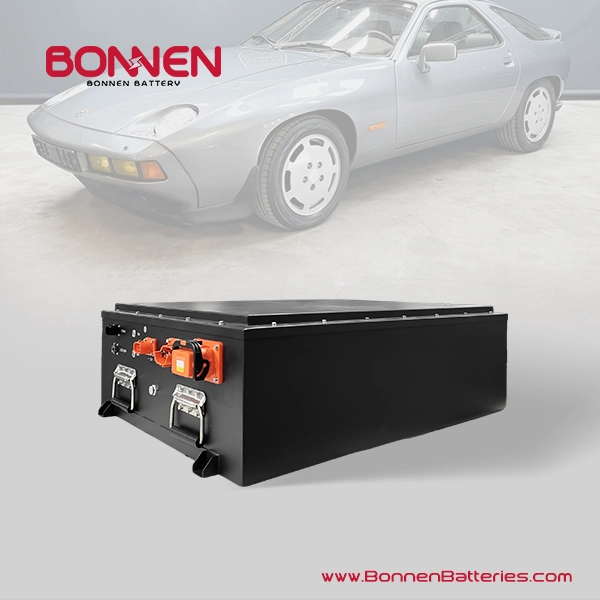
96V LiFePO4 Lithium Battery Pack for DIY Electric Car Conversion
This pack is designed around LiFePO4 chemistry and can be customized according to vehicle requirements.
View the 96V LiFePO4 EV Battery ⇱
9.2 Lightweight and Space-Constrained EV Applications
When battery height, weight or available installation space is a major constraint, NMC may be worth evaluating.
96V Ultra-Thin and Lightweight NMC EV Battery Pack
9.3 Cold-Climate EV and Industrial Vehicle Applications
For projects where low-temperature performance is particularly important, sodium-ion can also be evaluated.
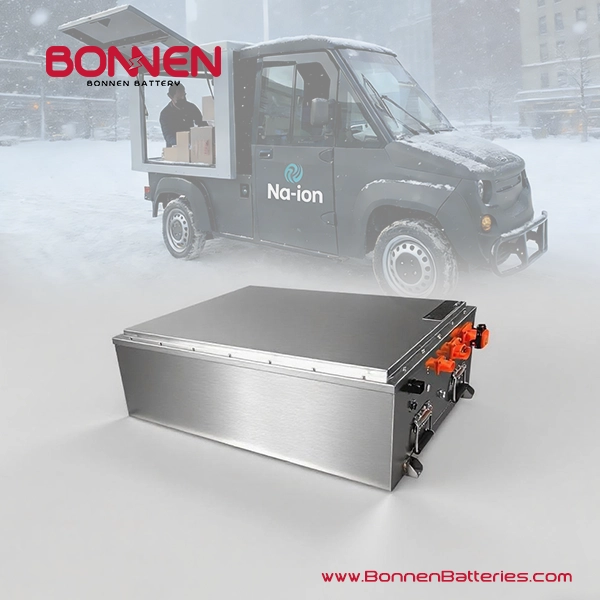
96V Sodium-Ion Battery for EVs, Trucks, Tractors and Transport Vehicles
View the 96V Sodium-Ion EV Battery ⇱
9.4 Higher-Voltage EV Systems
For applications requiring a higher system voltage, Bonnen also develops higher-voltage LiFePO4 battery systems.
144V LiFePO4 EV Battery Pack
For other voltage, capacity and vehicle requirements, explore our complete range of:
10. Conclusion: Battery Lifespan Should Be Designed Around the Vehicle
The lifespan of an EV battery cannot be accurately predicted from chemistry or cycle-life specifications alone.
A realistic evaluation should consider:
- Cycle aging
- Calendar aging
- Temperature
- SOC range
- Depth of discharge
- Charge and discharge rate
- Daily energy throughput
- Thermal management
- BMS strategy
- Cell consistency
For some vehicles, LFP provides the best balance of durability and cycle life. For applications where weight and installation space are critical, NMC may be a better solution. Sodium-ion is also becoming an interesting option for selected cold-climate and industrial EV applications.
The most important step is to match the battery to the vehicle’s actual duty cycle.
11. FAQ
1. How many years can I realistically expect my electric vehicle battery to last?
An EV lithium battery typically lasts between 8 to 10 years or 100,000 to 150,000 miles before its capacity drops below the 70% threshold, which is generally considered the “end of life” for automotive use.
2. Why does the “theoretical” cycle life of a battery differ from real-world performance?
Theoretical cycle life is measured in controlled lab conditions (constant temperature and steady discharge), whereas real-world facts show that variables like extreme weather, aggressive driving, and fast charging can reduce the actual lifespan by 20% to 30% compared to lab estimates.
3. Is it true that I should not charge my EV to 100% every day?
For many lithium-ion batteries, avoiding prolonged storage at very high SOC and avoiding unnecessary deep discharge can help reduce battery stress. However, there is no universal 20%–80% rule for every EV battery. The recommended SOC operating window should be determined according to the cell chemistry, vehicle range requirement and BMS strategy.
4. Which is better for long-term durability: NMC or LFP batteries?
LFP (Lithium Iron Phosphate) batteries generally offer a superior lifespan of 2,000 to 3,000 cycles, making them more durable than NMC (Nickel Manganese Cobalt) batteries, which typically provide between 1,000 and 1,500 cycles.
5. How does high-temperature weather actually affect lithium battery health?
High temperature can accelerate unwanted chemical reactions inside lithium-ion cells and increase the rate of battery degradation. The actual effect depends on cell chemistry, SOC, exposure time and battery thermal management. For EVs operating in hot climates, controlling both maximum temperature and temperature uniformity across the pack is important for long-term battery health.
6. Does frequent DC fast charging damage my battery?
Frequent fast charging does not automatically mean rapid battery degradation. Its impact depends on charging C-rate, battery temperature, SOC and the characteristics of the selected cells. A properly designed BMS reduces charging current when the battery approaches operating limits. Fast charging becomes more stressful when high charging current is combined with unsuitable temperature or high SOC.
7. What is Depth of Discharge (DOD) and why does it matter for my EV?
Depth of Discharge (DOD) refers to the percentage of the battery’s total capacity that has been used; a lower DOD (e.g., using only 50% before recharging) can nearly double the total number of cycles a battery can achieve compared to a high DOD of 80% or 90%.
8. What are the three most important steps to extend my lithium battery’s life?
Follow these three steps: First, avoid parking in direct sunlight during extreme heat; second, keep your daily charge range between 20% and 80%; and third, use “timed charging” so the battery doesn’t sit at 100% for long periods.
9. Can a “degraded” EV battery still be used for something else?
Absolutely. A battery that has hit its 70% “end of life” for a vehicle is still highly functional and can be repurposed for stationary energy storage systems (ESS), where it can serve for an additional 5 to 10 years.
10. How does aggressive driving or a high “C-rate” impact my battery?
High discharge rates increase heat generation and can increase battery stress, especially when repeated frequently or combined with high ambient temperature. However, the effect cannot be expressed as one fixed percentage for every battery. The pack should be designed so that continuous and peak current remain within the limits of the selected cells, busbars, contactors and thermal-management system.
11. Does cold weather cause permanent damage to lithium batteries?
Cold weather does not usually cause permanent damage, but it temporarily reduces driving range by up to 30% because low temperatures increase internal resistance and slow down the chemical migration of ions.
12. What role does the Battery Management System (BMS) play in preventing degradation?
The BMS is the “brain” of the battery that prevents damage by balancing individual cell voltages, preventing overcharging, and regulating thermal thresholds to ensure the pack stays within its optimal “Goldilocks” operating zone.
13. If I am not using my EV for a month, what is the best way to store it?
For long-term storage, you should keep the battery at approximately 50% charge in a cool environment; storing it at 0% can lead to “bricking” (permanent failure), while storing at 100% causes rapid chemical aging.
14. Is liquid cooling significantly better than air cooling for battery longevity?
Liquid cooling can provide better temperature control and temperature uniformity than simpler cooling methods in high-power or high-energy battery packs. This can help reduce thermal stress and cell-to-cell temperature differences. Whether liquid cooling is necessary depends on battery power, vehicle duty cycle, pack size, ambient conditions and packaging constraints.
15. What is “Calendar Aging” vs. “Cycle Aging”?
Calendar aging is the capacity and performance degradation that occurs over time even when the battery is not being cycled. Its rate is not fixed. Cell chemistry, storage SOC, temperature and time all influence calendar aging. Cycle aging, by contrast, is associated with energy throughput and charge/discharge operation. Real EV battery life is the combined result of both mechanisms.
16. How do I know if my EV battery is actually failing or just naturally aging?
Natural aging is a slow, linear decline in range, whereas battery failure is usually signaled by sudden “voltage sags” (a rapid drop in percentage during acceleration) or the vehicle’s inability to reach a full charge even after a long session.
Contact Bonnen Battery↓ now and let us help you power your adventures with the best in EV lithium battery technology.
© [Bonnen Battery] and [www.bonnenbatteries.com]. Unauthorized use and/or duplication of this material without express and written permission from this site’s author and/or owner is strictly prohibited. Excerpts and links may be used, provided that full and clear credit is given to [Bonnen Battery] and [www.bonnenbatteries.com] with appropriate and specific direction to the original content.