
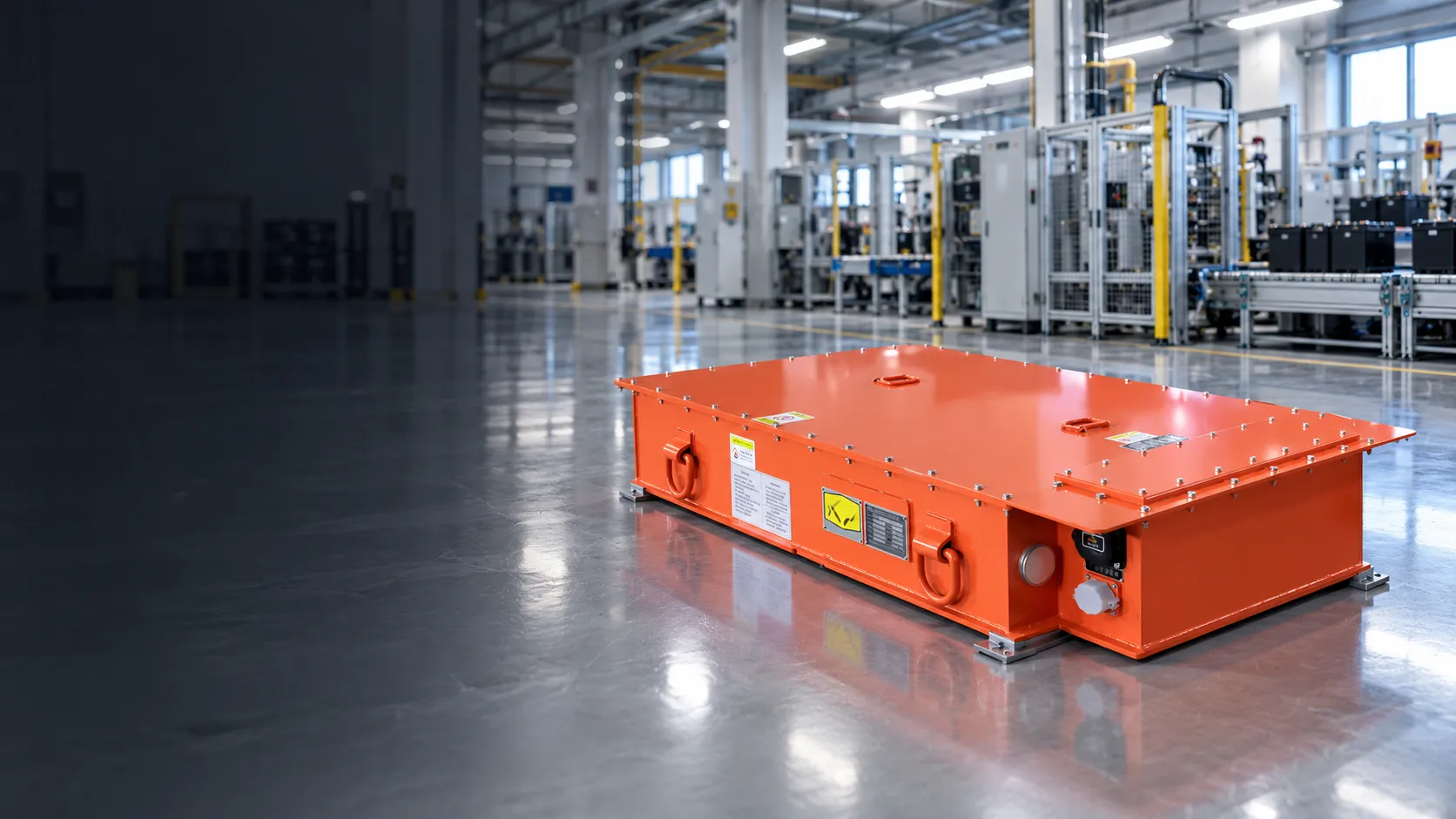
OEM Battery Engineering & Manufacturing
Custom Lithium Battery Packs for OEM & Industrial Applications
Bonnen Battery designs and manufactures custom lithium battery packs using LFP or NMC cells, as well as sodium-ion battery systems. Each project starts with your voltage, power, installation space, communication, operating environment and production requirements.
From the first technical review to prototype development and repeat manufacturing, we help OEM teams build a battery system that works with their equipment.
LFP, NMC & Sodium-ion · Custom BMS · CAN Integration · Custom Enclosures · Prototype to Production
Application-Specific Design
What Is a Custom Lithium Battery Pack?
A custom lithium battery pack is a battery system designed for a particular machine, vehicle or OEM product. Its cell configuration, voltage, capacity, current capability, enclosure, BMS, connectors and communication interface are selected around the application.
The battery also needs to work with the motor or inverter, charger, controller and installation space. A useful design review considers how the equipment operates, how it charges and how the battery will be installed and serviced.
Bonnen also develops sodium-ion battery systems. Sodium-ion is a separate battery technology, and its suitability is reviewed against the same application and integration requirements.
| Standard Battery Pack | Custom Battery Pack |
|---|---|
| Fixed platform specifications | Specifications developed around the application |
| Existing enclosure and mounting | Project-specific packaging and mounting |
| Predefined connectors and controls | Interfaces reviewed with the host equipment |
| Existing product validation scope | Validation planned for the released design |
| Often practical when it already fits | Useful when existing platforms leave important requirements unmet |
A standard platform can be a practical starting point when it meets the requirements. Custom development is useful when space, power, interfaces or operating conditions need a different solution.
Chemistry Selection
LFP, NMC and Sodium-Ion Battery Options
Chemistry selection starts with the work the battery must do. We review energy, power, space, weight, charging, operating temperature and supply requirements before choosing the cell and system architecture.
LFP / Lithium Iron Phosphate
LFP is an option for custom lithium battery systems where service life, thermal behavior and repeat operation are important. The selected cell still needs to meet the project's power, charging and environmental requirements.
NMC / Nickel Manganese Cobalt
NMC can be evaluated for projects with demanding space or weight limits. Cell selection, electrical protection and thermal design must be reviewed together against the actual duty cycle.
Sodium-ion
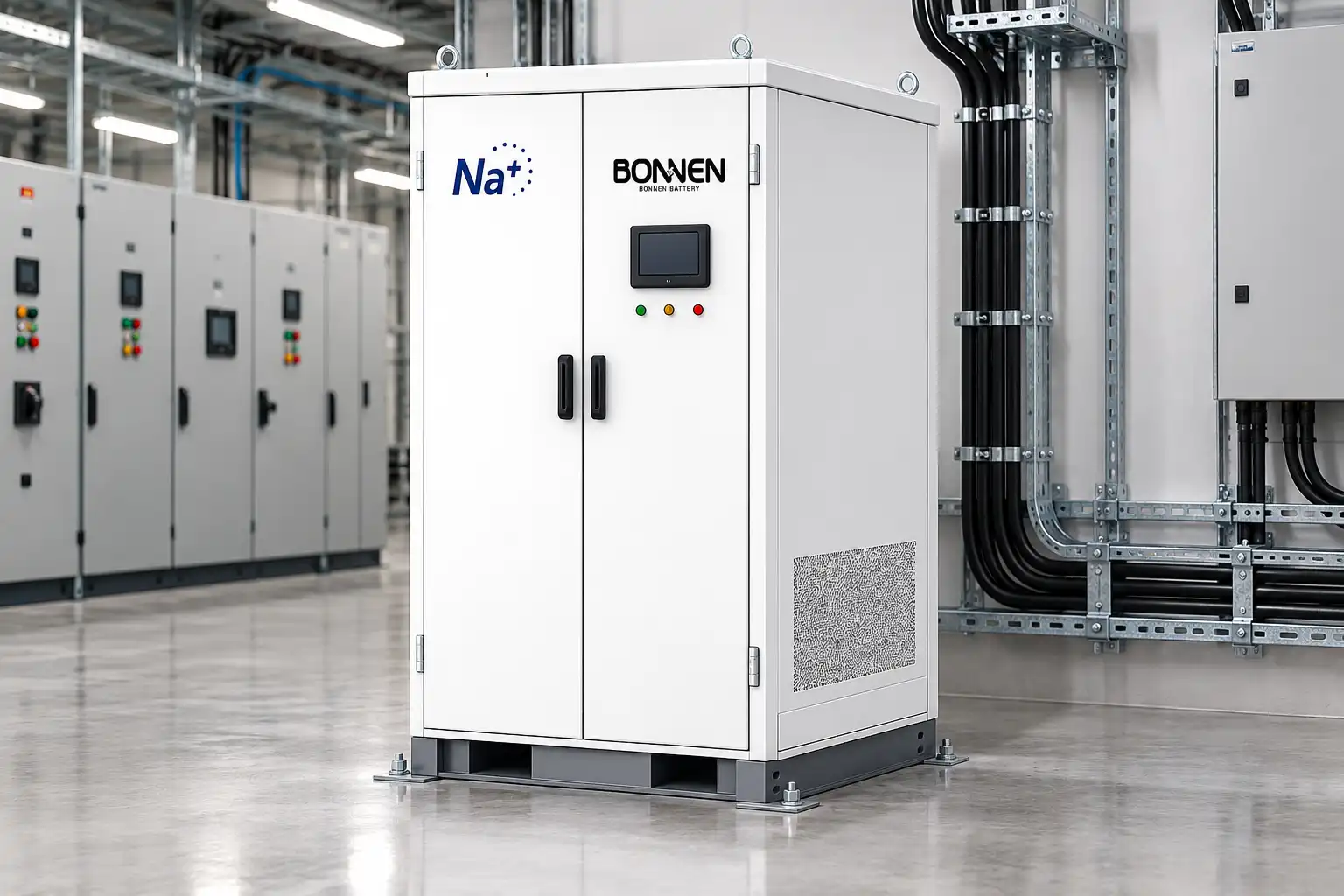
Bonnen provides sodium-ion battery systems for suitable projects, including stationary energy storage. We review the selected cell's voltage range, power capability, charging behavior and operating conditions before defining the system.
There is no single chemistry for every OEM project. The final choice should be based on the selected cell data and the complete system requirements.
System-Level Development
Custom Battery Engineering Capabilities
A custom battery system needs electrical, mechanical, communication and thermal decisions to work together. Our development scope is defined around the equipment and the agreed project requirements.
Electrical Architecture & Power Design
We review the operating voltage range, usable energy, continuous current and peak load duration. These inputs guide the cell configuration, current paths, switching components and electrical protection.
Where the architecture requires them, the design can include contactors, fuses, current sensing and pre-charge. Charger limits and control behavior are reviewed with the load requirements, rather than treated as separate decisions.
Enclosure & Mechanical Integration
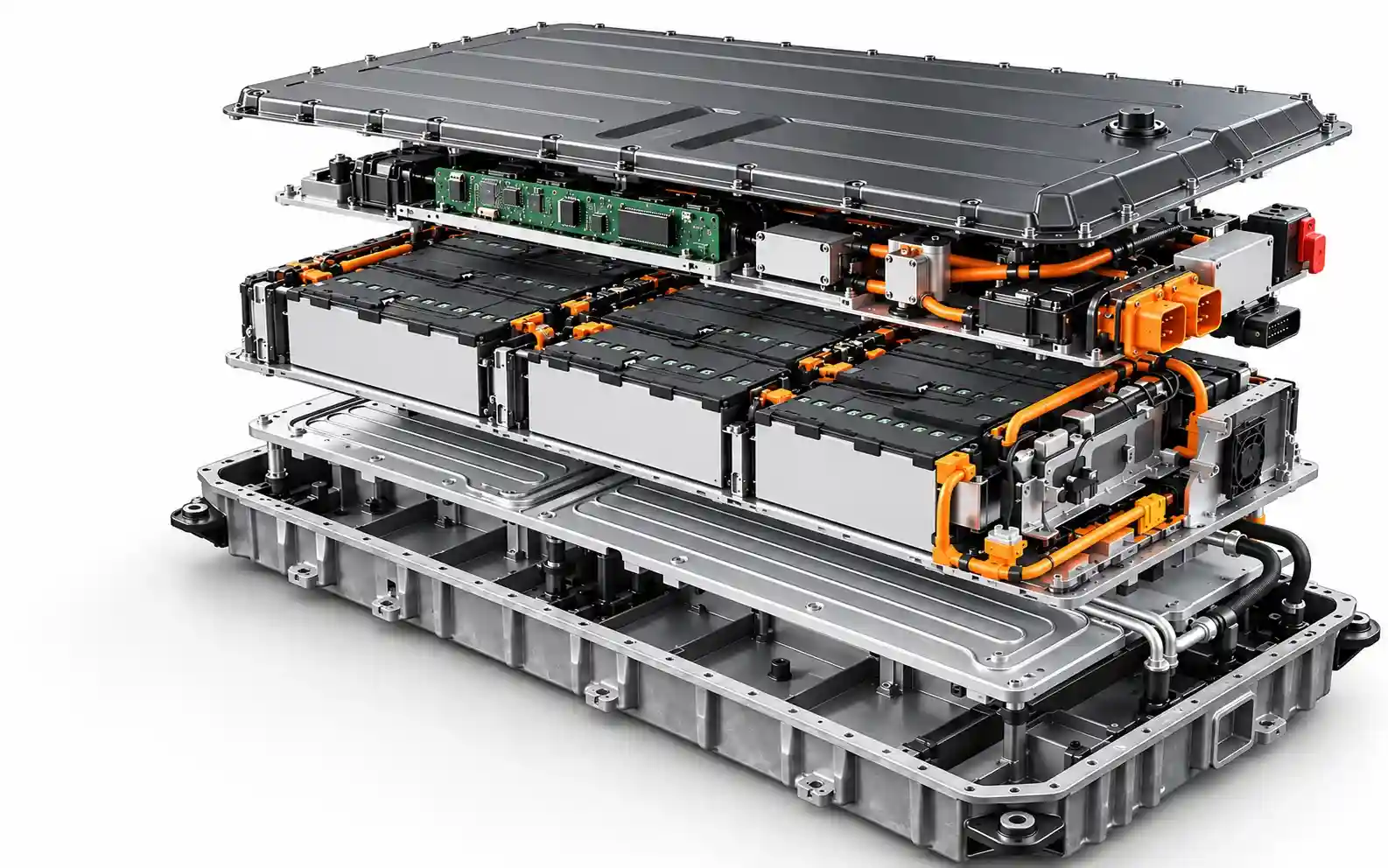
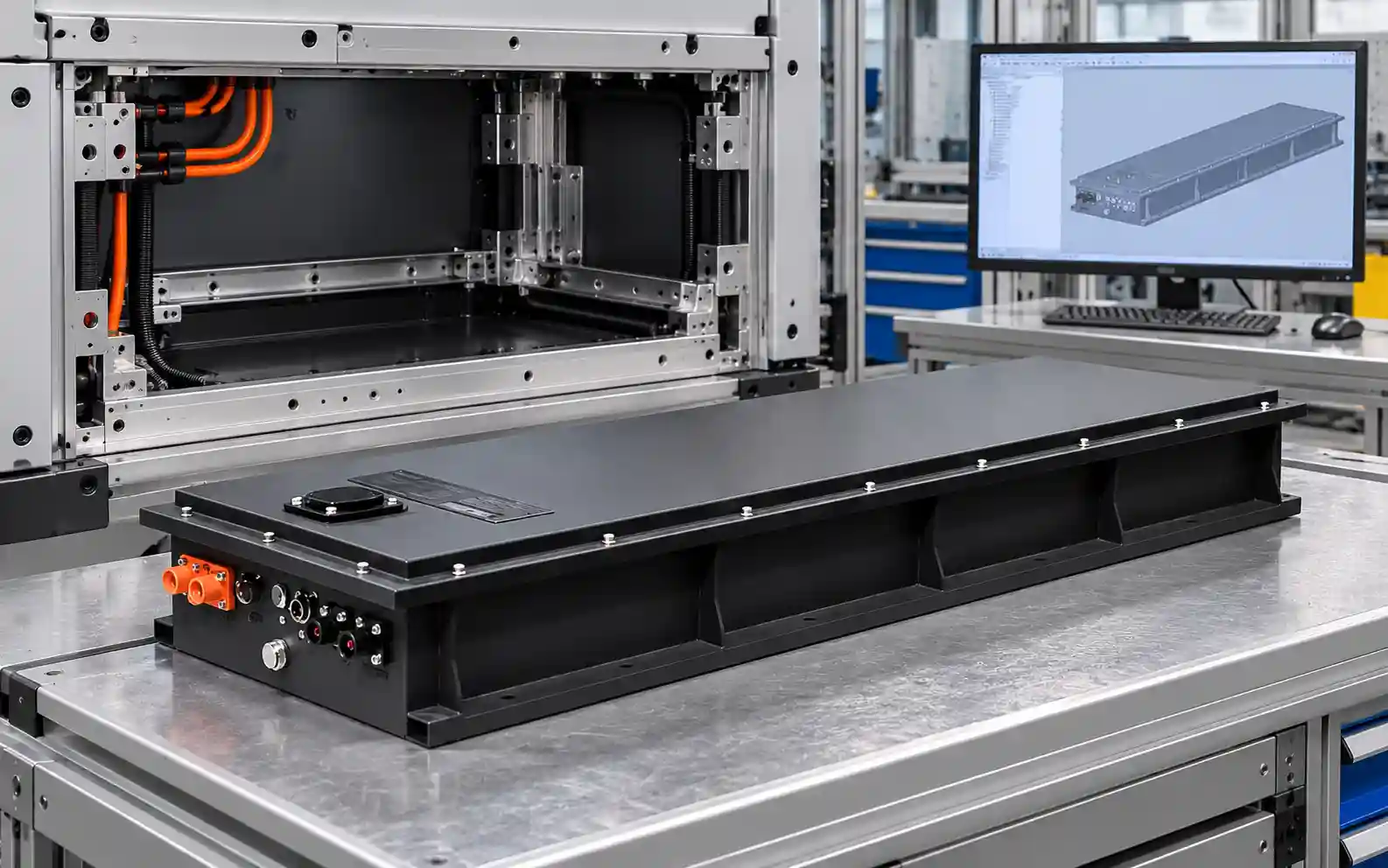
The enclosure is developed around available space, mounting points, cable routing and service access. Connector positions, lifting or handling provisions and installation clearances are considered before the layout is released.
Project drawings or CAD models help us review how the battery fits the equipment. Sealing, vibration and structural requirements are defined for the intended environment and validation scope.
BMS & System Communication
The BMS monitors the battery and manages the protection and control functions specified for the system. Integration can include SOC reporting, temperature data, alarms, charge and discharge limits, and coordination with other equipment.
CAN or RS485 support does not by itself confirm compatibility with a particular controller, charger or display. Protocol documents and operating logic are reviewed for the target devices before compatibility is confirmed.
Thermal & Environmental Design
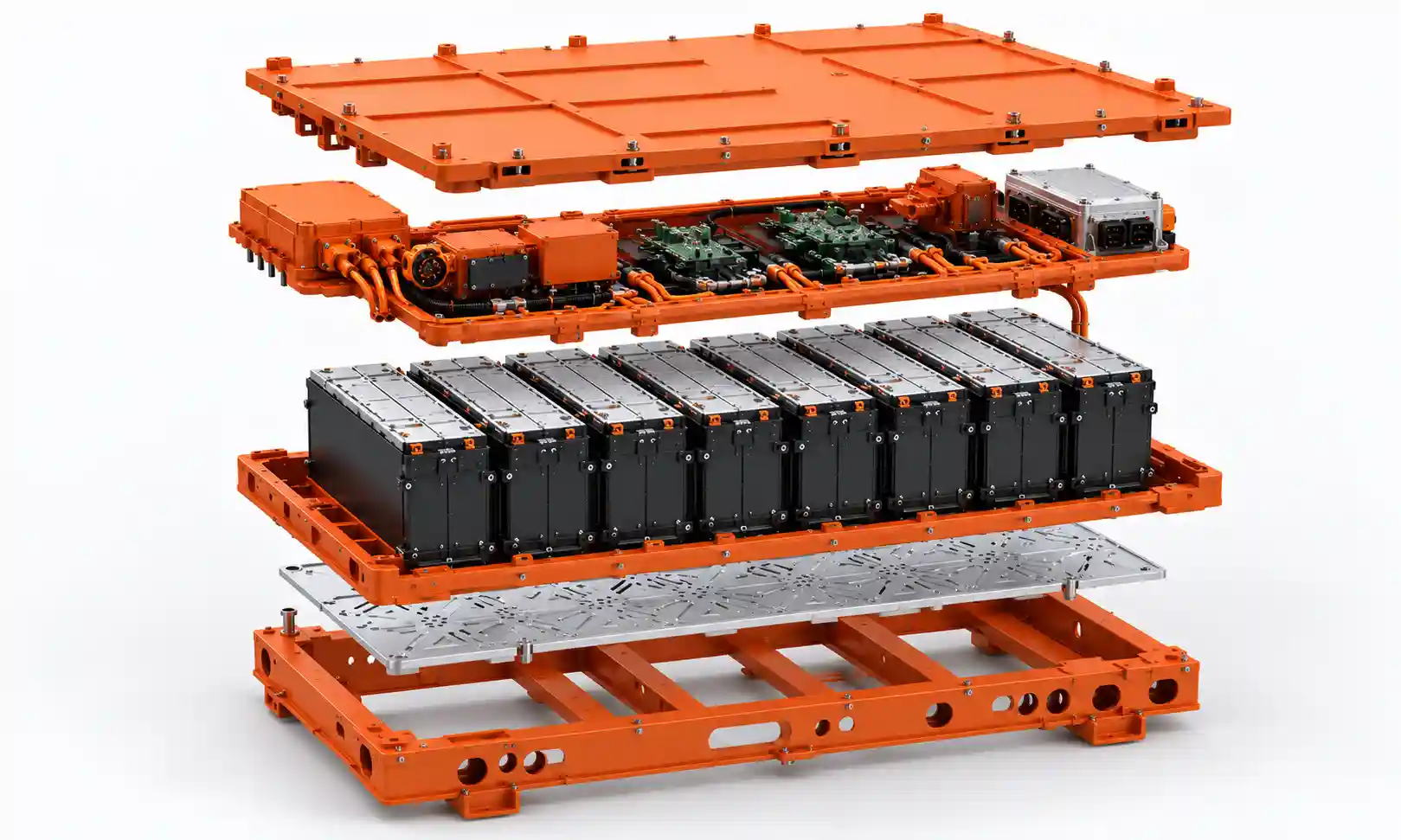
Thermal design follows the selected cell, heat load, duty cycle and ambient conditions. Passive cooling, air cooling, liquid cooling or heating can be evaluated where the project requires them.
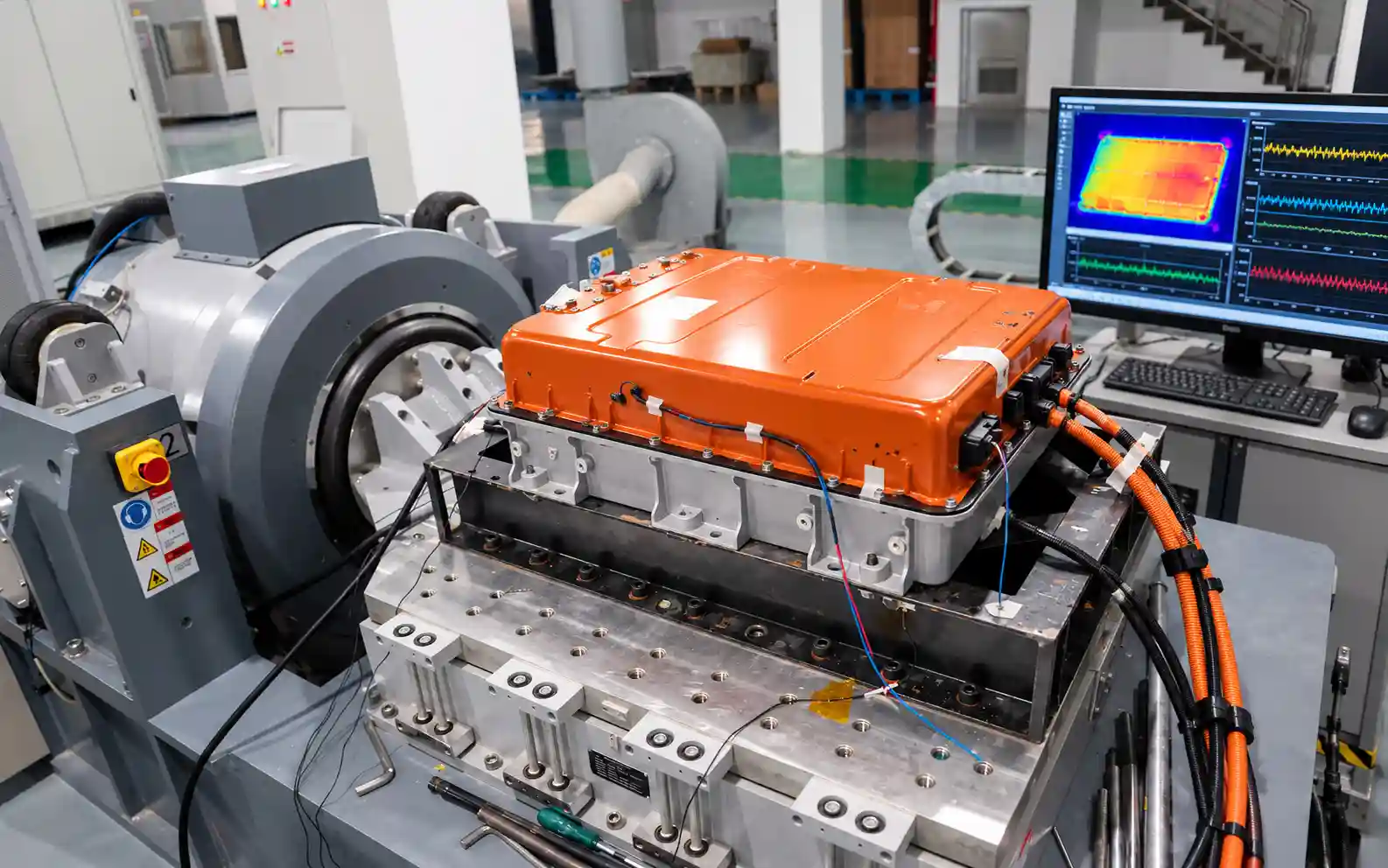
Operating temperature limits, enclosure protection and environmental checks are specified for the final design. These features are project options and requirements, rather than standard equipment on every battery pack.
Project Definition
What Can Be Customized in a Battery Pack?
The right customization scope depends on the equipment and the development stage. These are the main areas we review when defining a custom battery project.
| Engineering Area | Customization Scope |
|---|---|
| Cell Technology | LFP or NMC lithium-ion cells, or sodium-ion cells for suitable projects |
| Voltage & Energy | Nominal and operating voltage, capacity, usable energy and cell configuration |
| Power & Current | Continuous demand, peak current duration, load profile and charging limits |
| Enclosure & Mounting | Dimensions, material, mounting interfaces, service clearances and handling |
| Connectors & Wiring | Power connectors, communication connectors, harness layout and cable routing |
| BMS & Controls | Monitoring, protection thresholds, SOC reporting, alarms and operating logic |
| Communication | CAN or RS485 interfaces and project-specific protocol review |
| Thermal Design | Passive, air or liquid cooling and heating where required |
| Charging | Charger operating range, current limits, communication and charging conditions |
| System Protection | Fuses, contactors, pre-charge, insulation and other application-specific functions |
| Environmental Requirements | Temperature, enclosure protection, vibration and agreed validation scope |
| Production Plan | Prototype, design revision, pilot build and repeat manufacturing |
Not sure which specifications your equipment needs? Share the application and what you already know. Our engineers can help identify the next technical questions.
Application Paths
Custom Battery Solutions by Application
Start with the equipment and its operating profile. Explore the application pages for more detailed information about integration, available platforms and project requirements.
Electric Vehicles
Battery systems developed around vehicle voltage, motor and inverter demand, available space, charging and control interfaces.
Explore EV Battery Systems →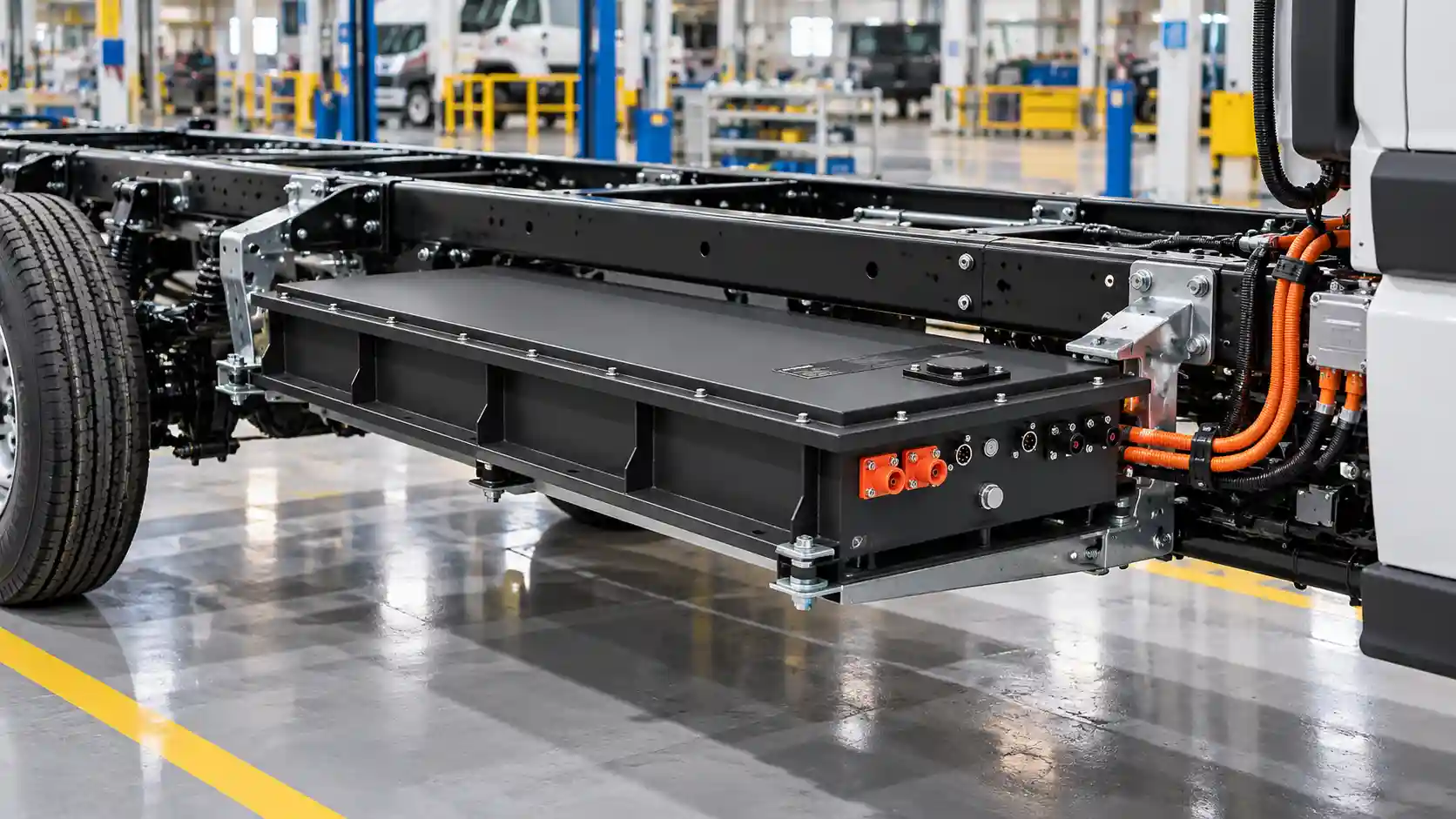
Marine & Electric Boats
Battery solutions for electric propulsion and onboard power, with installation, power demand and marine exposure reviewed together.
Explore Marine Battery Systems →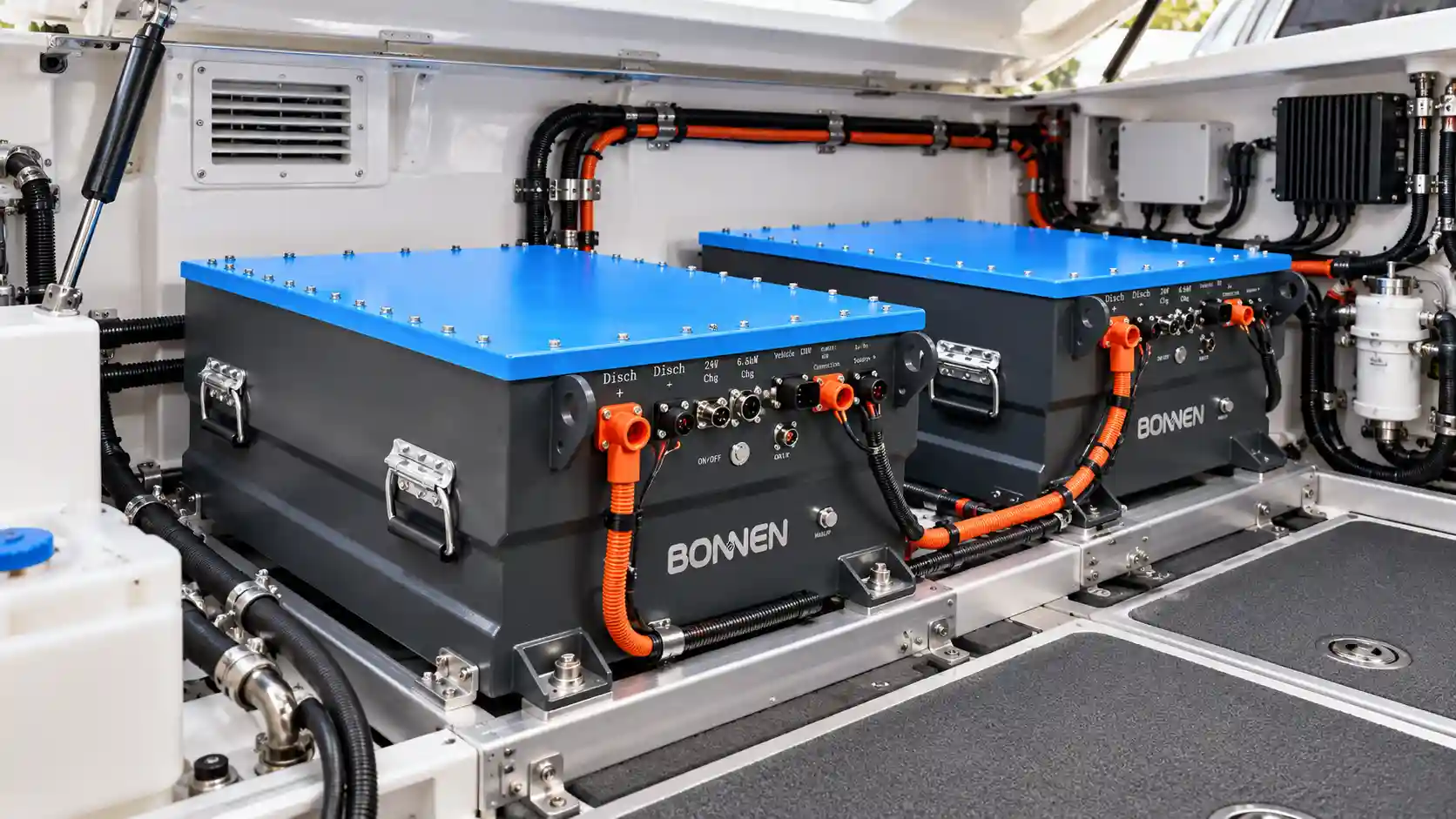
Heavy Equipment
Custom systems for construction, agriculture, mining and off-highway equipment with demanding loads and operating environments.
Explore Heavy Equipment Batteries →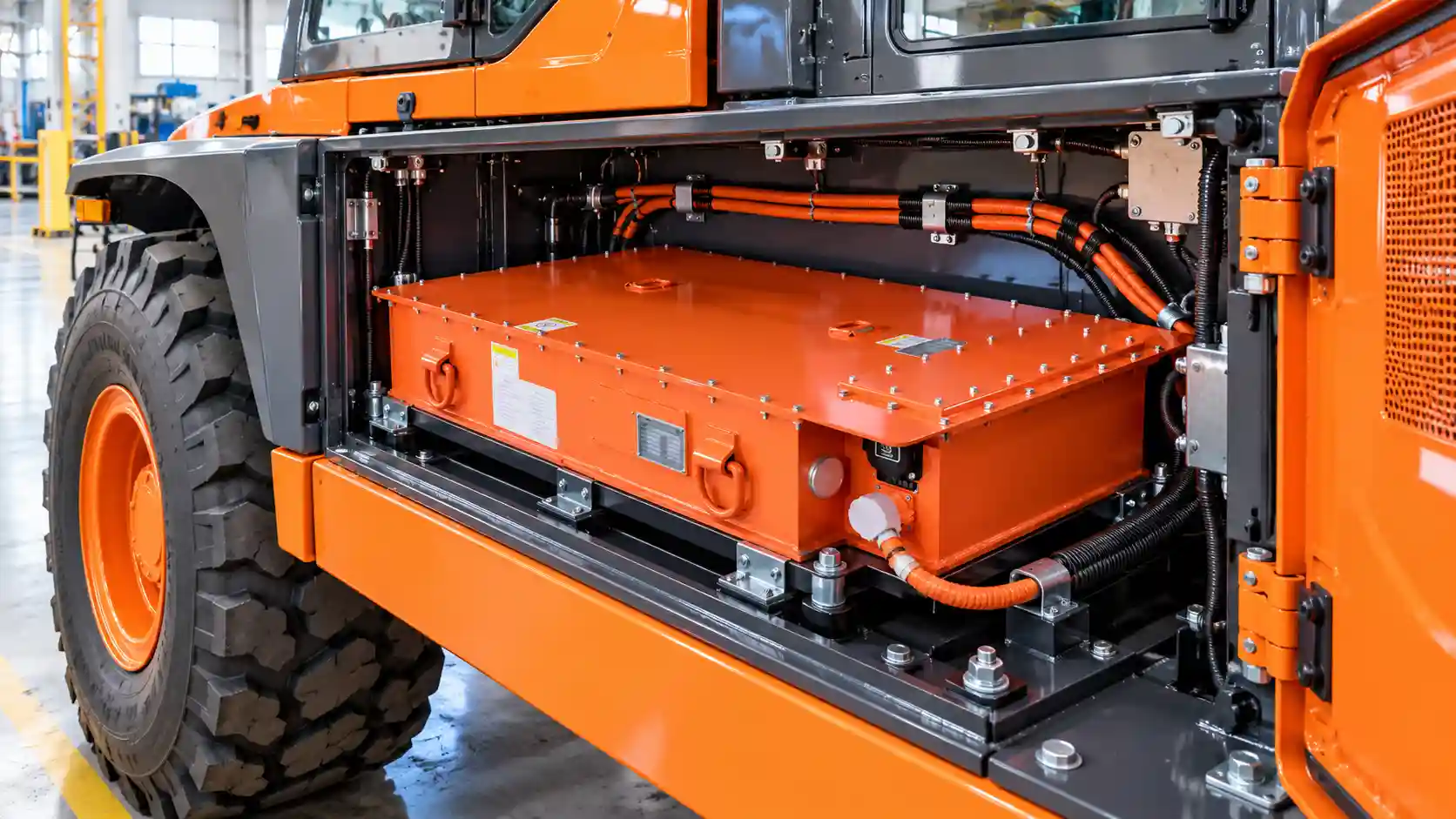
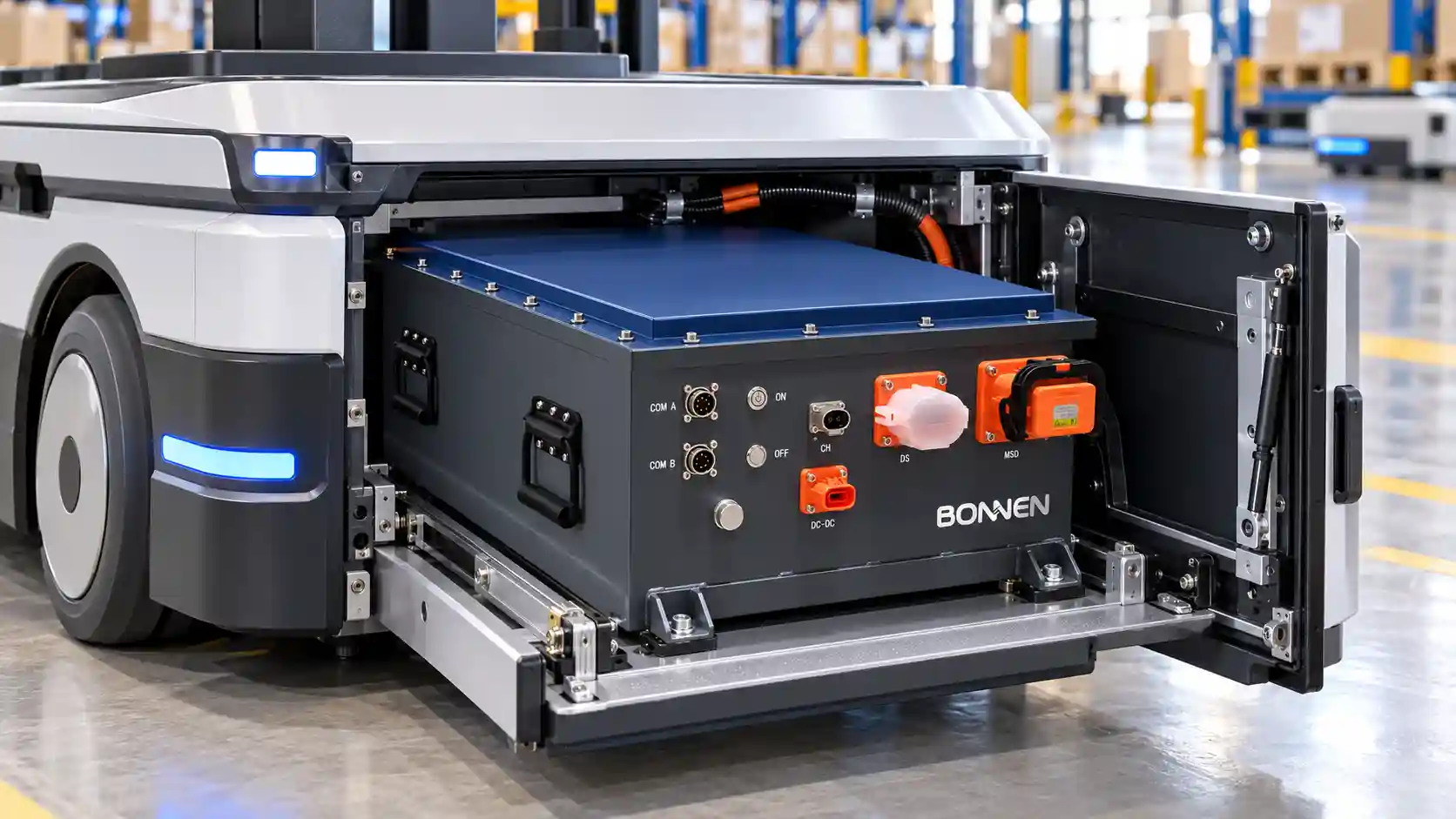
AMR, AGV & Industrial Robotics
Battery systems matched to robot duty cycles, charging windows, installation limits and host control requirements.
Explore AMR & AGV Batteries →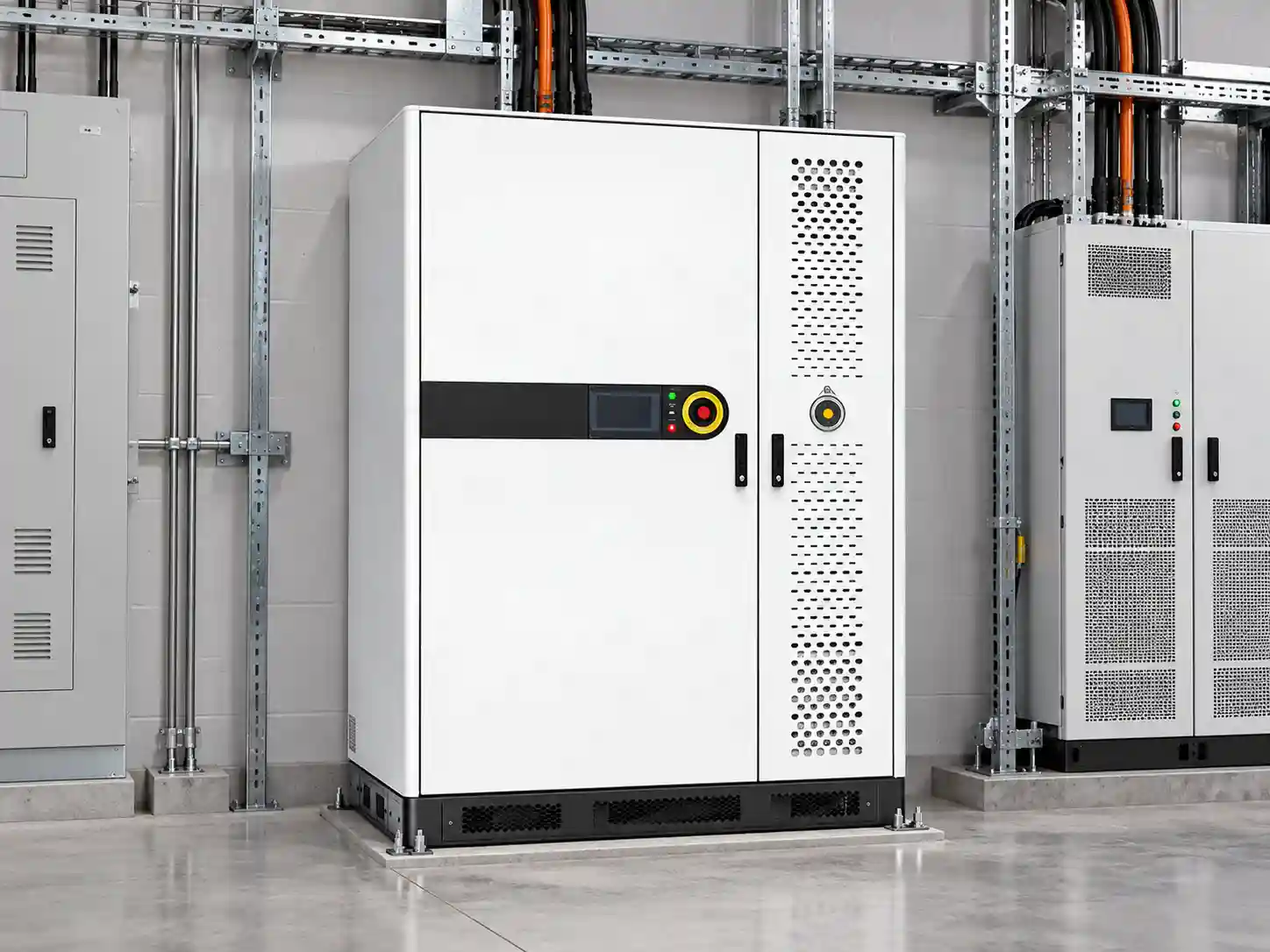
Commercial & Industrial Energy Storage
LFP and sodium-ion system options for suitable storage projects, developed around site loads, power conversion and operating strategy.
Explore C&I Energy Storage →Representative Platforms
Explore Custom Battery Systems
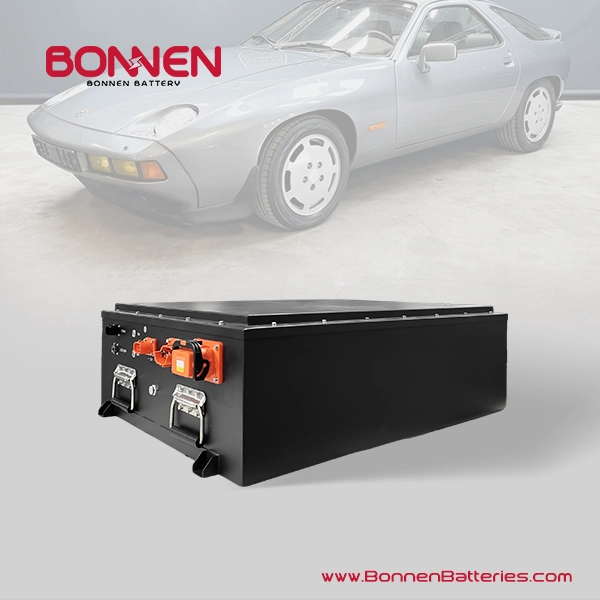
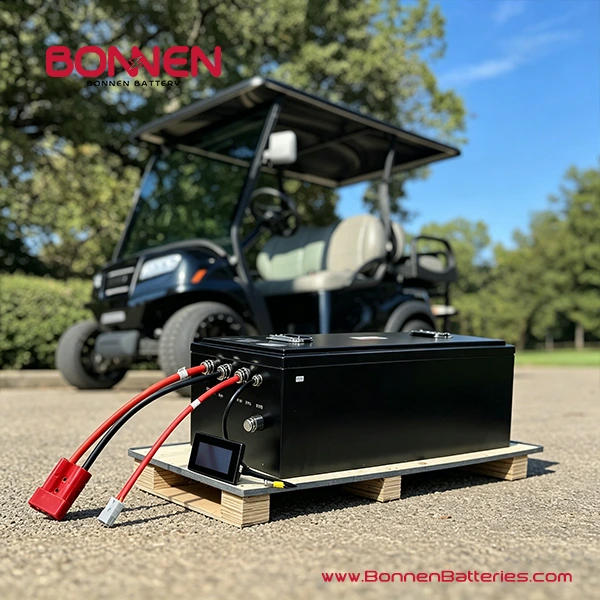
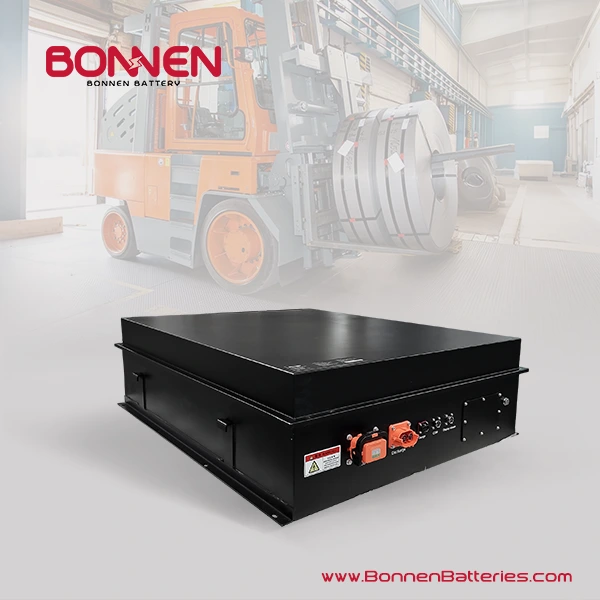
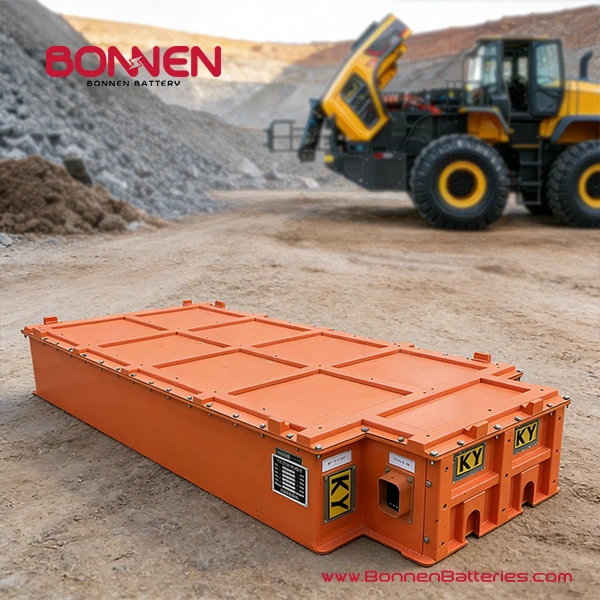
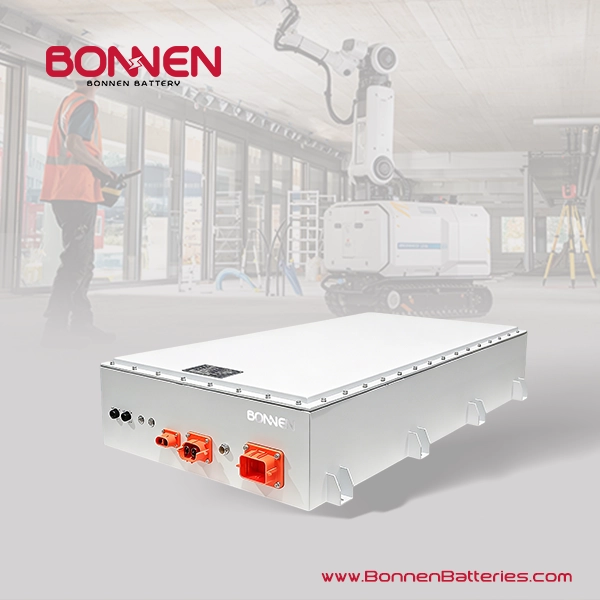
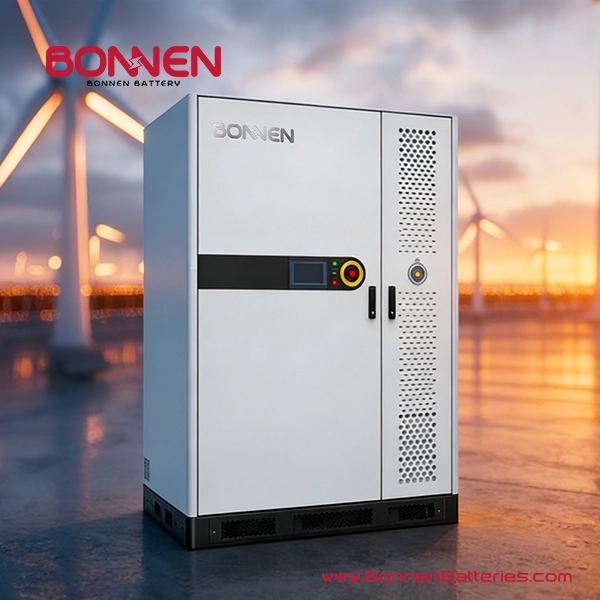
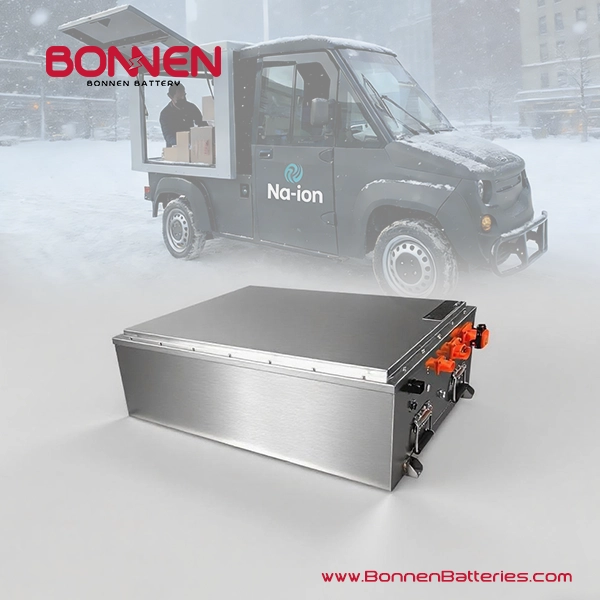
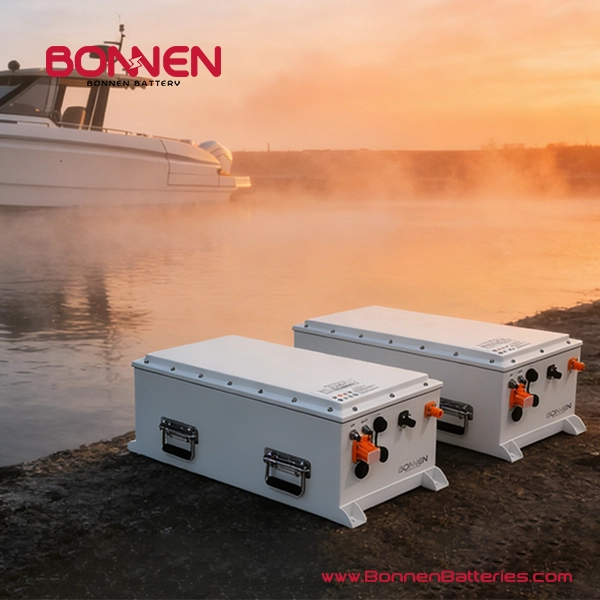
Browse representative Bonnen Battery systems for different voltage levels, power requirements and applications. Use the product pages as a starting point for technical review; the final configuration and chemistry are confirmed for your project.
Engineering Examples
Custom Battery Engineering Examples
These Bonnen Battery solutions show how packaging, interfaces and system architecture are developed around specific application requirements.
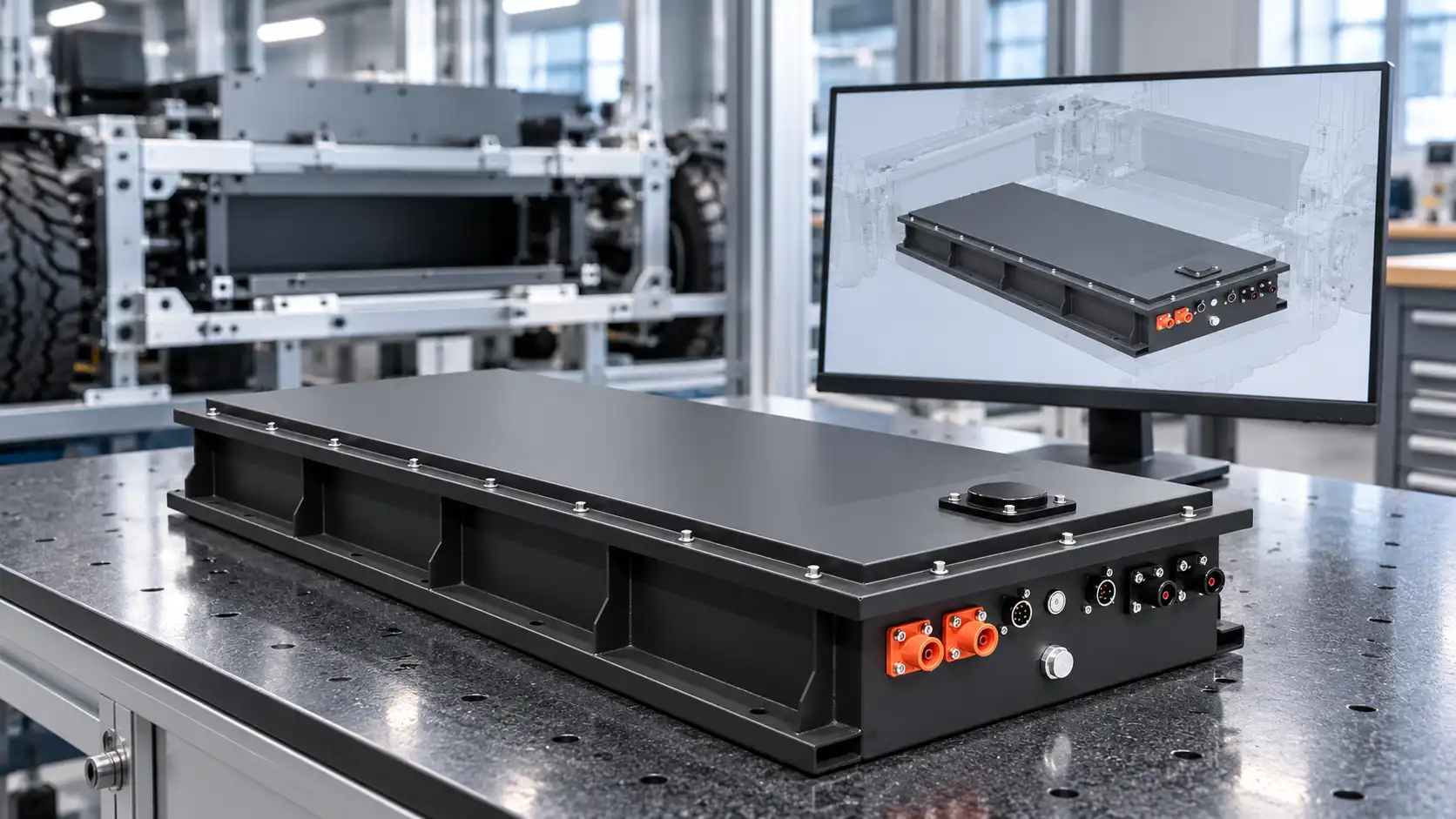
Compact Battery for Industrial Equipment
- Application
- Space-constrained industrial equipment and cable-pulling systems.
- Design challenge
- Low installation height, accessible front interfaces and a long mounting footprint.
- Engineering response
- A low-profile enclosure with reinforced side rails, perimeter fastening and grouped power and communication connections.
- Status
- Bonnen Battery solution for space-constrained industrial equipment.
- Further details
- Review the industrial winch battery →
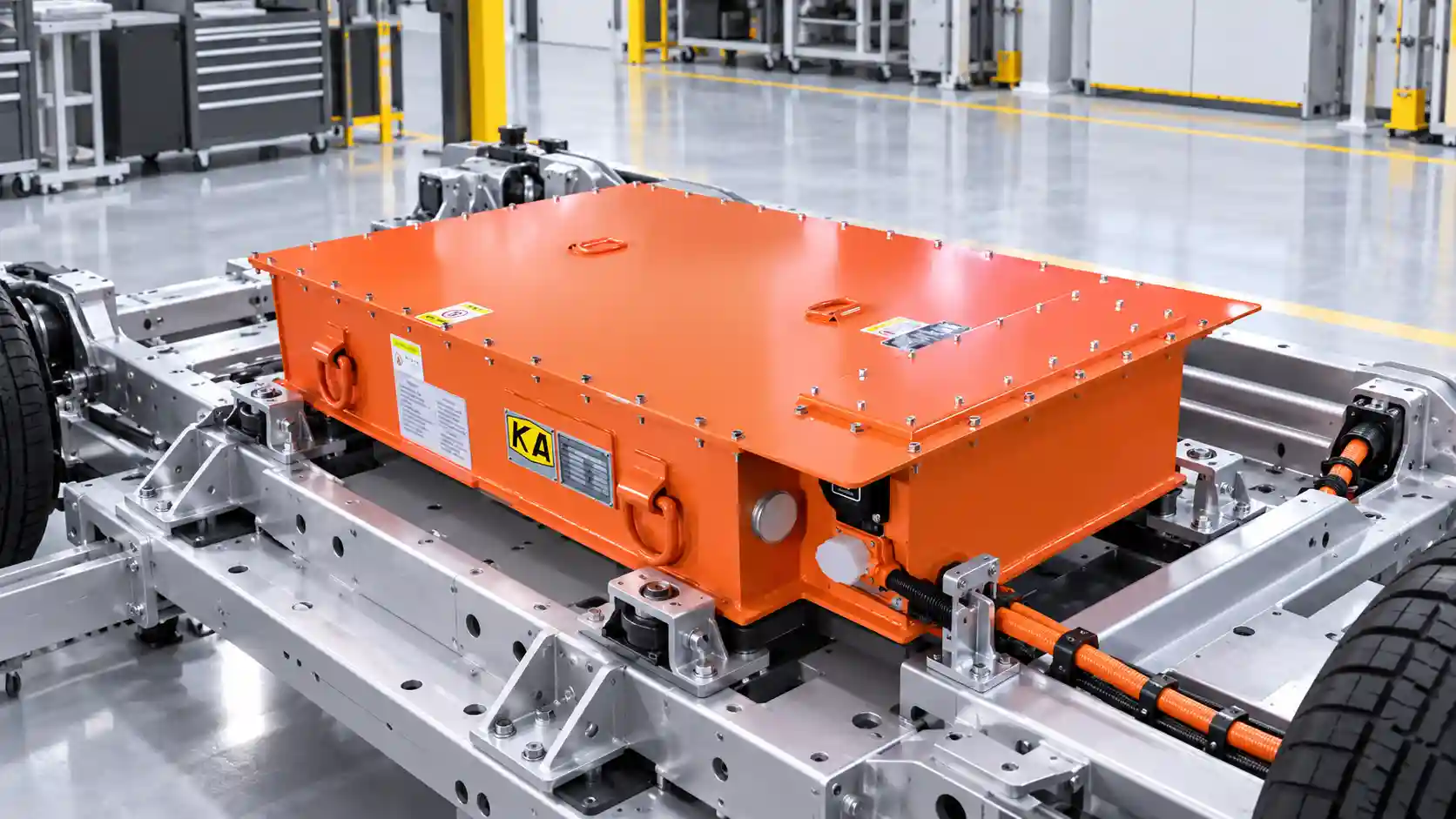
High-Voltage Battery for a Vehicle Platform
- Application
- Vehicle and heavy-equipment platform integration.
- Design challenge
- Electrical protection, interface coordination and mechanical fit must be reviewed as one system.
- Engineering response
- Define the voltage window, continuous and peak load, protection architecture, BMS communication, mounting and service clearances before release.
- Status
- Bonnen Battery high-voltage solution for vehicle and heavy-equipment integration.
- Further details
- Explore EV battery engineering →
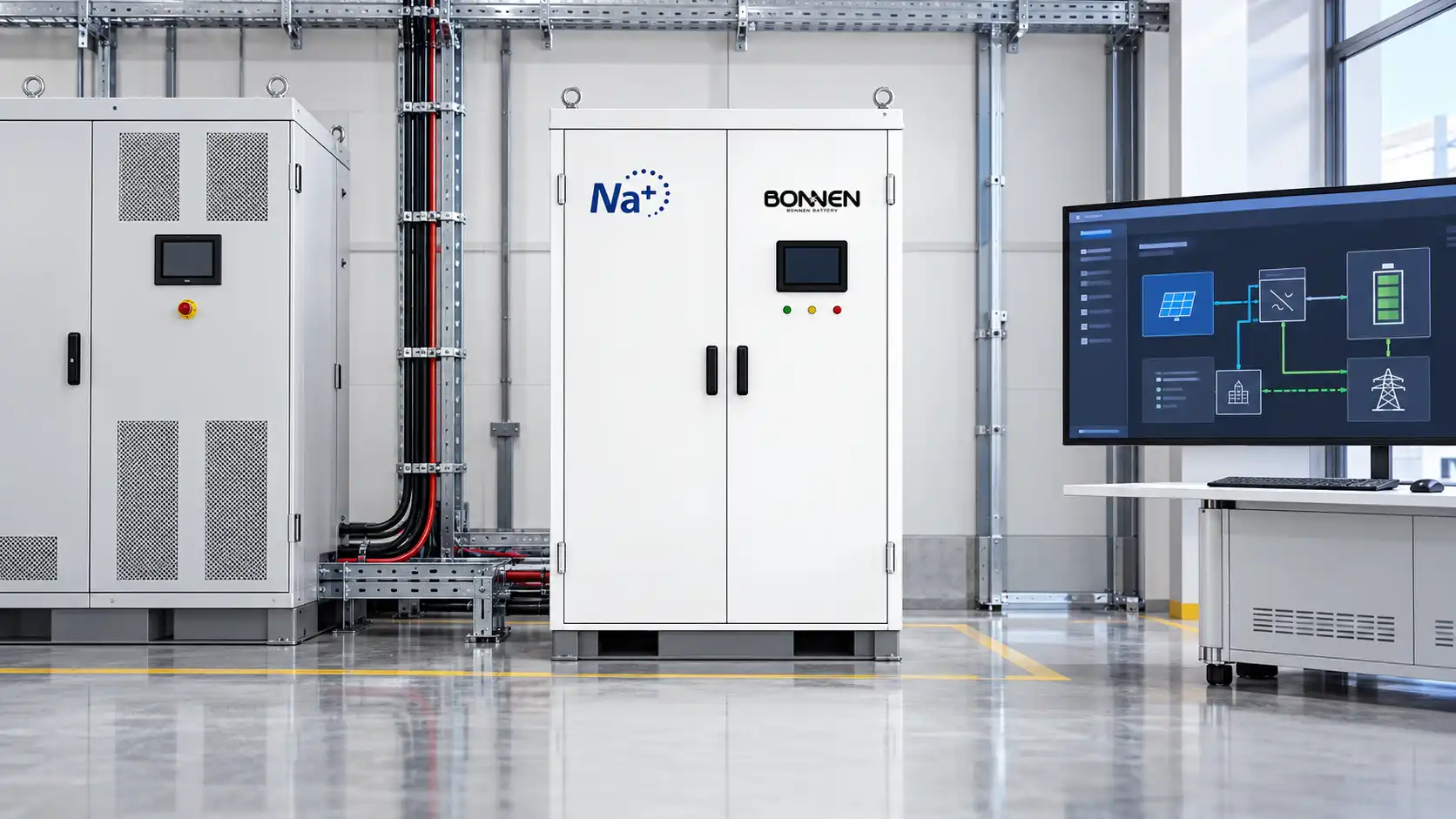
Sodium-Ion System for Stationary Storage
- Application
- Suitable commercial and industrial stationary energy storage projects.
- Design challenge
- Cell voltage range, power capability, charging behavior, cabinet architecture and site interfaces must be coordinated.
- Engineering response
- Review the selected sodium-ion cells and the complete system requirements before defining the cabinet and control architecture.
- Status
- Bonnen Battery sodium-ion solution for stationary energy storage.
- Further details
- Explore C&I energy storage systems →
Development Workflow
How We Develop Custom Battery Systems
Development works best when the battery and host equipment are reviewed together. The following stages connect the first requirements to a released design and repeatable manufacturing.
- 01
Requirement Review
Review the application, voltage range, load profile, runtime, available space, charging, communication, environment and expected quantity. Identify missing inputs and define the initial development scope.
- 02
System Architecture
Select the cell technology and configuration, then define the BMS, protection, charging and thermal approach. Check the proposed architecture against the equipment requirements.
- 03
Detailed Design
Develop enclosure, mounting, connectors and interfaces. Review the agreed drawings and specifications with the customer before prototype release.
- 04
Prototype Build
Build the prototype in the agreed configuration and record the relevant build and test information. The prototype provides a practical basis for equipment integration.
- 05
Integration & Validation
Review battery operation with the host equipment and complete the agreed validation scope. Resolve findings and control design changes before production release.
- 06
Pilot & Volume Production
Confirm the released design, manufacturing documents and inspection requirements. Pilot builds and repeat production follow the agreed project and order plan.
Typical Project Deliverables
Depending on the agreed scope, project deliverables can include a technical proposal, battery specification, mechanical drawings, interface information, a validation plan and relevant test records. Document scope and responsibilities are confirmed during development.
Development and Production Timing
Timing depends on design complexity, component availability, prototype work, validation requirements and order quantity. We confirm the development and production schedule after reviewing the project, rather than applying one lead time to every custom battery.
Released Design to Repeat Build
Custom Battery Manufacturing and Quality Control
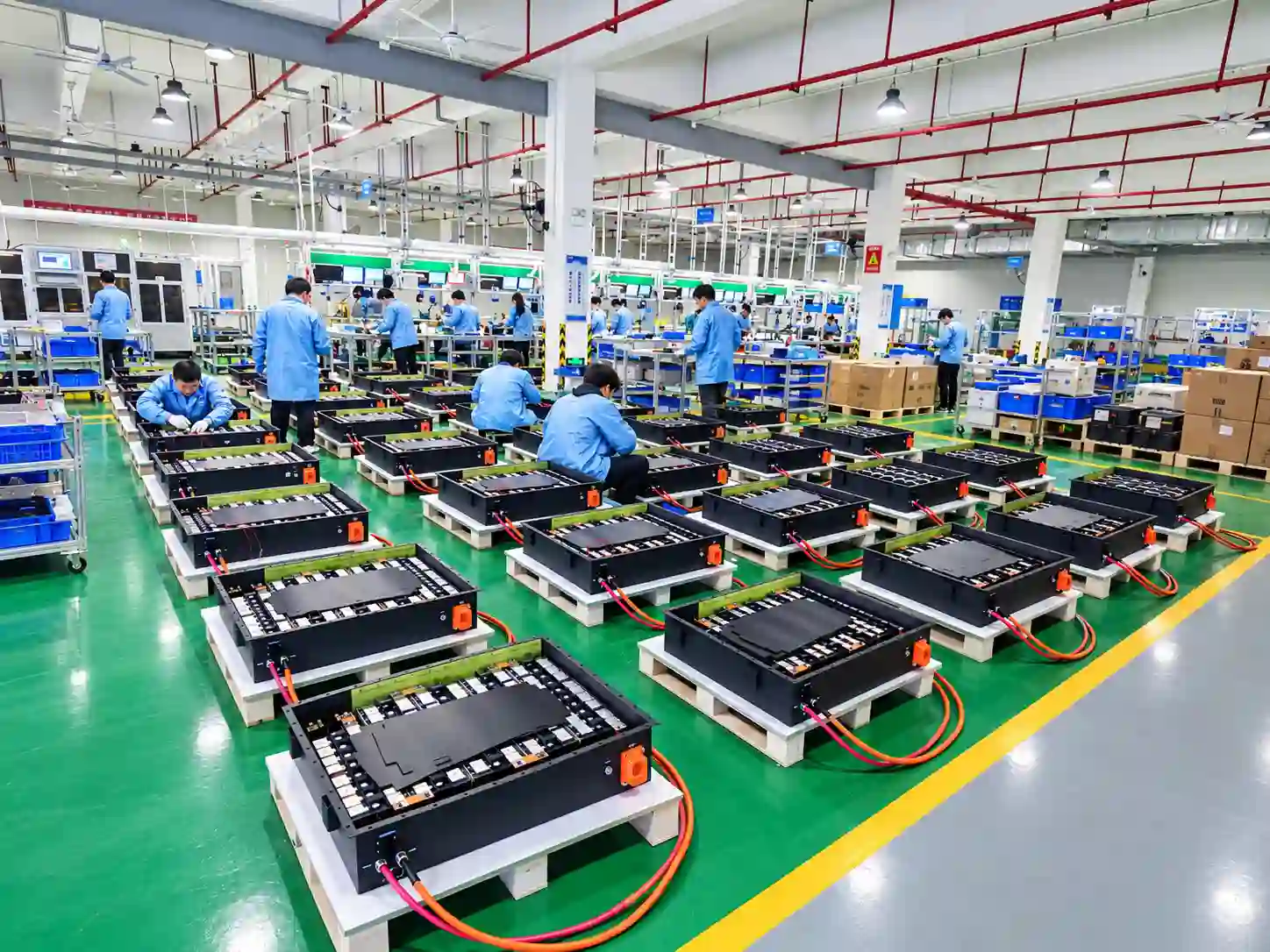
Manufacturing follows the released design and the agreed inspection and test requirements. The checks should be appropriate to the cell technology, system voltage, enclosure and intended application.
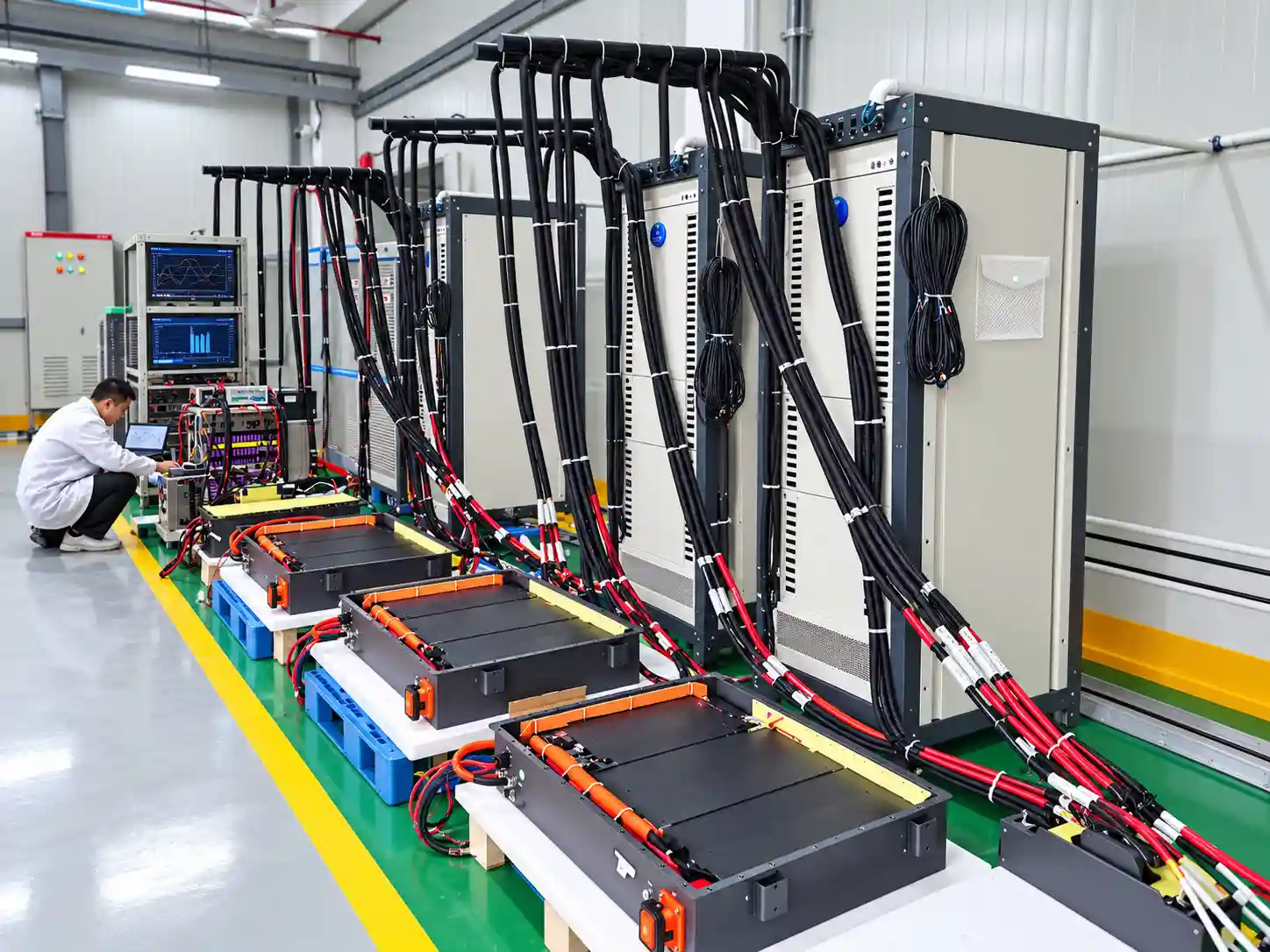
Functional Testing
Relevant electrical functions, protection behavior, communication and charging operation can be checked to the agreed system scope.
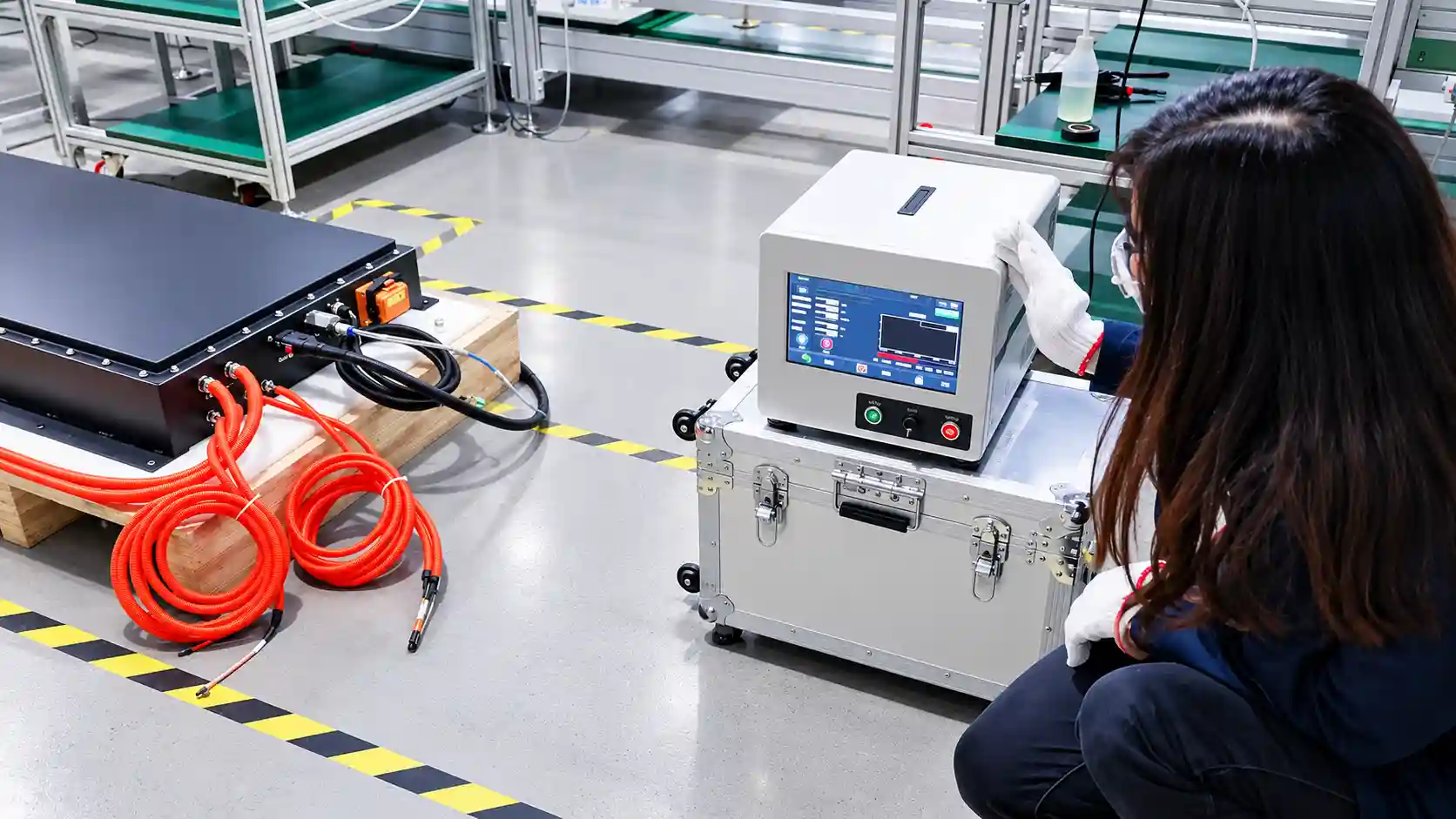
Project Validation
Additional performance, insulation, temperature, sealing or environmental checks are planned where the project requires them.
Controlled Assembly
Component identification, assembly steps, wiring and BMS configuration should follow the released documents. Process checks help maintain consistency between the approved design and the finished battery.
Functional Testing
Final checks can include the relevant electrical functions, protection behavior, communication and charging operation. The actual test scope is defined for the system and recorded as agreed with the customer.
Project Validation
Development validation and routine production inspection serve different purposes. The applicable performance, insulation, temperature, sealing or environmental checks are defined separately.
Project-Specific Evidence
Testing and Compliance for Custom Battery Projects
A newly developed battery may fall outside the scope of an existing product certificate or test report. The required validation and documentation depend on the final design, cell technology, application, shipping method and destination market.
During development, we review the relevant requirements and agree the test and document scope with the customer. Quality-system records, qualified cell documents and reports from similar products can provide useful references, but they do not automatically approve a new pack configuration.
LFP, NMC and sodium-ion projects must be assessed against the requirements that apply to the selected battery system. Documentation should match the actual design and intended use.
Company & Process
Relevant quality-management and manufacturing evidence, when available and valid.
Cells & Existing Products
Applicable cell documents and similar product reports as references within their stated scope.
New Project
Validation, transport documentation and market requirements reviewed for the final battery configuration.
Prepare for Technical Review
What Do We Need to Start Your Battery Project?
You can start with complete drawings or a short description of the equipment. The more decision-driving information you can share, the faster the team can identify the right architecture and the remaining questions.
- Application and equipment type
- Nominal and operating voltage range
- Continuous and peak power or current
- Required runtime, range or usable energy
- Available dimensions and mounting points
- Maximum mass or handling limits
- Motor, inverter and auxiliary loads
- Charging method and available time
- CAN, RS485 or other interface documents
- Operating and charging temperatures
- Environmental and validation requirements
- Prototype and expected annual quantity
FAQs About Custom Lithium Battery Pack from Bonnen Battery
Find answers to common questions about custom battery design, BMS integration, prototypes, MOQ, pricing, lead times, and OEM manufacturing.
Start with the Application
Start Your Custom Battery Project
Share your application, power requirements or available battery space. Bonnen Battery can help review a suitable LFP, NMC or sodium-ion system and the next engineering steps.
You do not need a complete battery specification to get started.